Product Design
Eugene, Oregon
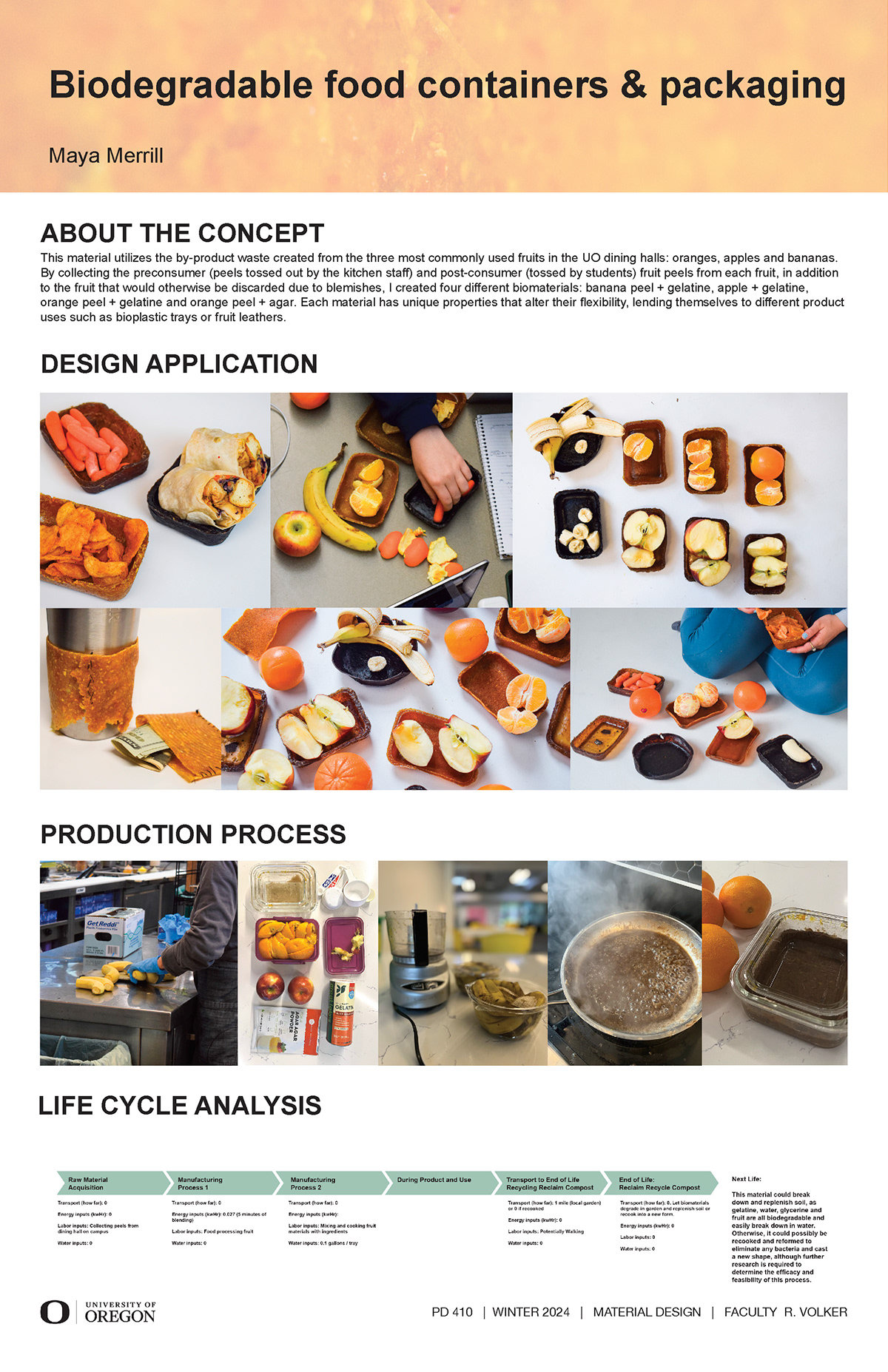
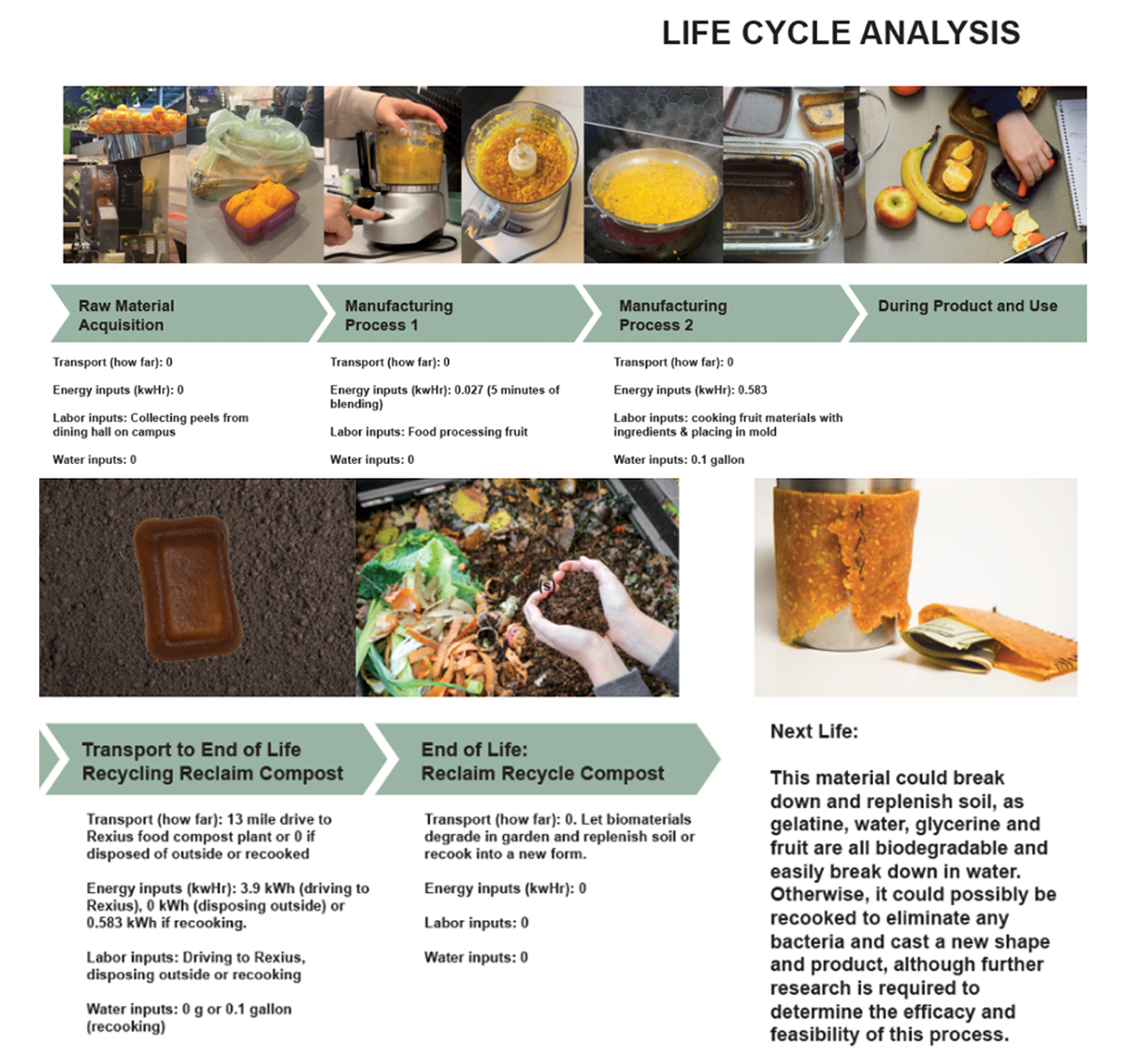
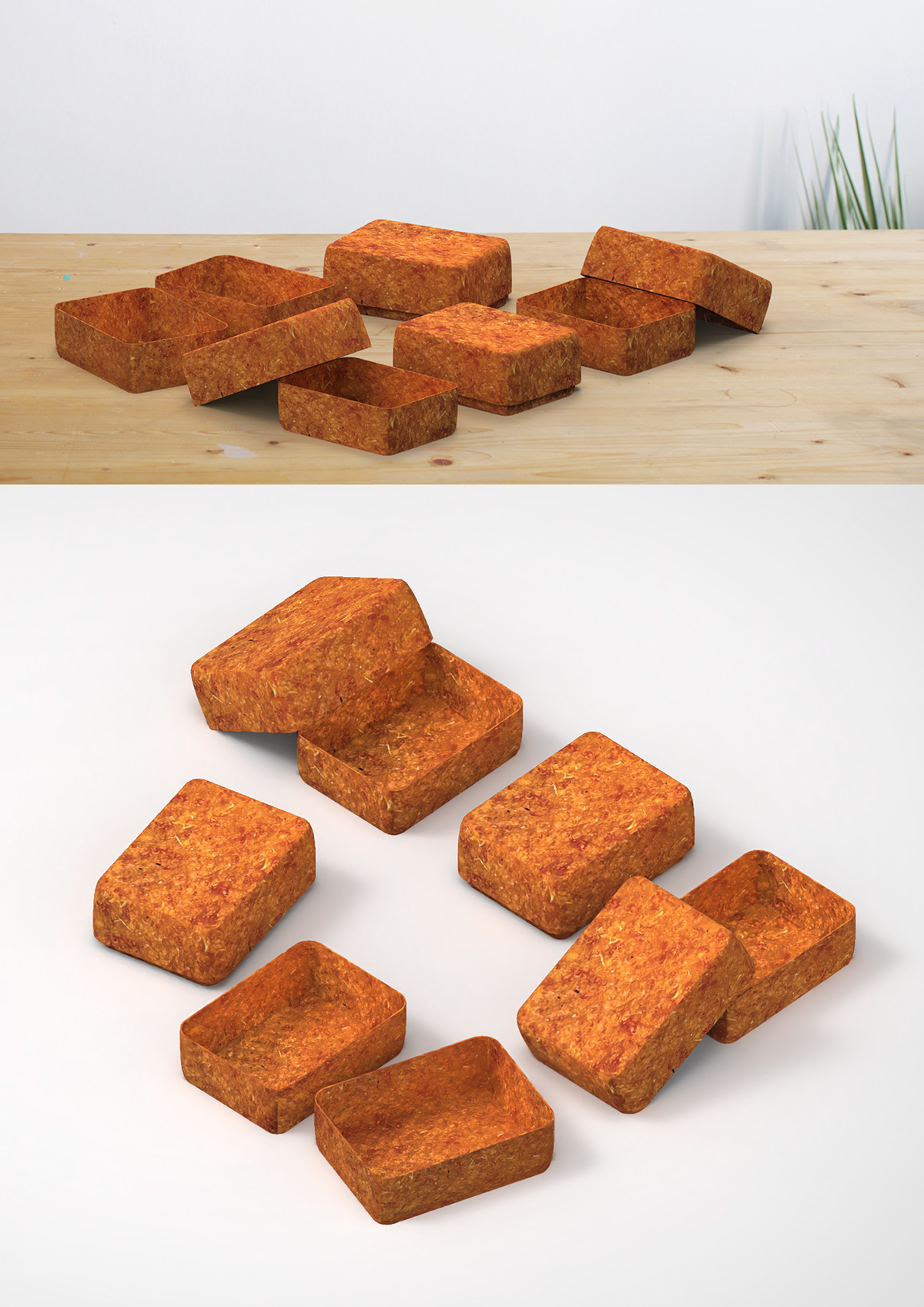
During my Material Design studio, I developed bioplastics using discarded fruit peels that were byproducts of the thousands of fruits and fruit-based dishes served and consumed every day on campus at the University of Oregon. I aimed to create a circular design resulting in truly compostable single-use bioplastics that don't require additional transport to a composting facility, but that can instead biodegrade when left outside. With this design solution, I hope to eliminate the significant amount of plastic and paper disposable food packaging distributed in thousands of meals at UO everyday and offer an alternative as part of my design thesis towards making university dining less wasteful. We can reduce waste, one meal and one university at a time.
Breaking down the compost problem in University of Oregon dining
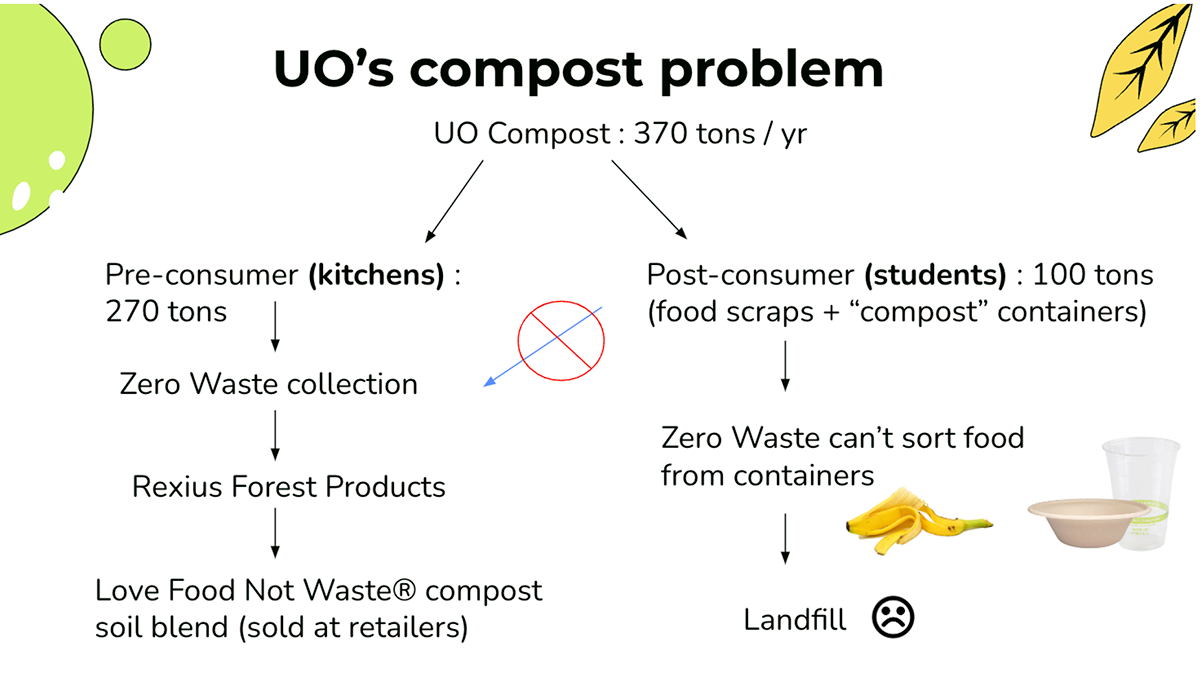
Problem: Current "compost" containers aren't actually compostable at Oregon composting facilities. Instead, their greenwashed packaging confuses students, who place them with food compost, contaminating food compost piles. This results in tons of wasted food compost.
How might we create truly compostable containers that do not need to be sorted from compost because they don't contaminate compost, so both packaging and food waste can be composted at the University of Oregon?
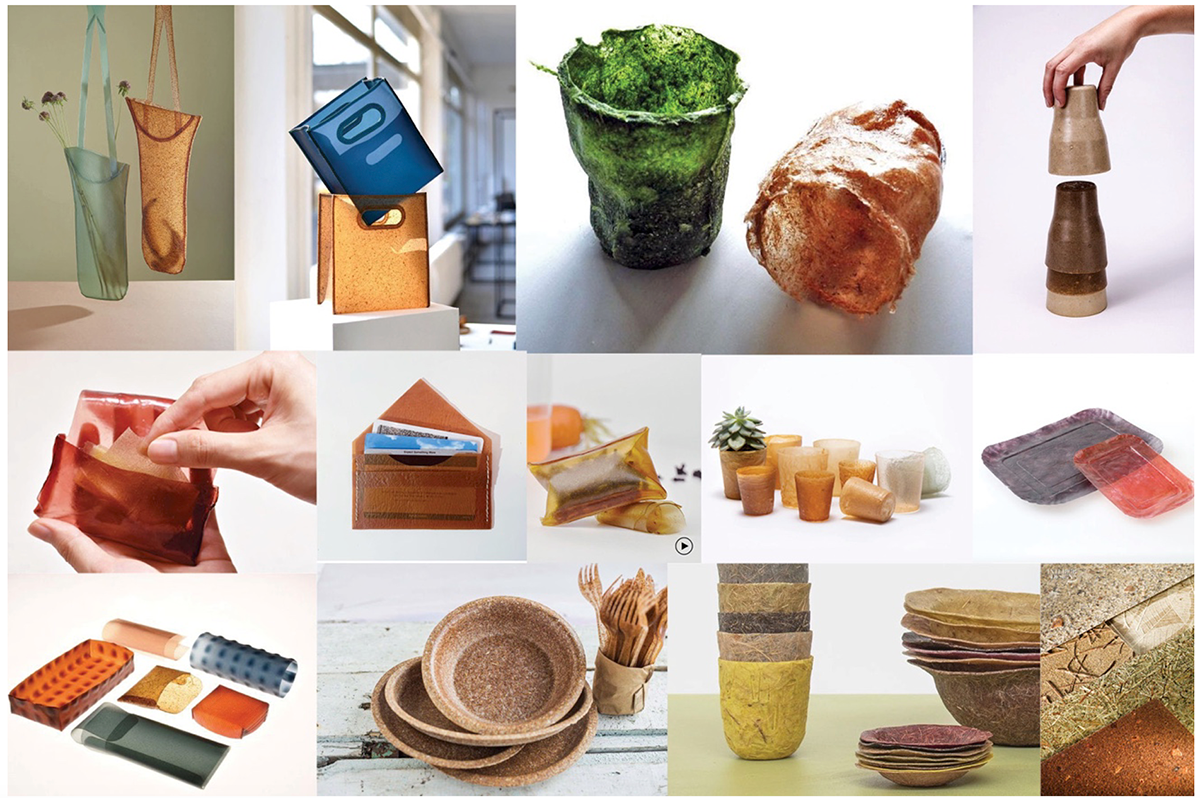
Moodboard

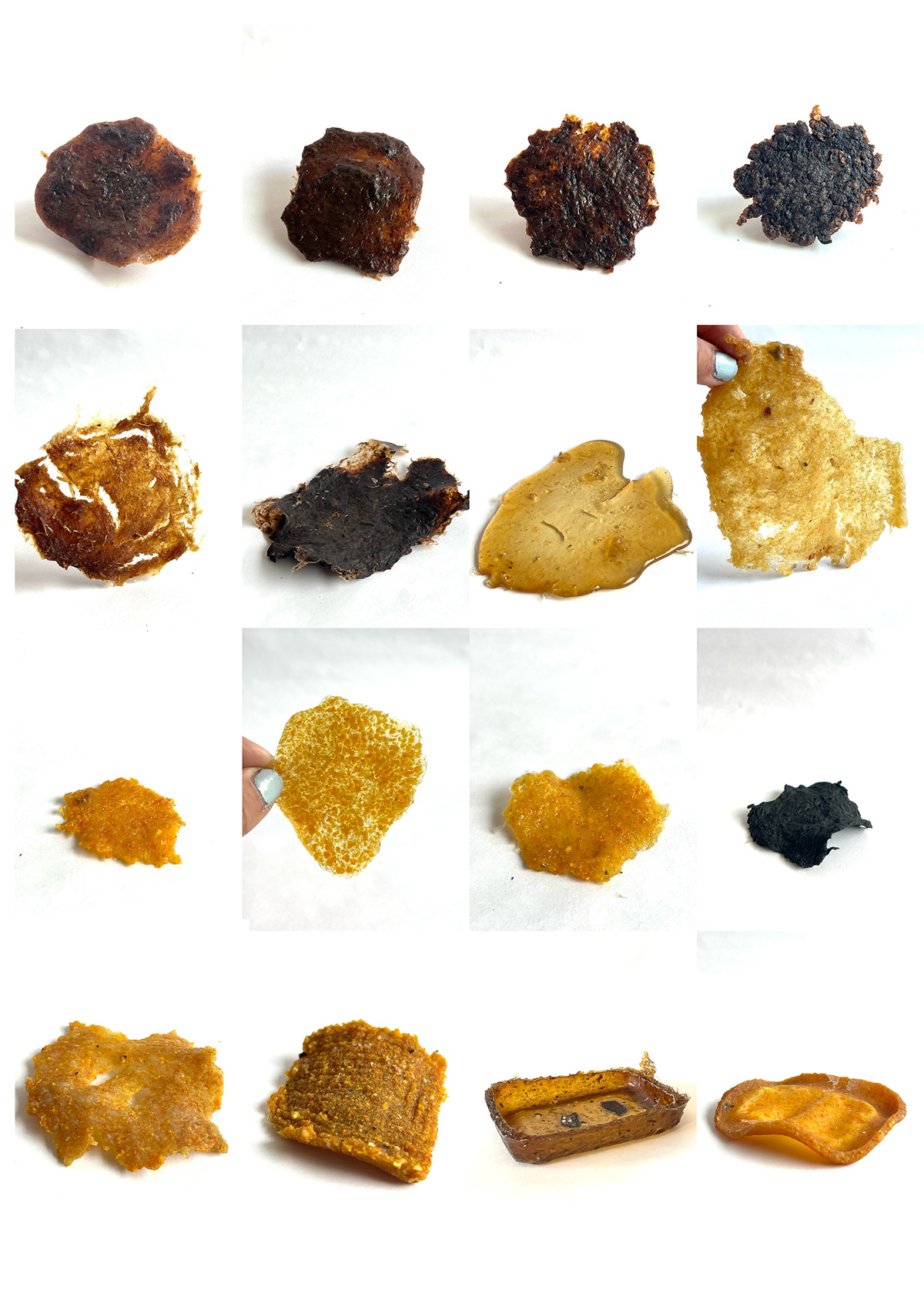
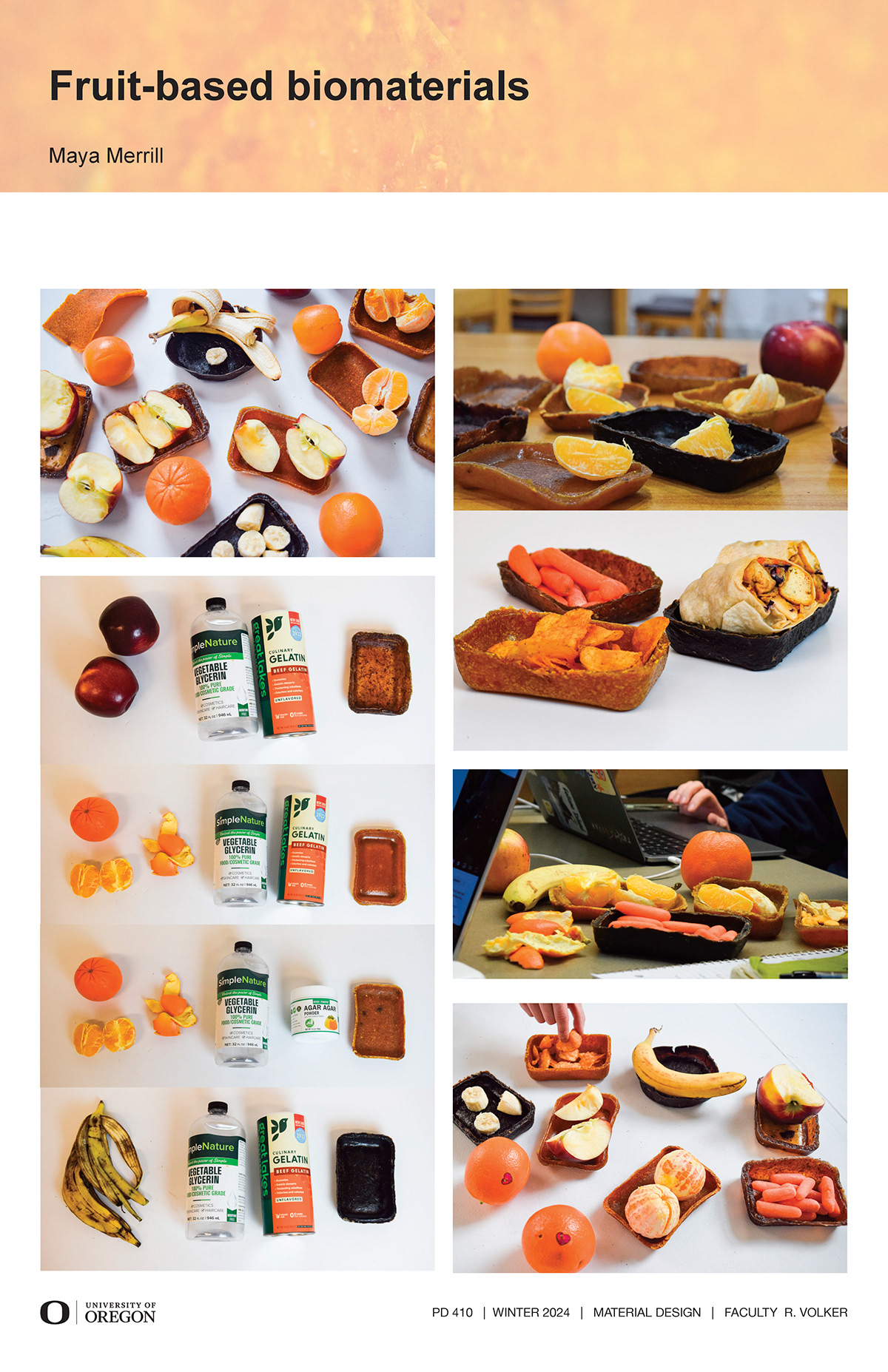
Material experimentation, using various wasted fruit peels and organic ingredients


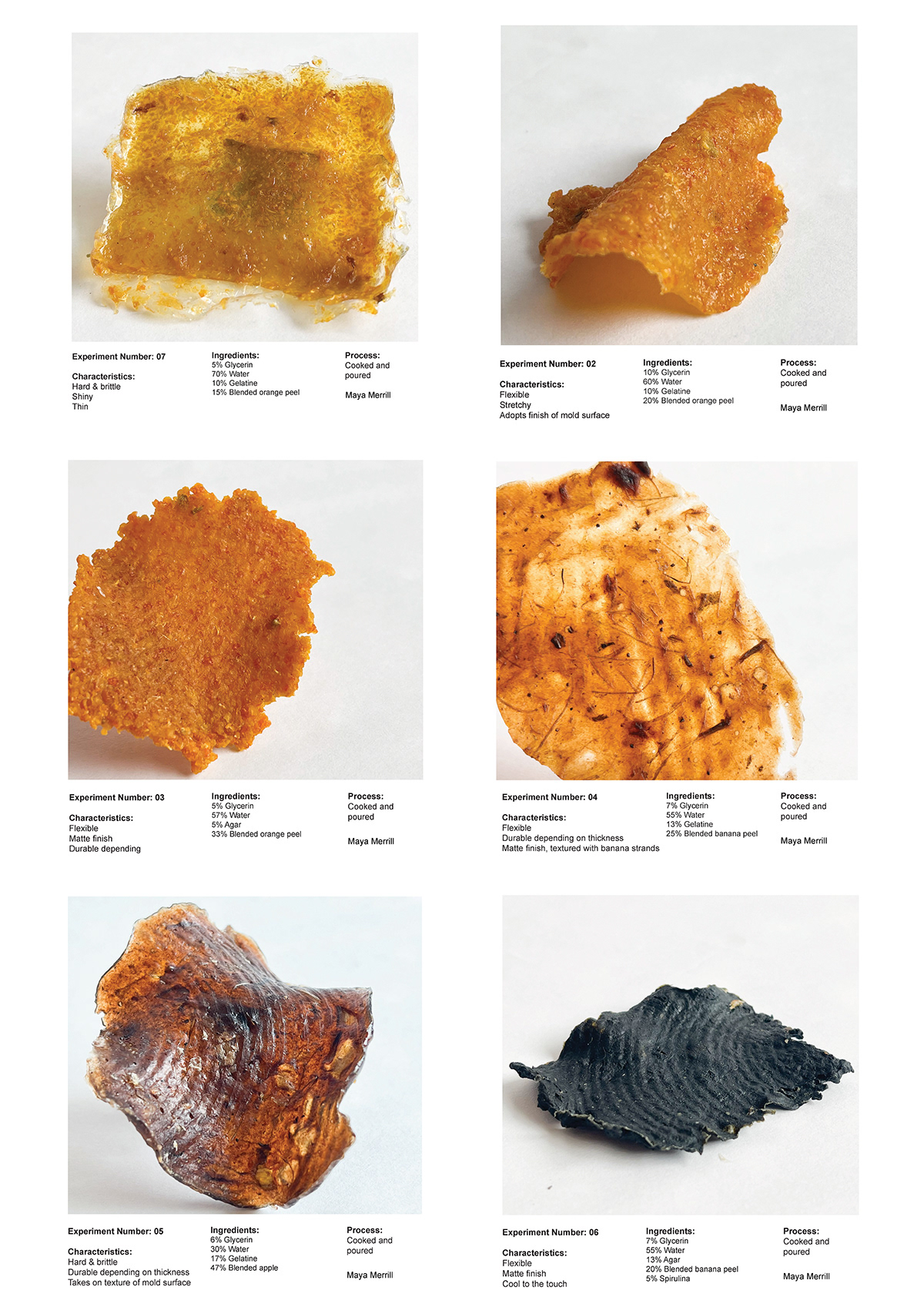
Refined biocontainer material experiment recipes

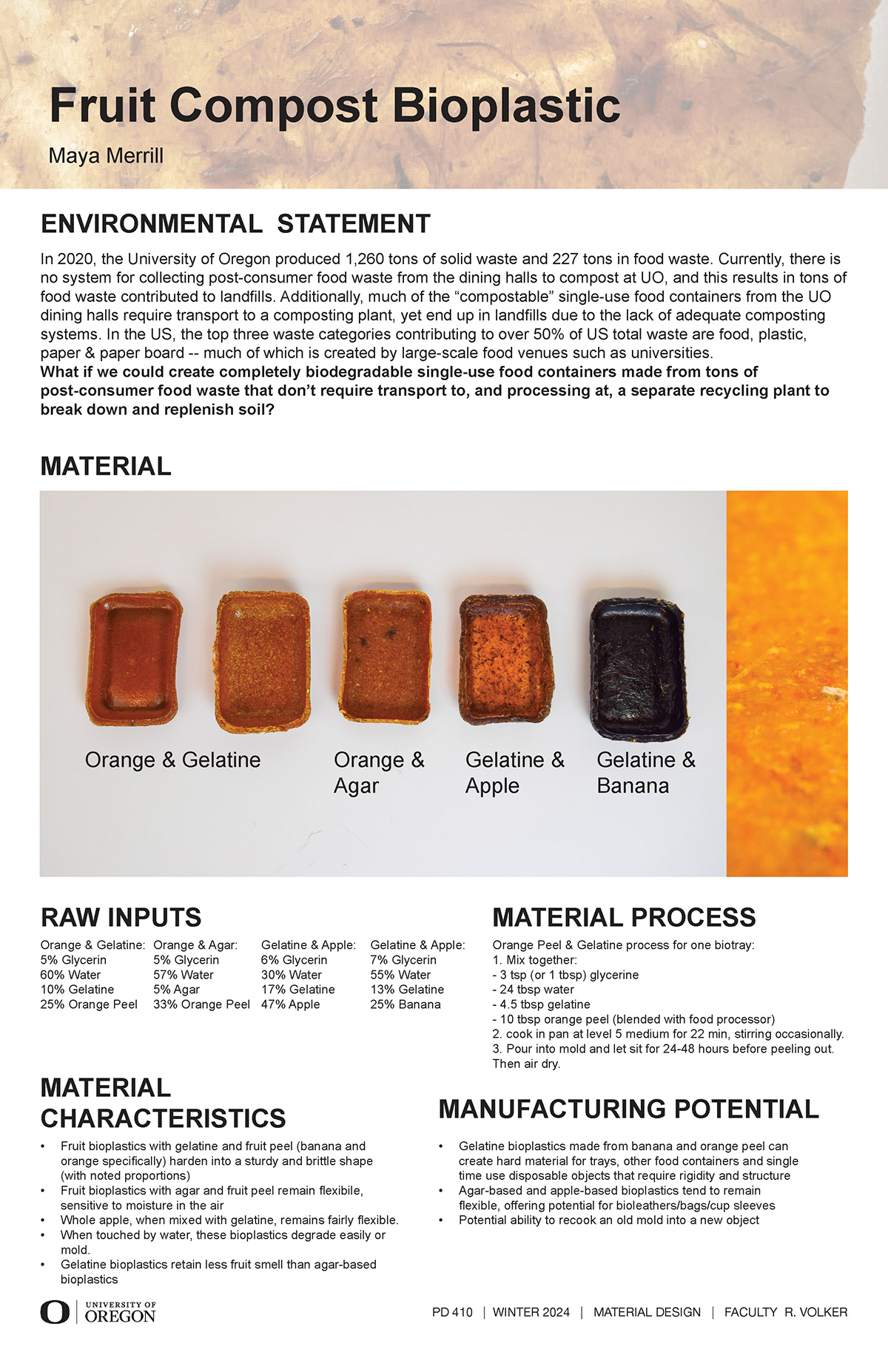
Creating biocontainers


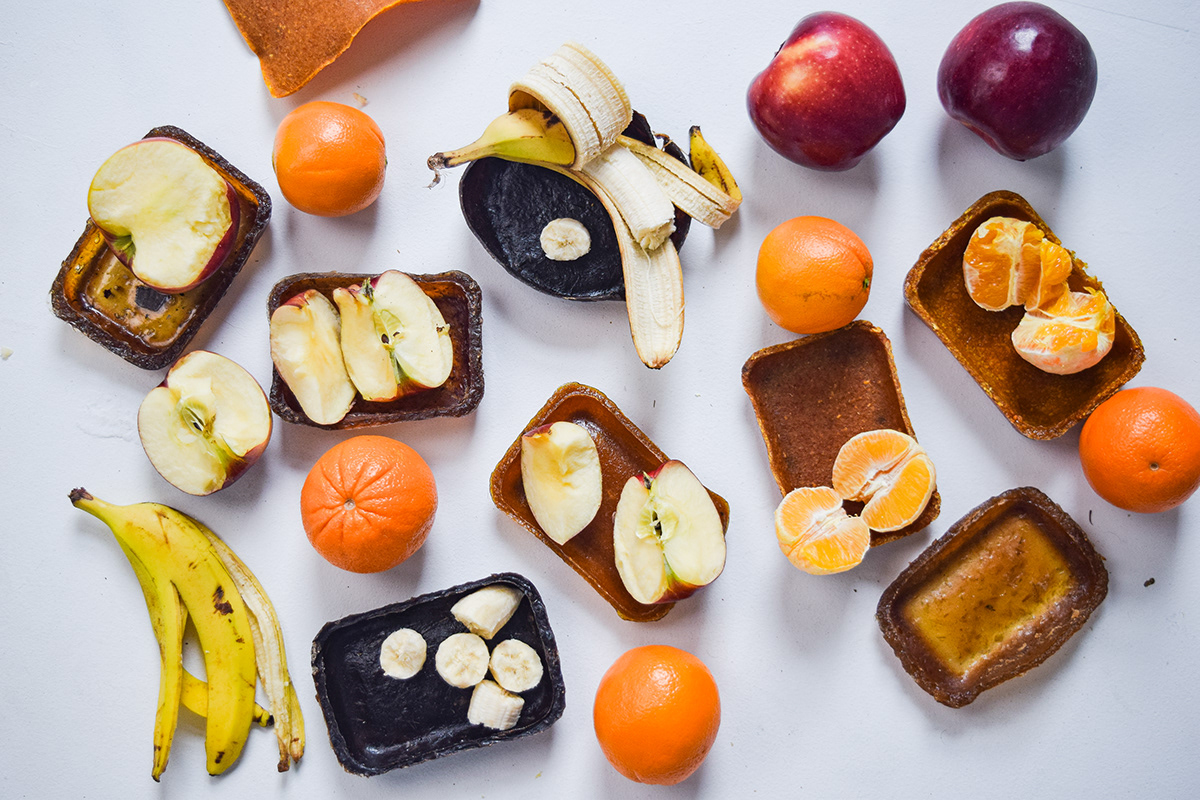
This biocontainer was approved to be composted by Rexius Compost, a local composting facility near the University of Oregon.
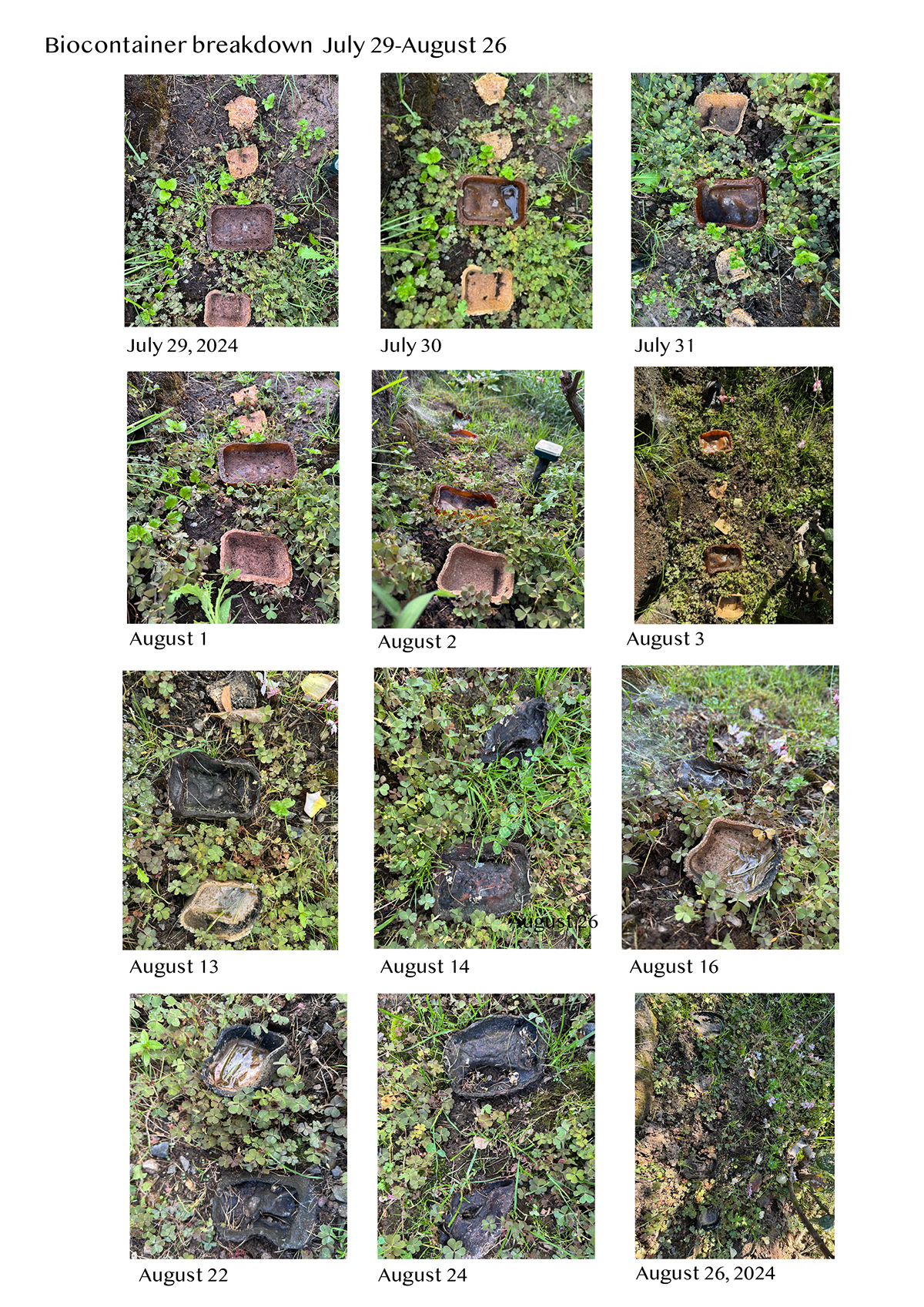
But how long would a biocontainer take to realistically break down, if left outside by students?
Does it need to be transported to a composting facility at all?
I tested the container compost process and found that it almost completely decomposed in less than a month when left outside.


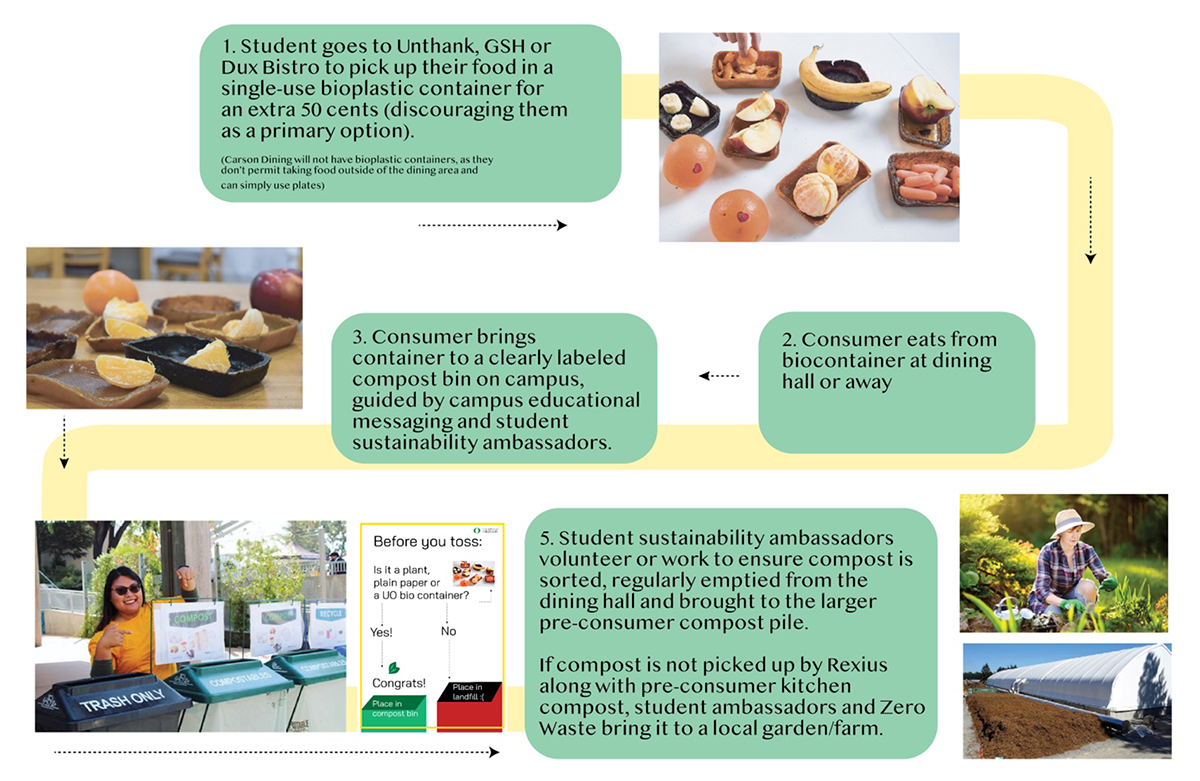
How would this be implemented in the UO Dining system?