Studio work from 'Design Discovery,' a three-week pre-professional architecture intensive program at the Harvard Graduate School of Design. All work is completed as part of a studio under the supervision and direction of Rachel Skof. The studio brief was designed and led by GSD graduates and instructors Chandler Caserta, Inmo Kang, Rachel Skof and Kaitlin Tse.
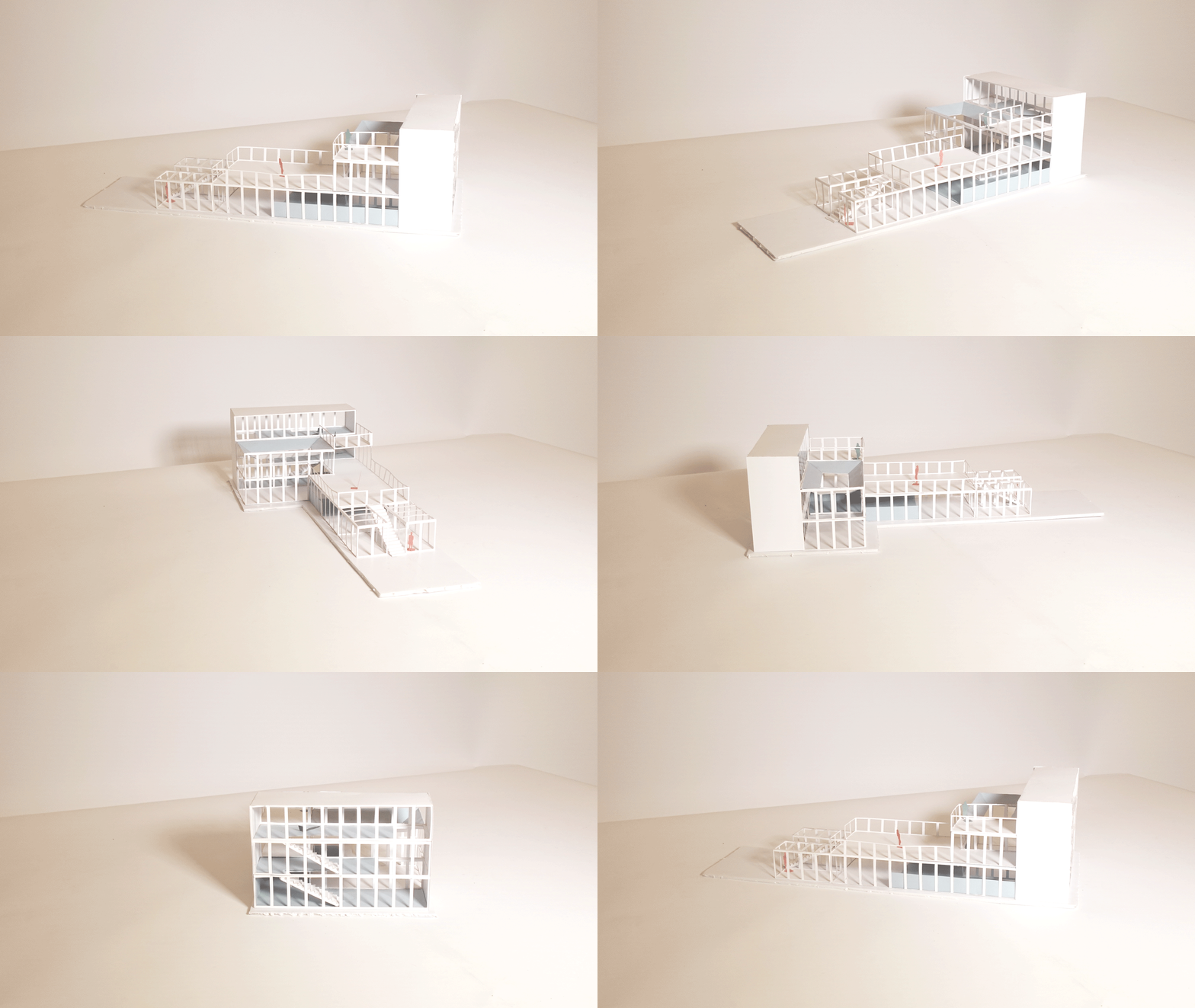
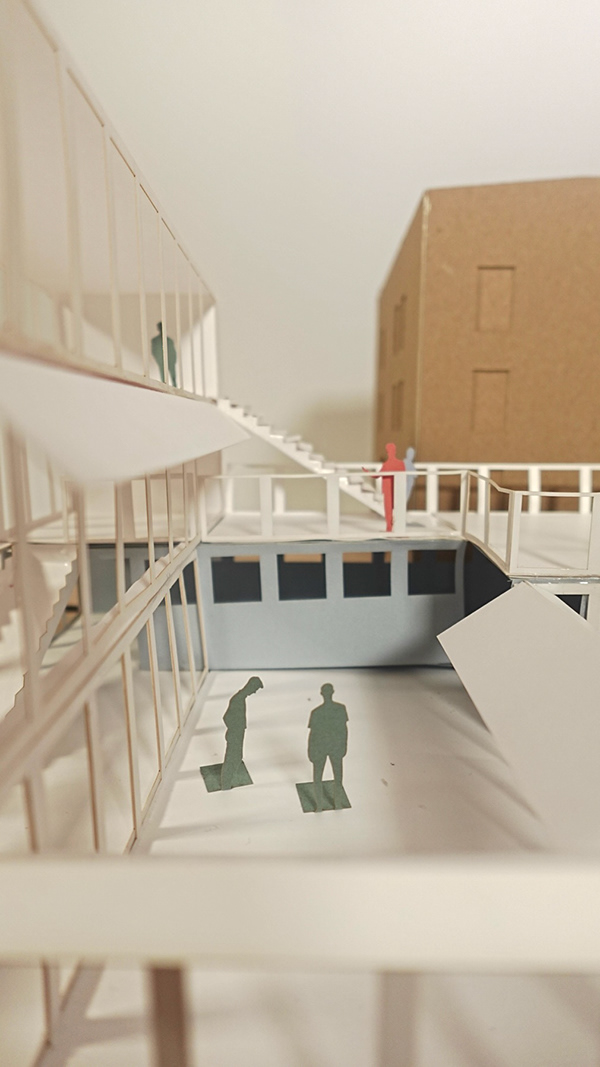
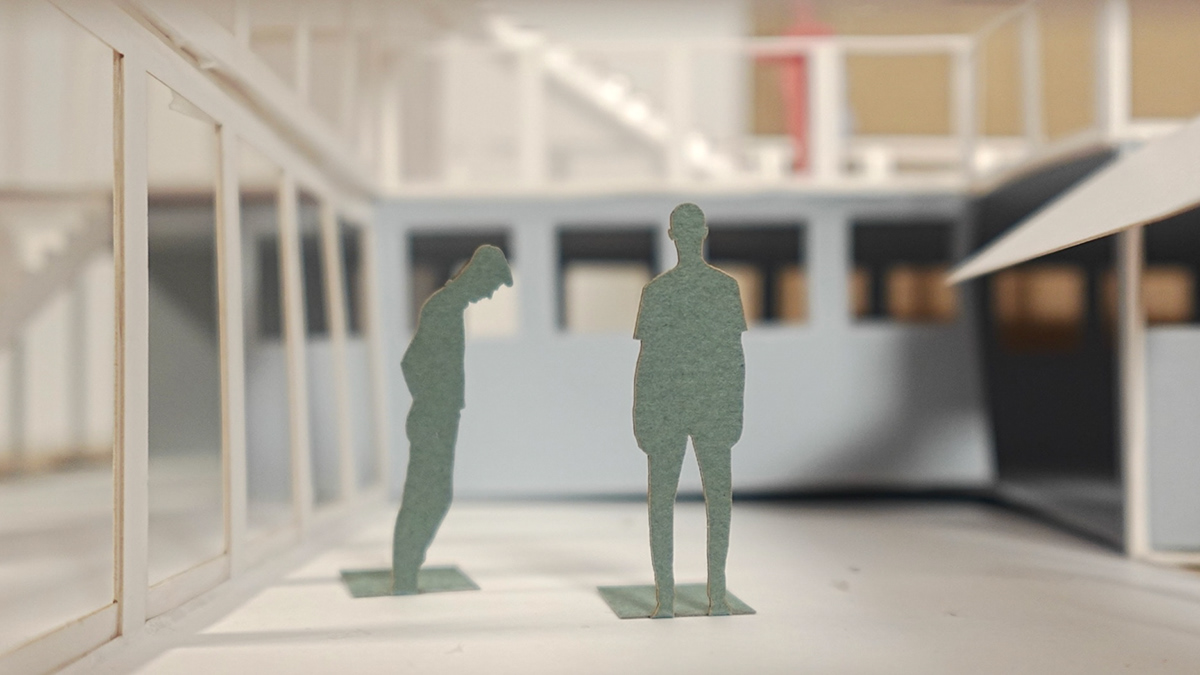
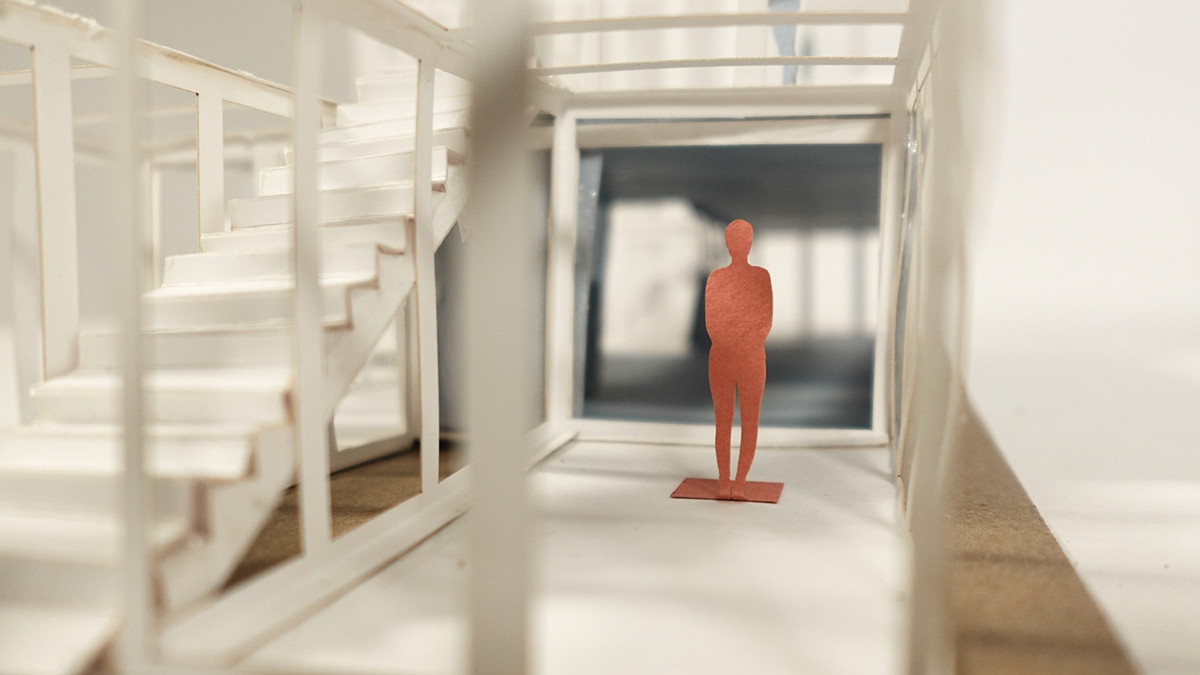
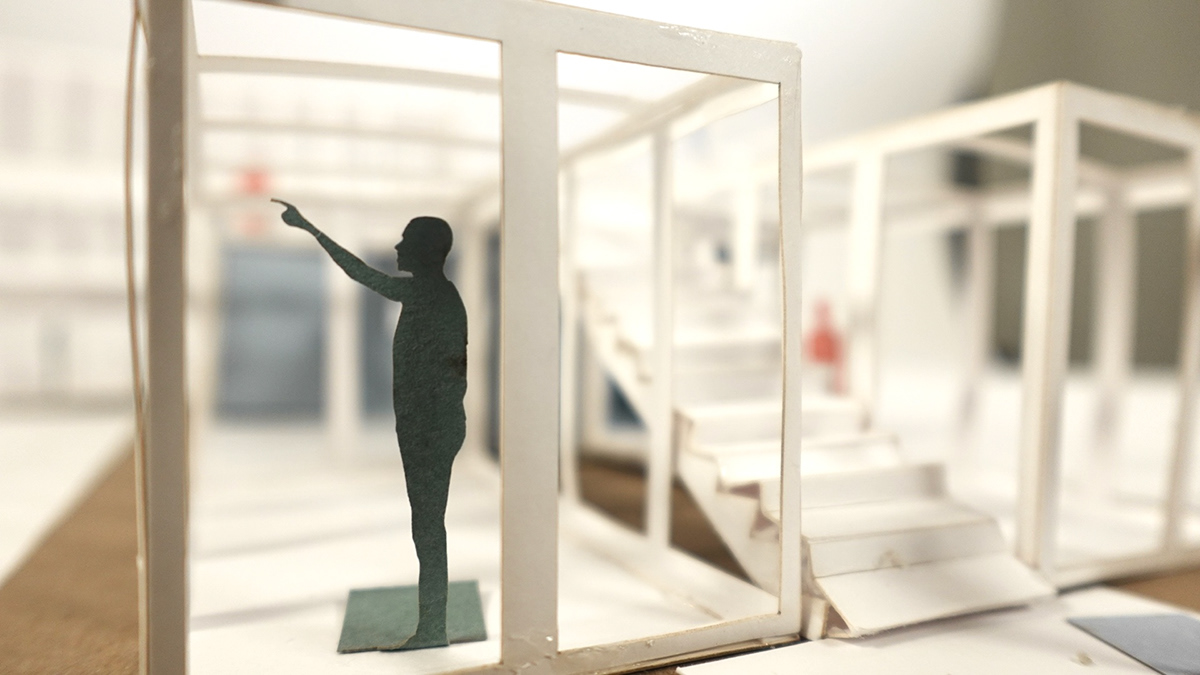
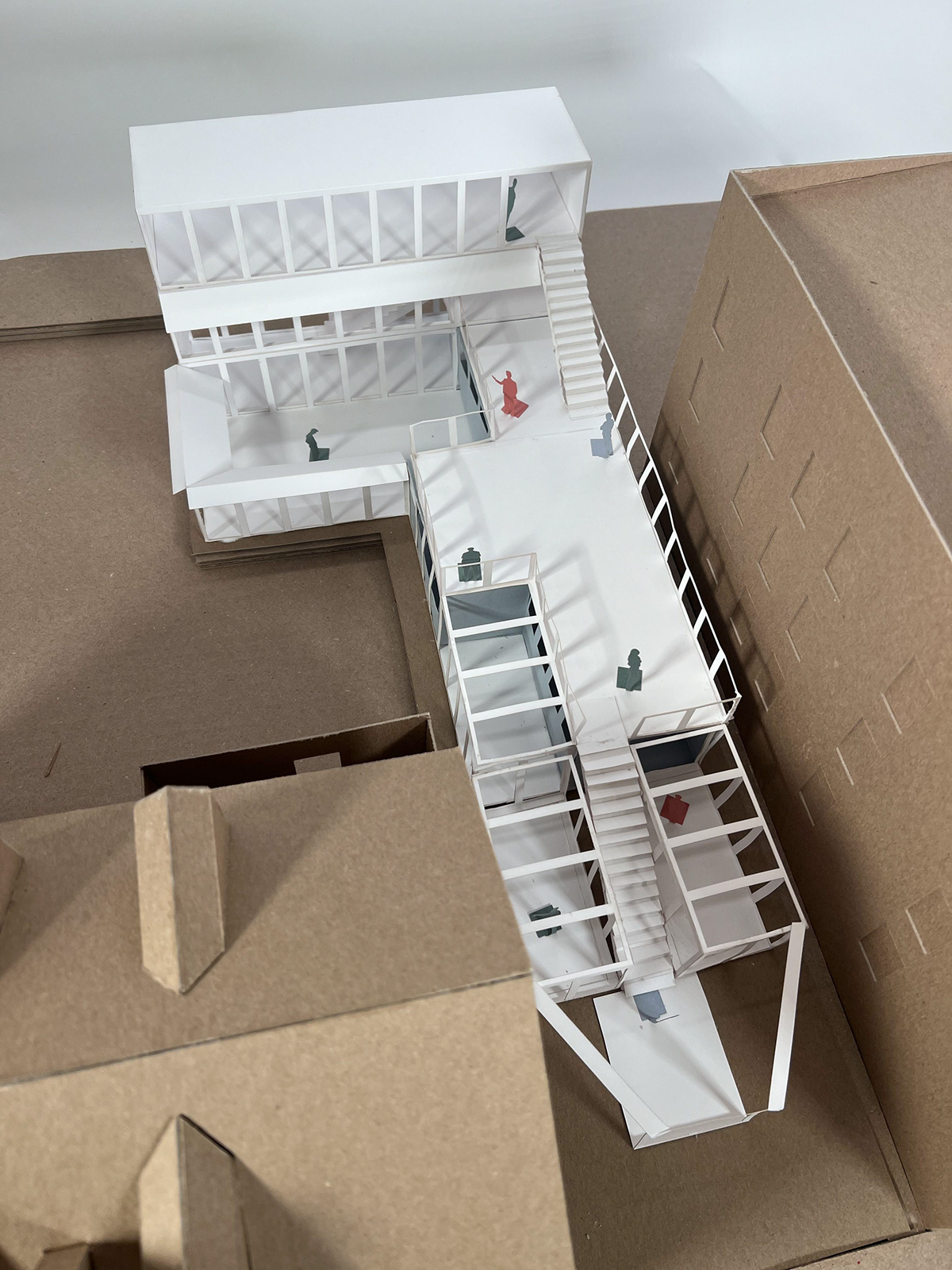
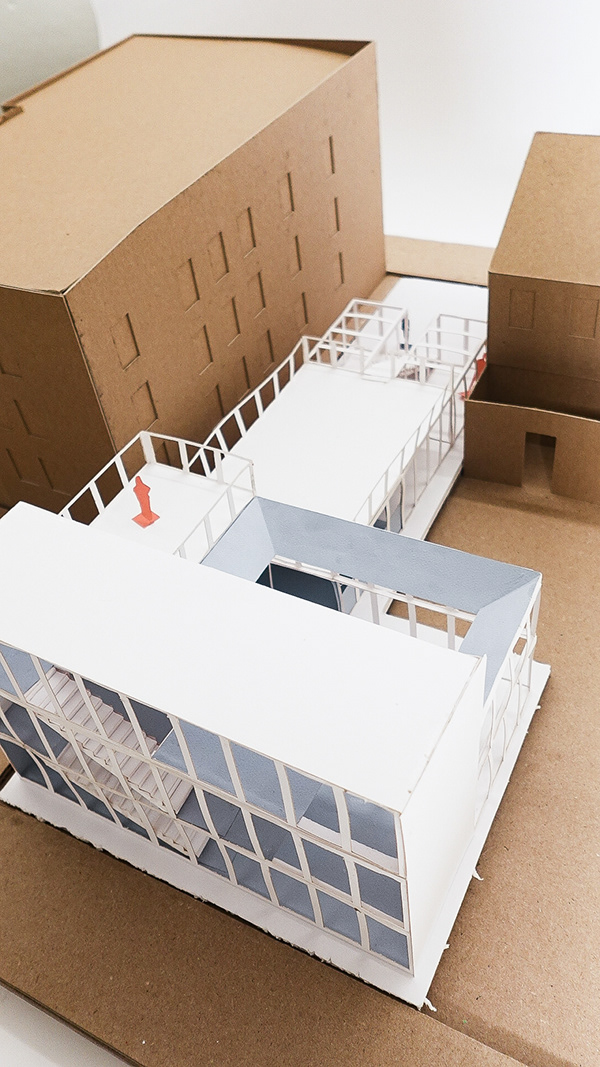
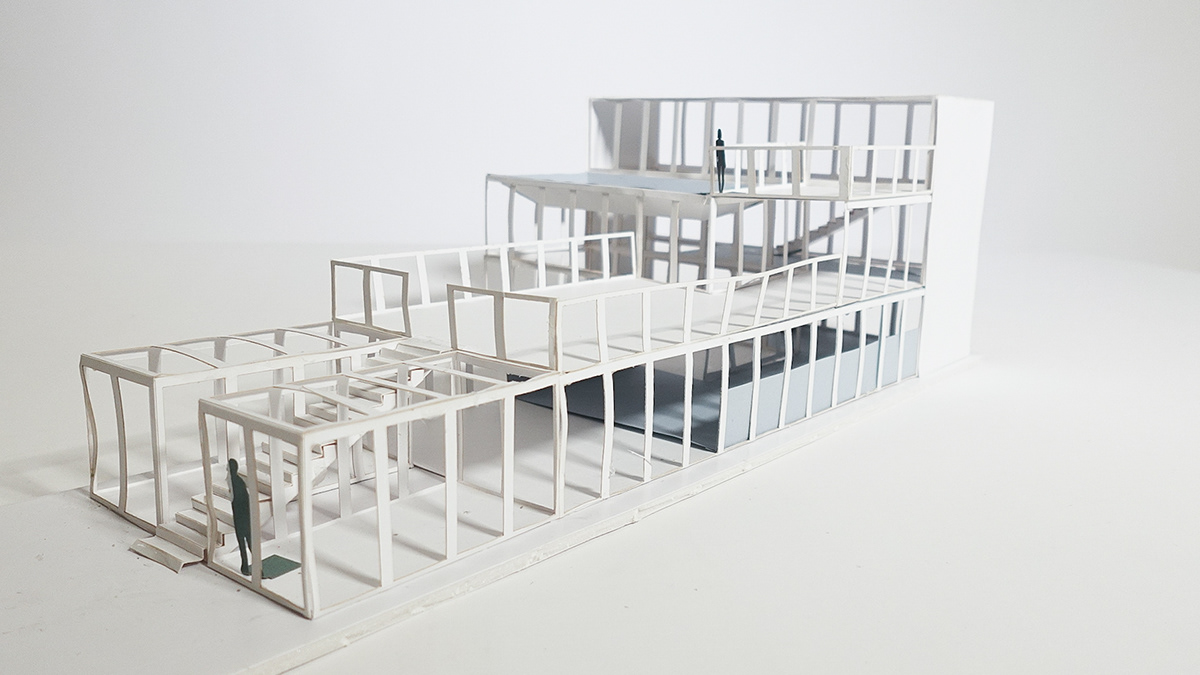
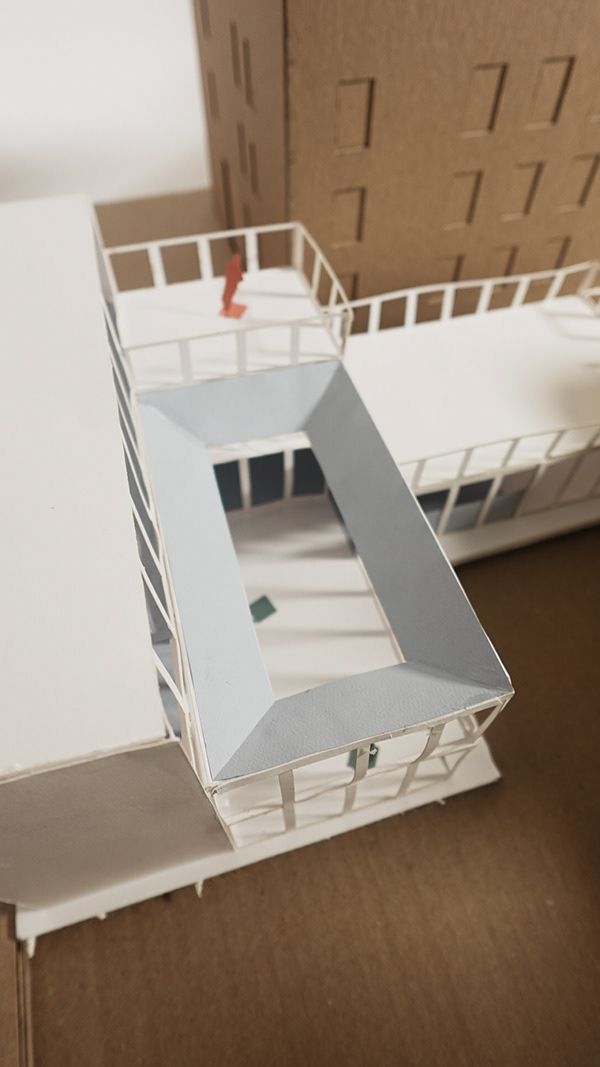
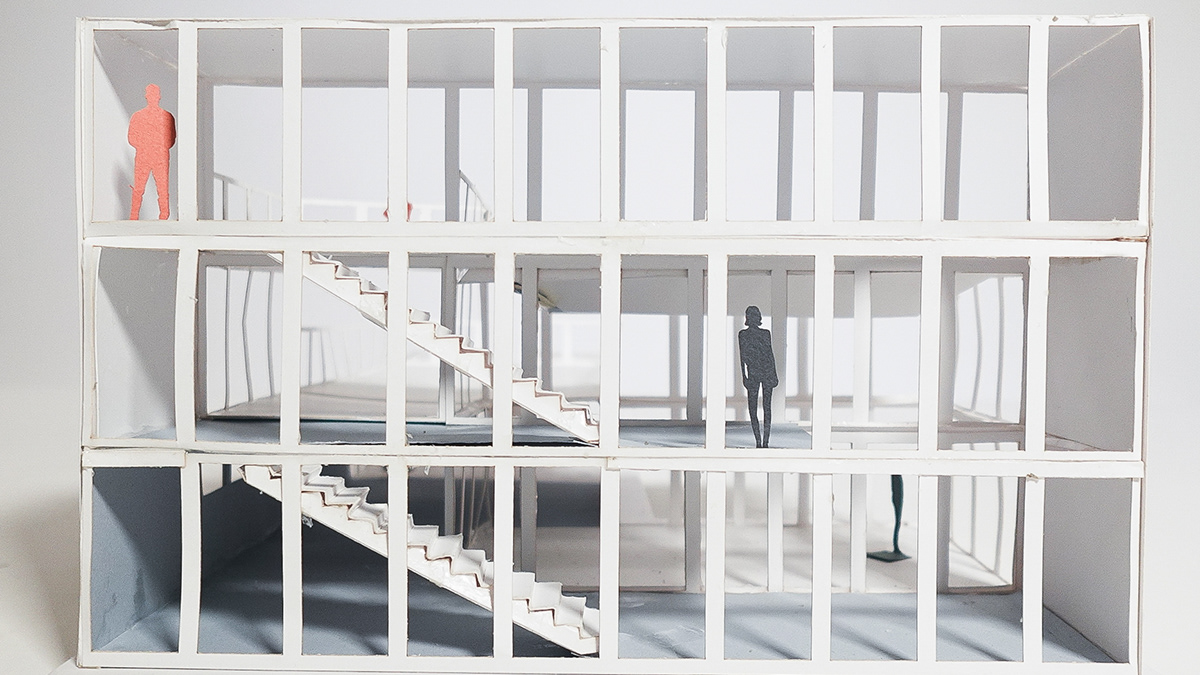
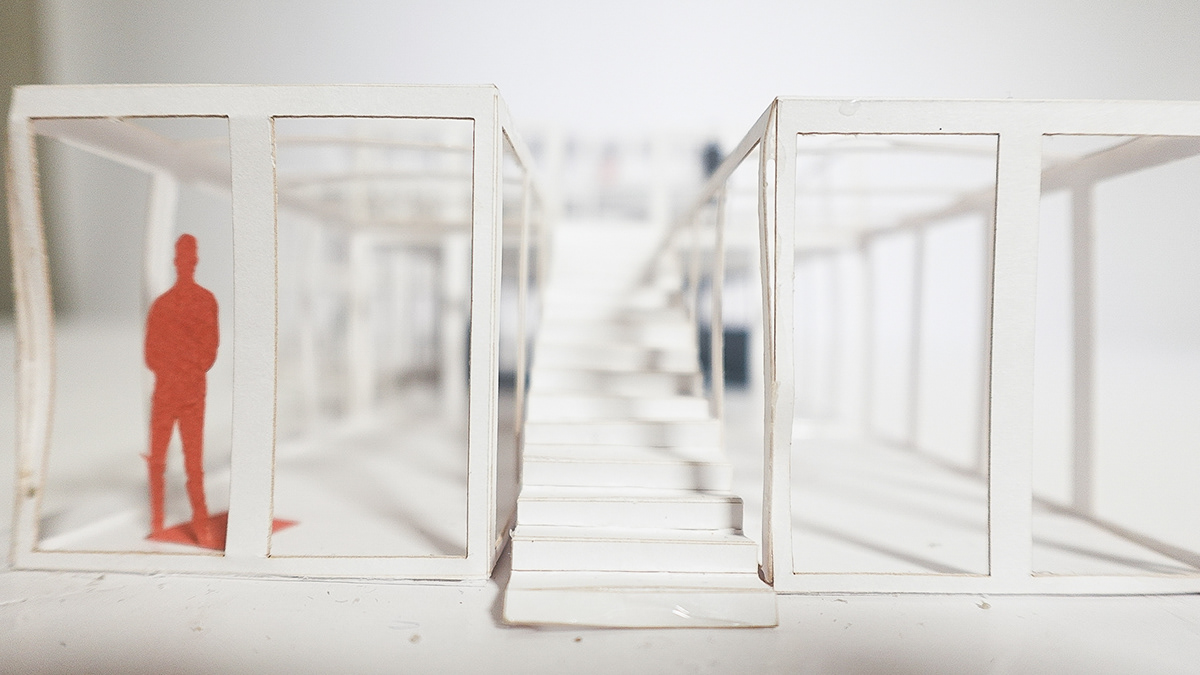
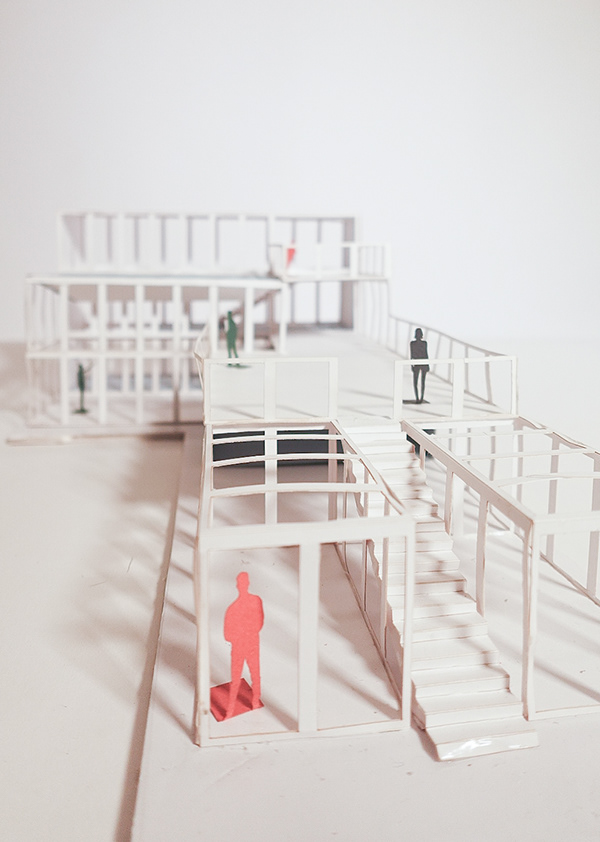
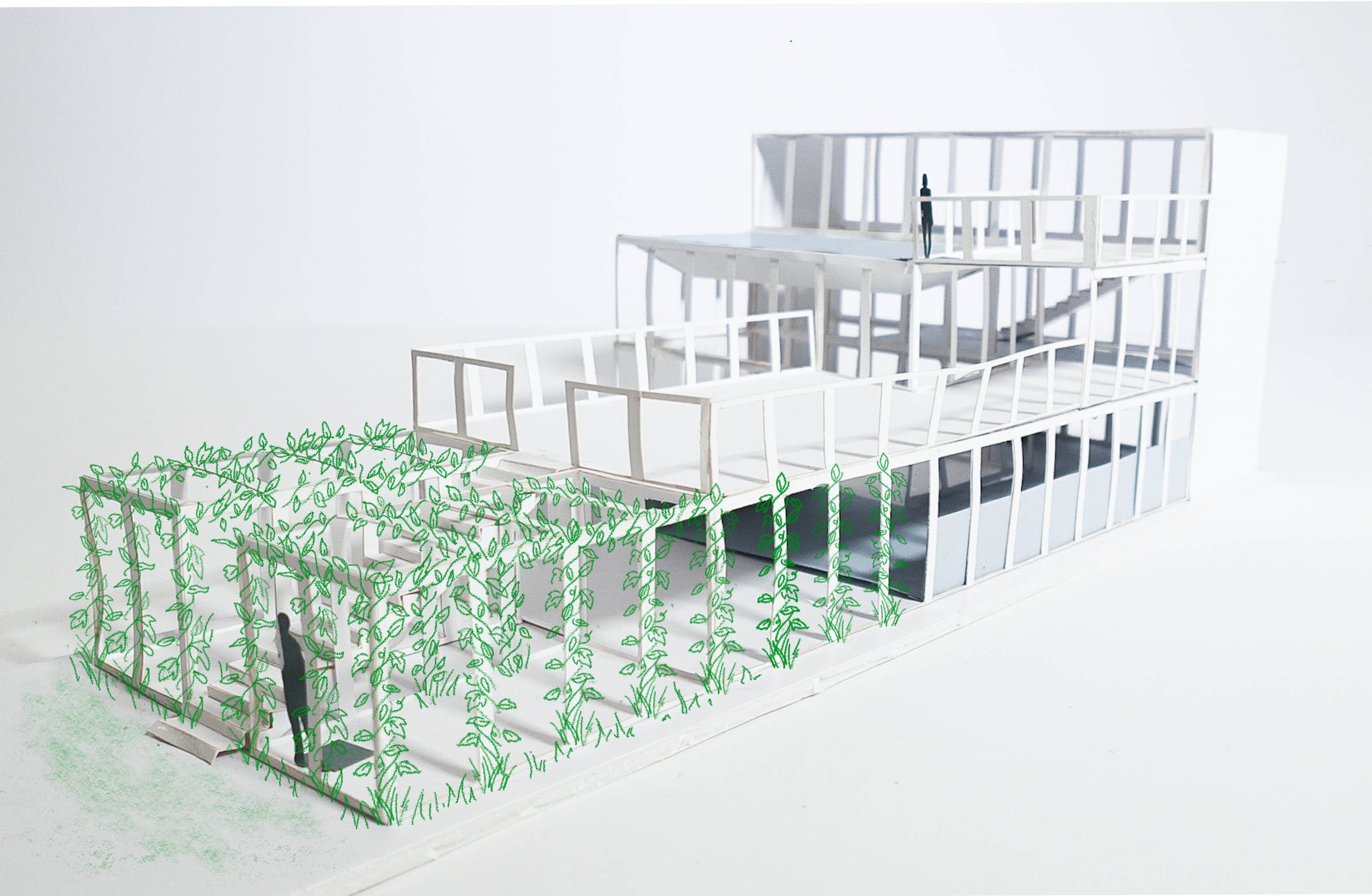
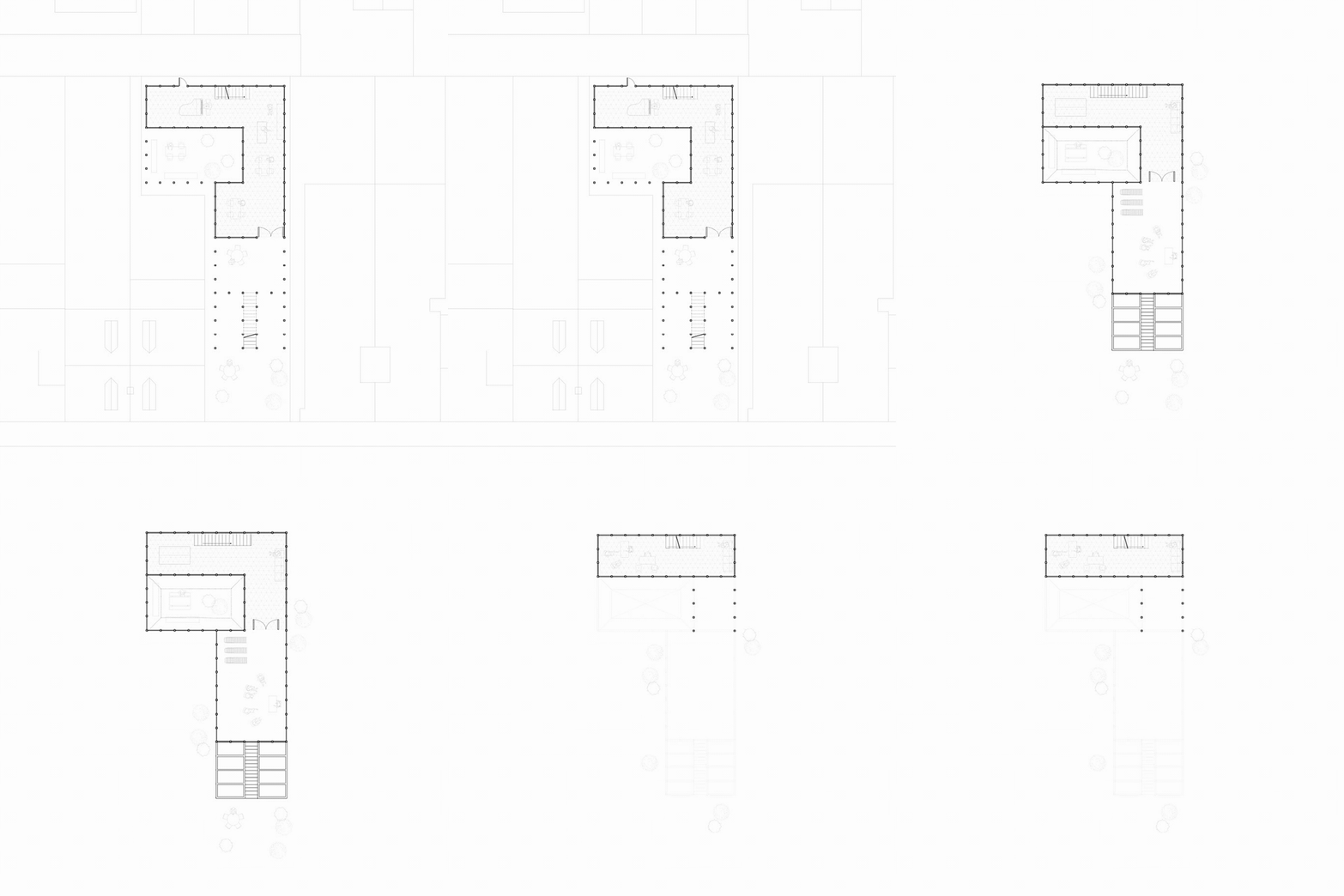
My final prototype, a multi-level pergola-inspired public gathering space.
Designing for the Site: 294 Sumner Street — Eastie Farms
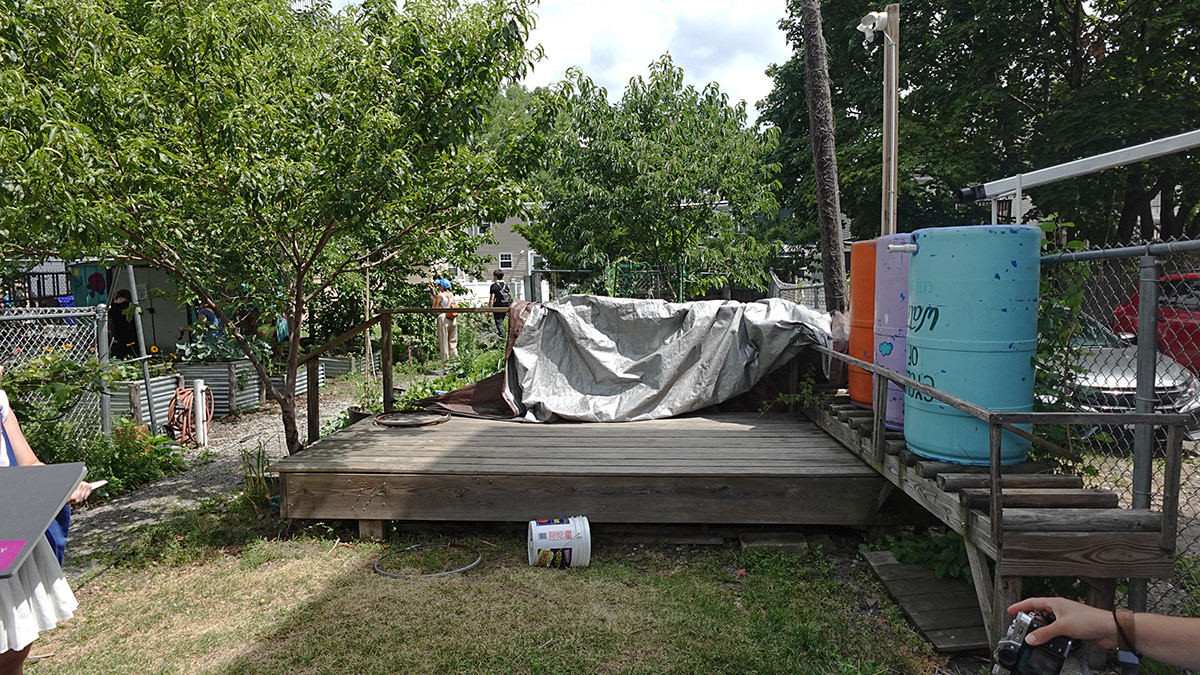
Within the broader context of East Boston, our specific site of investigation is 294 Sumner Street, currently home to Eastie Farms, a grassroots urban farm that already embodies many of the affordance principles we're exploring in this studio.
Eastie Farms demonstrates how a single site can afford multiple forms of collective engagement simultaneously: it affords food production and environmental stewardship, but also affords education through workshops and volunteer days, community gathering through harvest celebrations, and neighborhood identity through its role as a recognizable landmark of local resilience. On this given site, could what we design next similarly afford different forms of modality?
Over three intensive weeks, we'll explore how a small-scale architectural proposal can maximize its social return on investment. In our four studio groups, we will work through three sets of iterative exercises, understanding how our small commons has the potential to produce maximum collective bang for buck.
— written by studio instructors Chandler Caserta, Inmo Kang, Rachel Skof and Kaitlin Tse.
Sketching Affordances of the site & surrounding areas
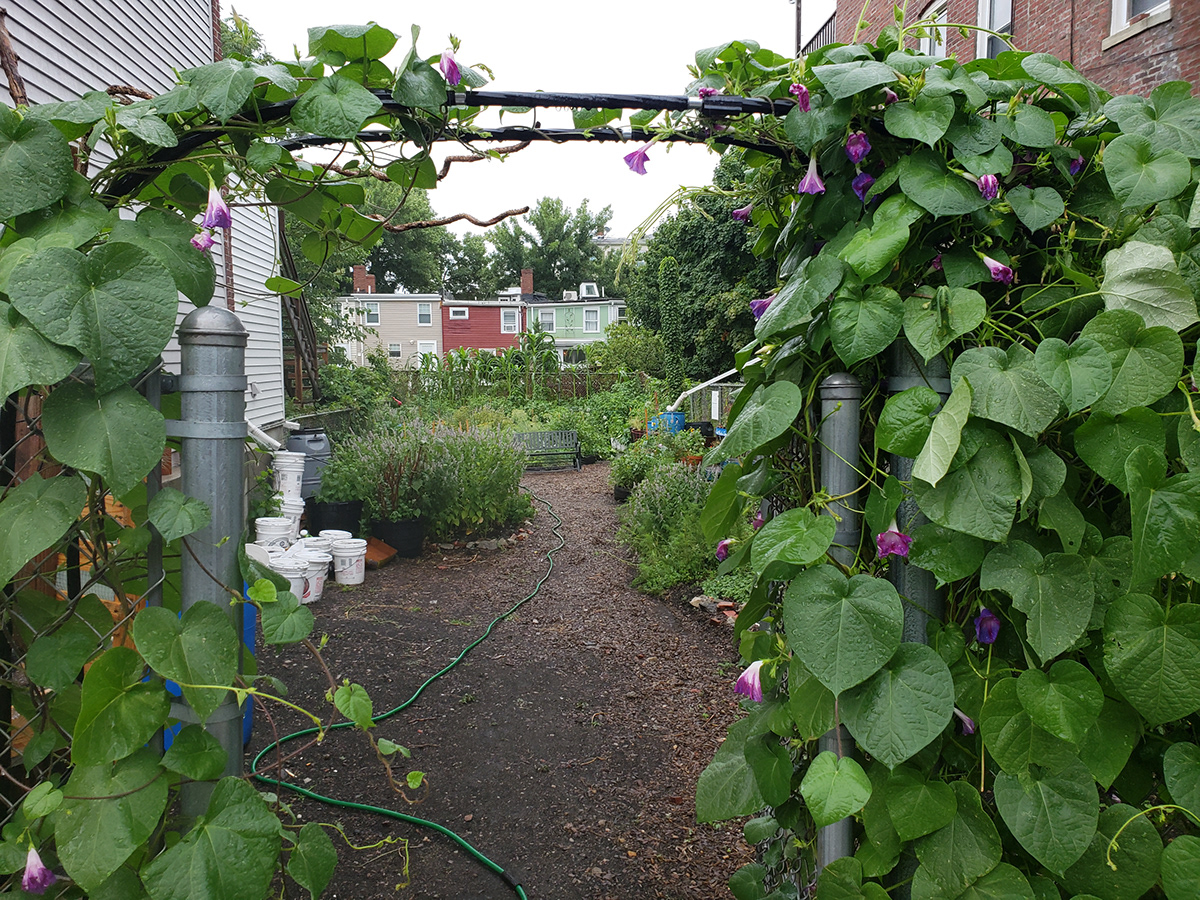
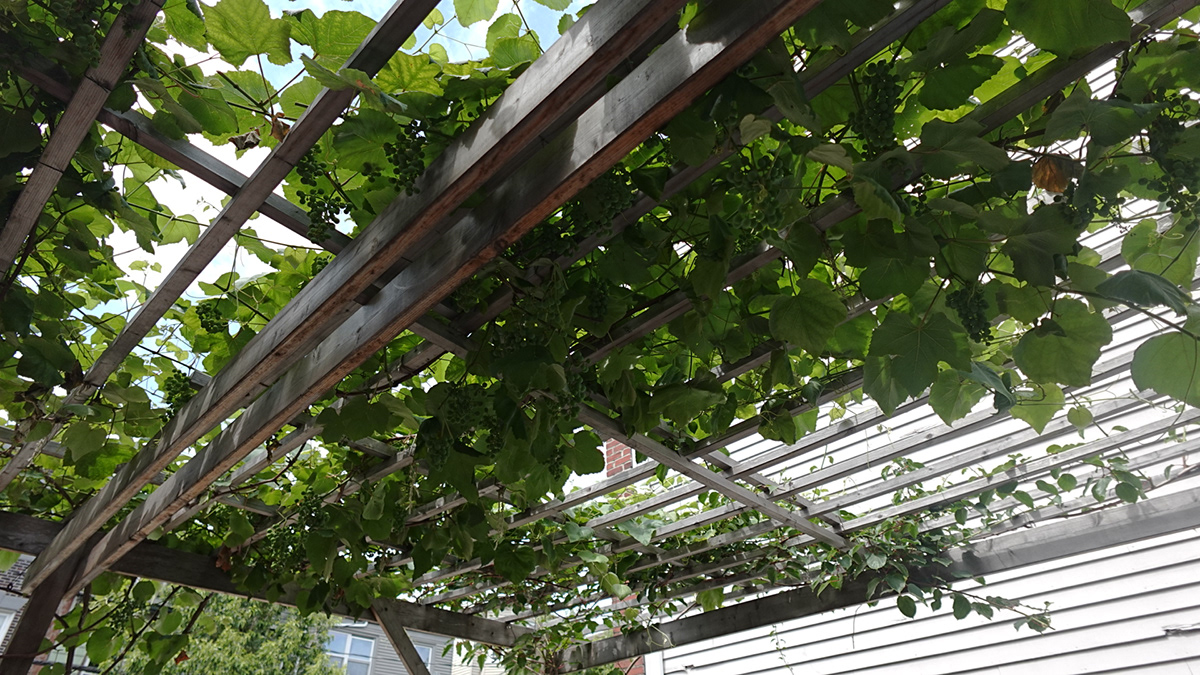
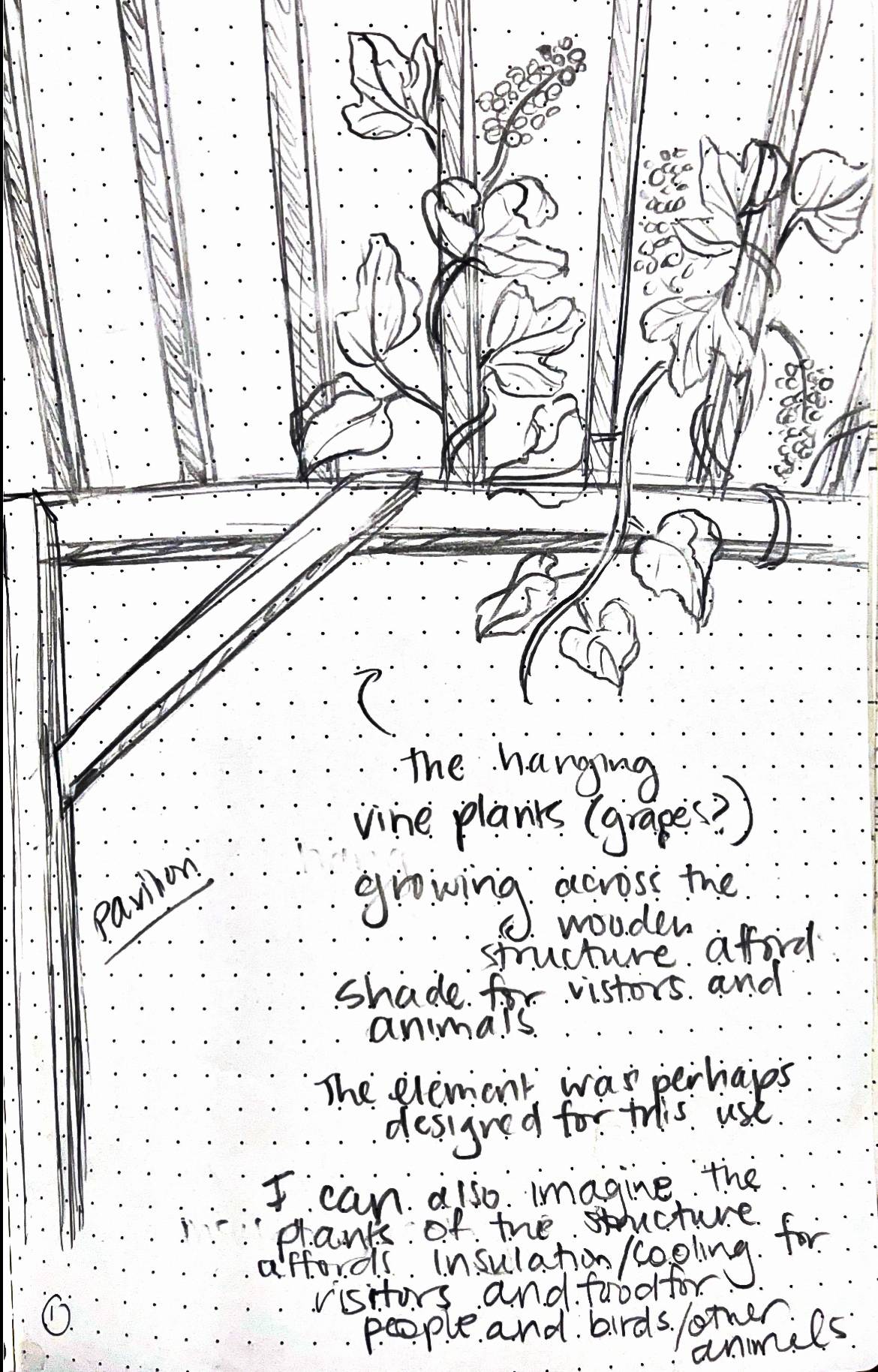
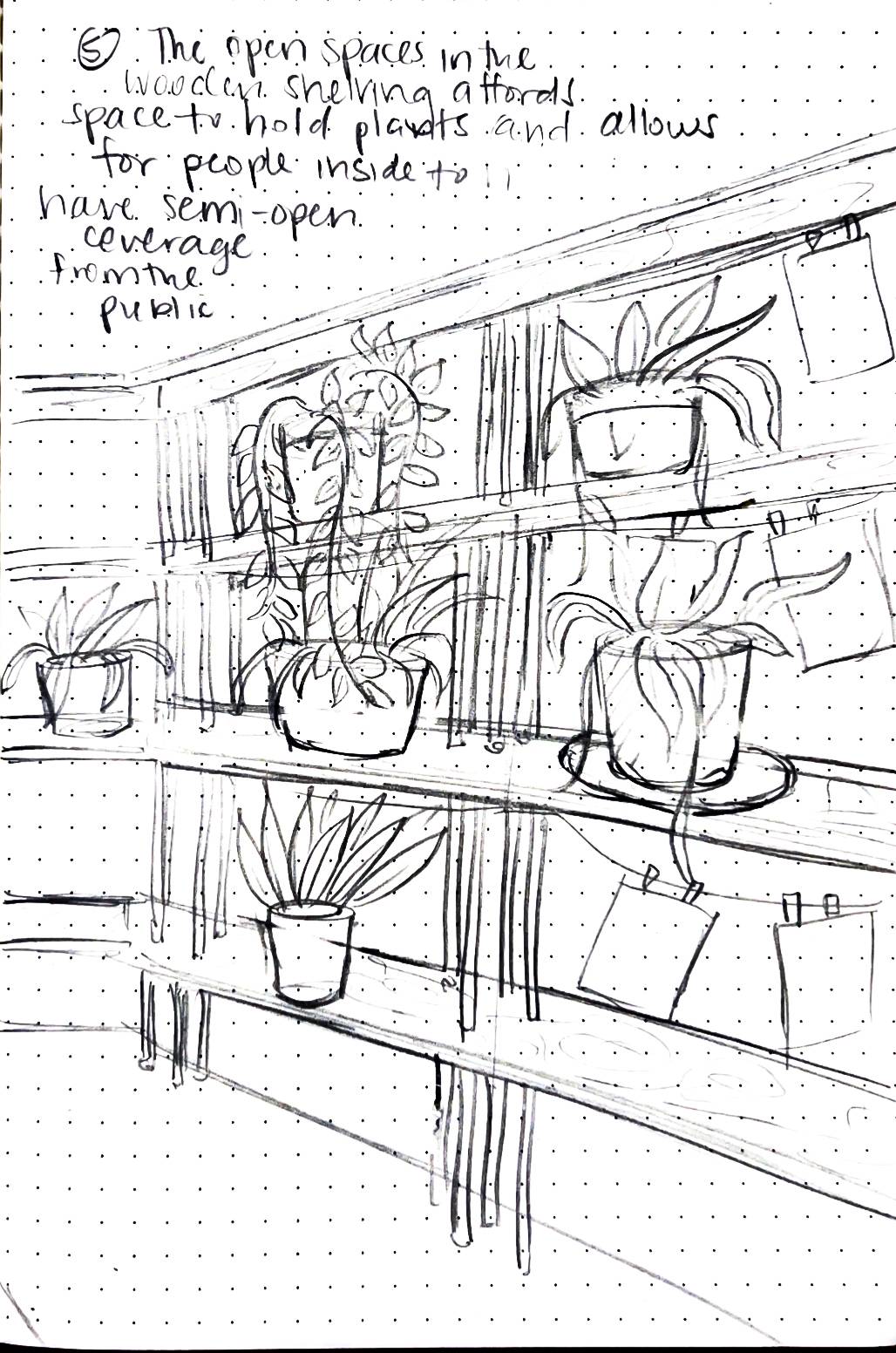
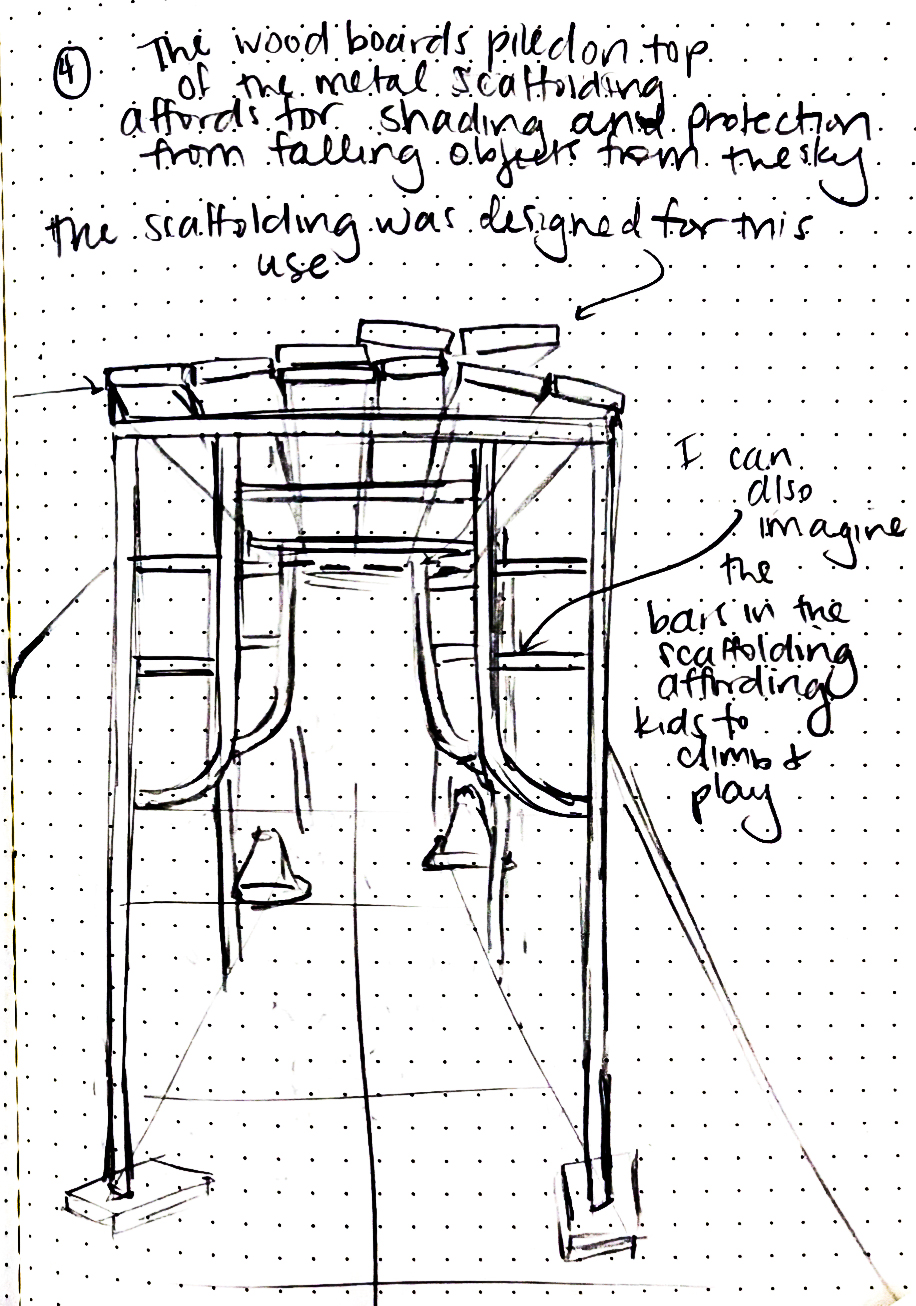
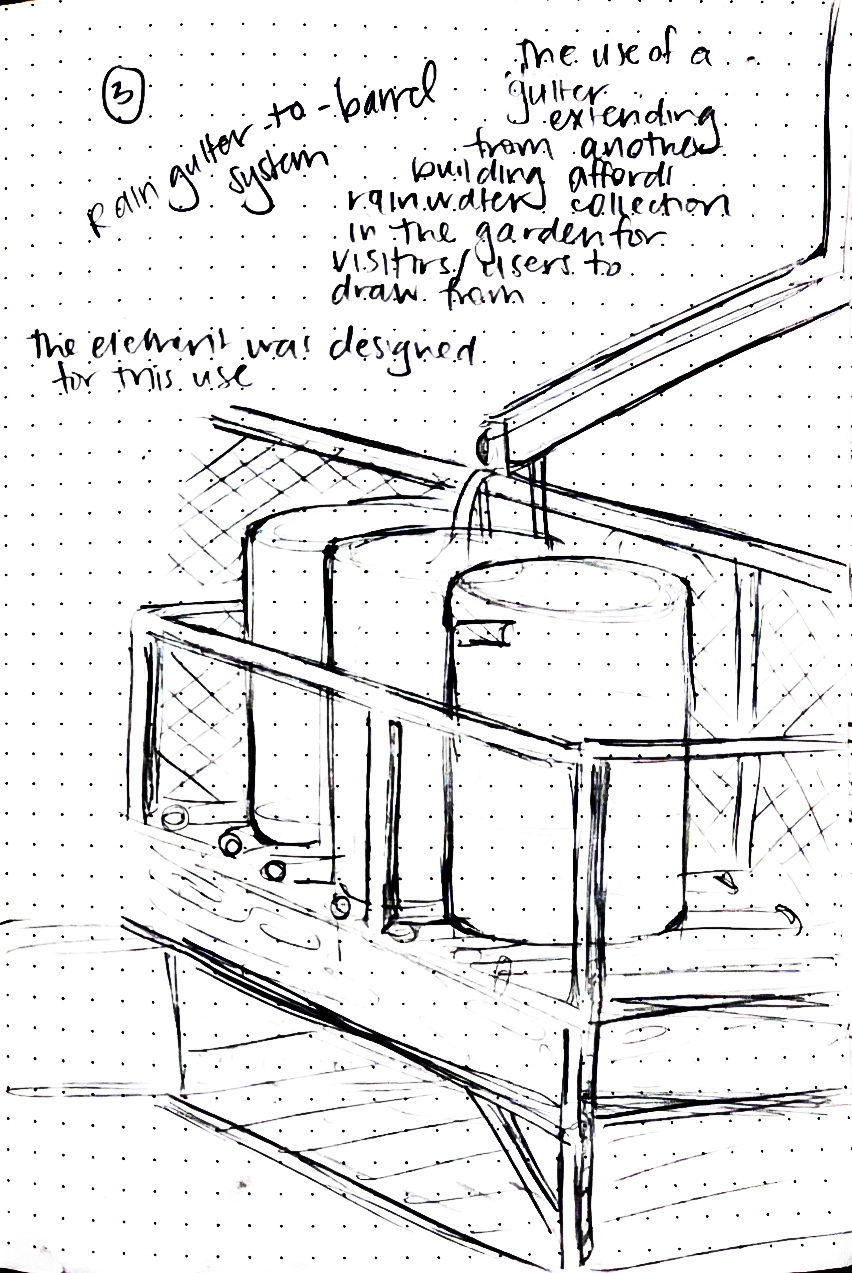
During our visit to the site and surrounding areas, we sketched the "affordances" (features that already encourage a certain type of behavior or use) in order to find elements we could enhance with our design. I noted the use of shading already afforded by the pergola and plants on the site, the porous boundaries using stacked shelves and plants in a nearby cafe, the adaptive shading created by simple structures like scaffolding and the vertical watering system from a neighbor's rain gutter.
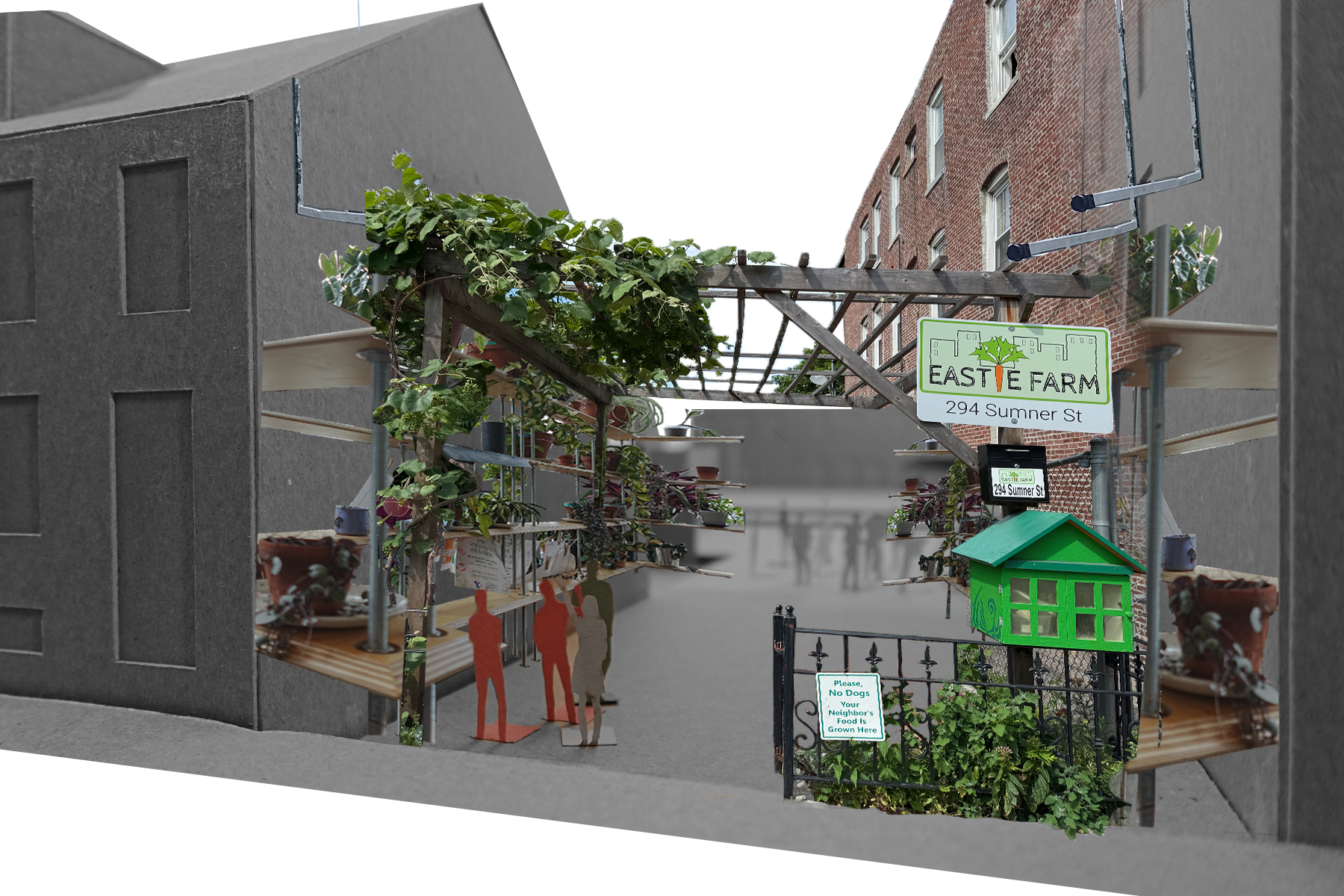
'Reimagining Eastie Farms' Collage
Various elements in and around the site I noted and collaged together based on their affordances. Made in Adobe Photoshop.
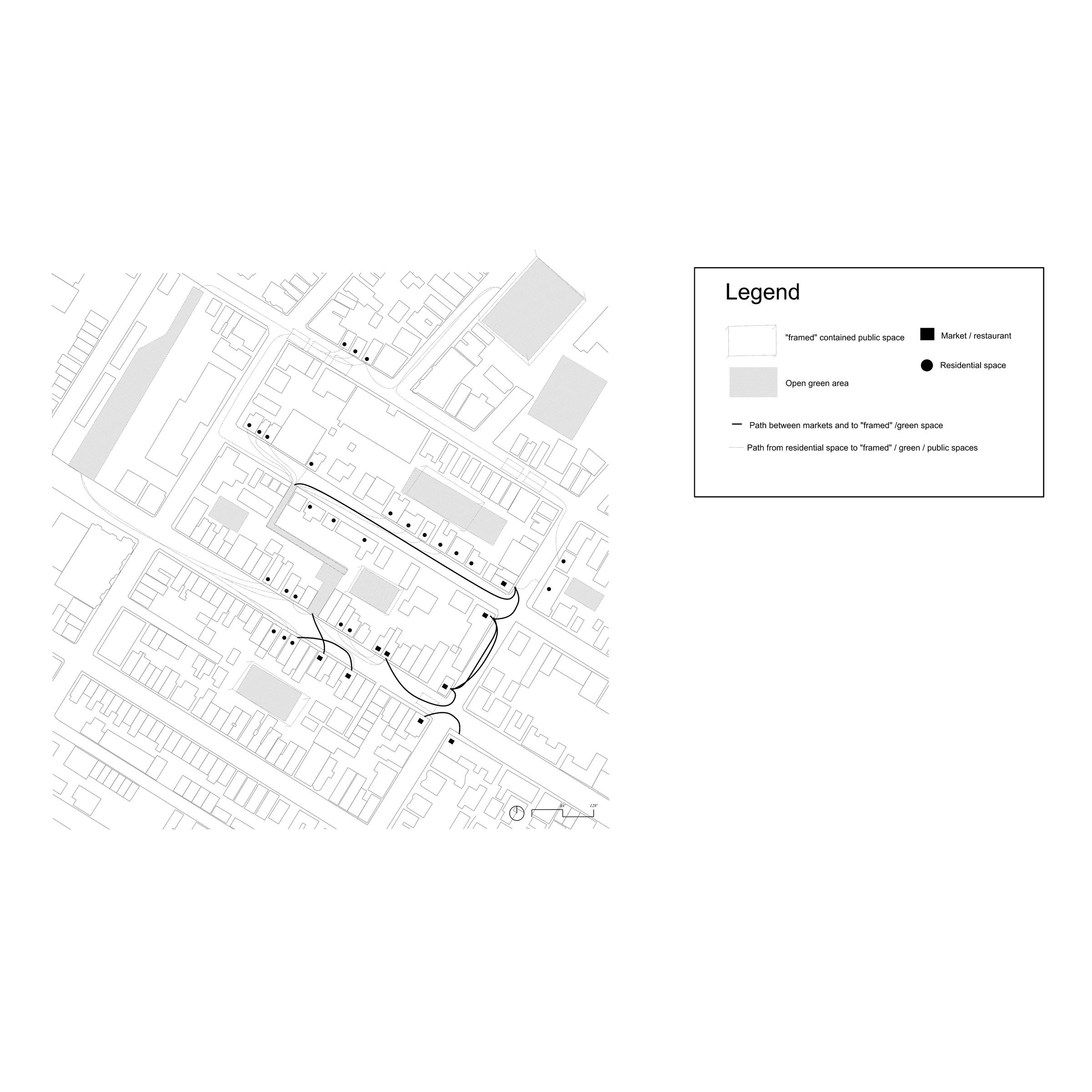
Site Map Analysis of Eastie Farms
In my site analysis of Eastie Farms, I focused on identifying similar nearby areas where framed spaces for collective gathering already exist. I found that the surrounding neighborhood areas had common places for completing daily tasks, such as markets and restaurants. However, these areas had limited seating and lacked intentional open areas for collective gathering. Eastie farms was one of the few areas designed for collective gathering, where members in the community could connect in a shared space with some form of shelter provided. This pushed me to maintain the spirit of Eastie farms as an open gathering area, with boundaries acting more as fences than walls, to invite others in.
Thrifting for Forms - Architectural Precedents Analysis
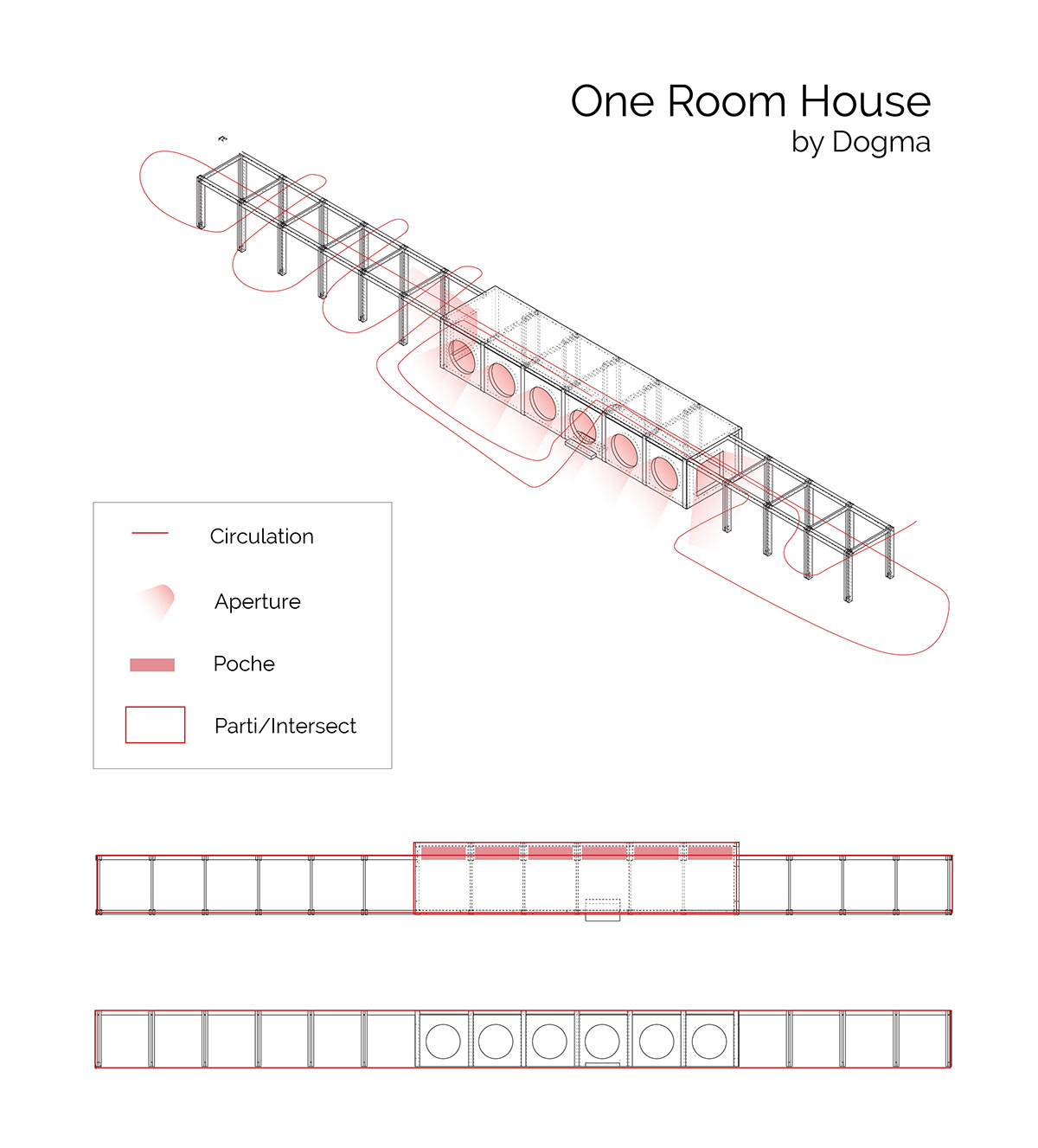
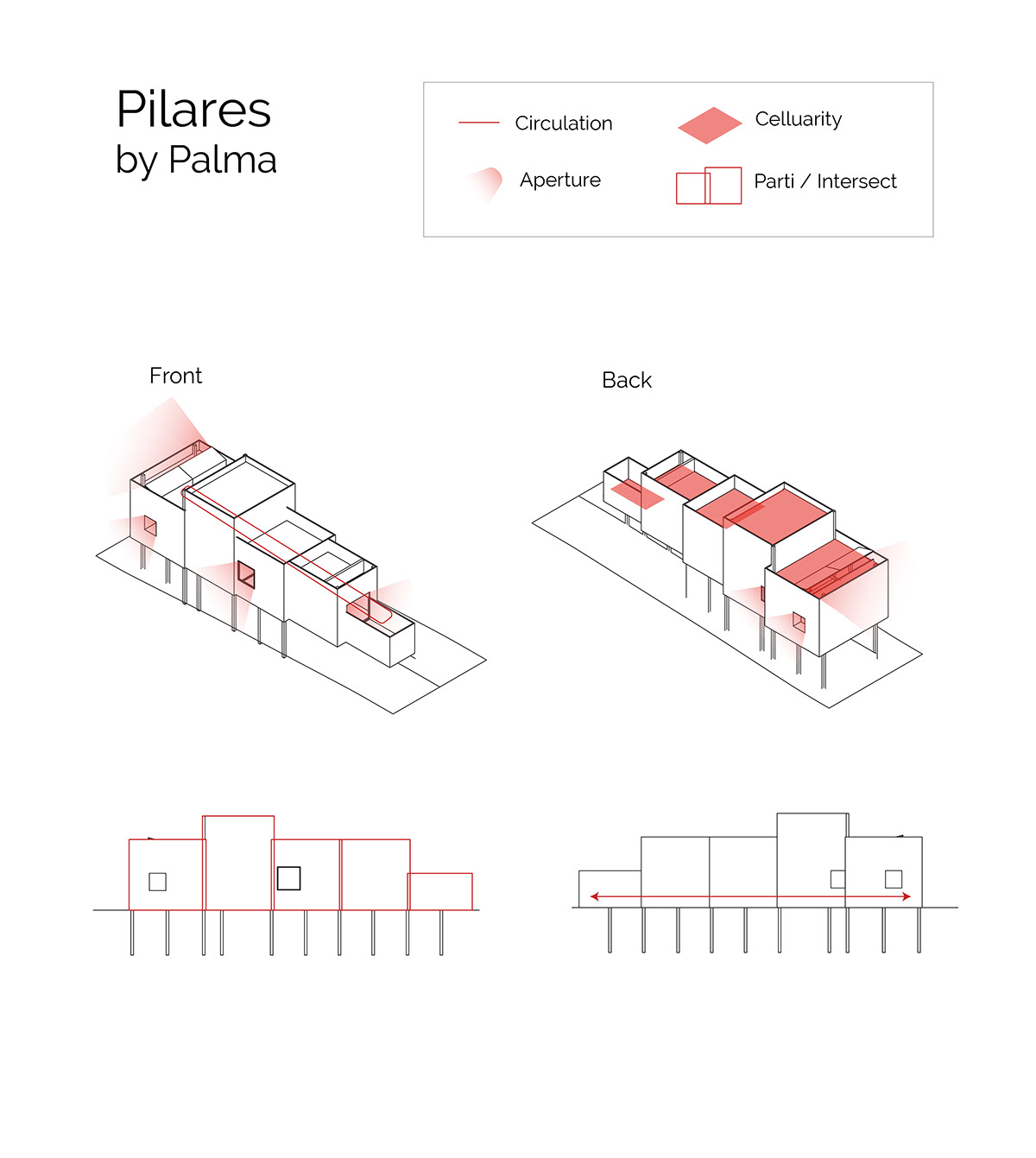
As part of my design research, I analyzed two architectural precedents from which to draw elements to incorporate into my site redesign.
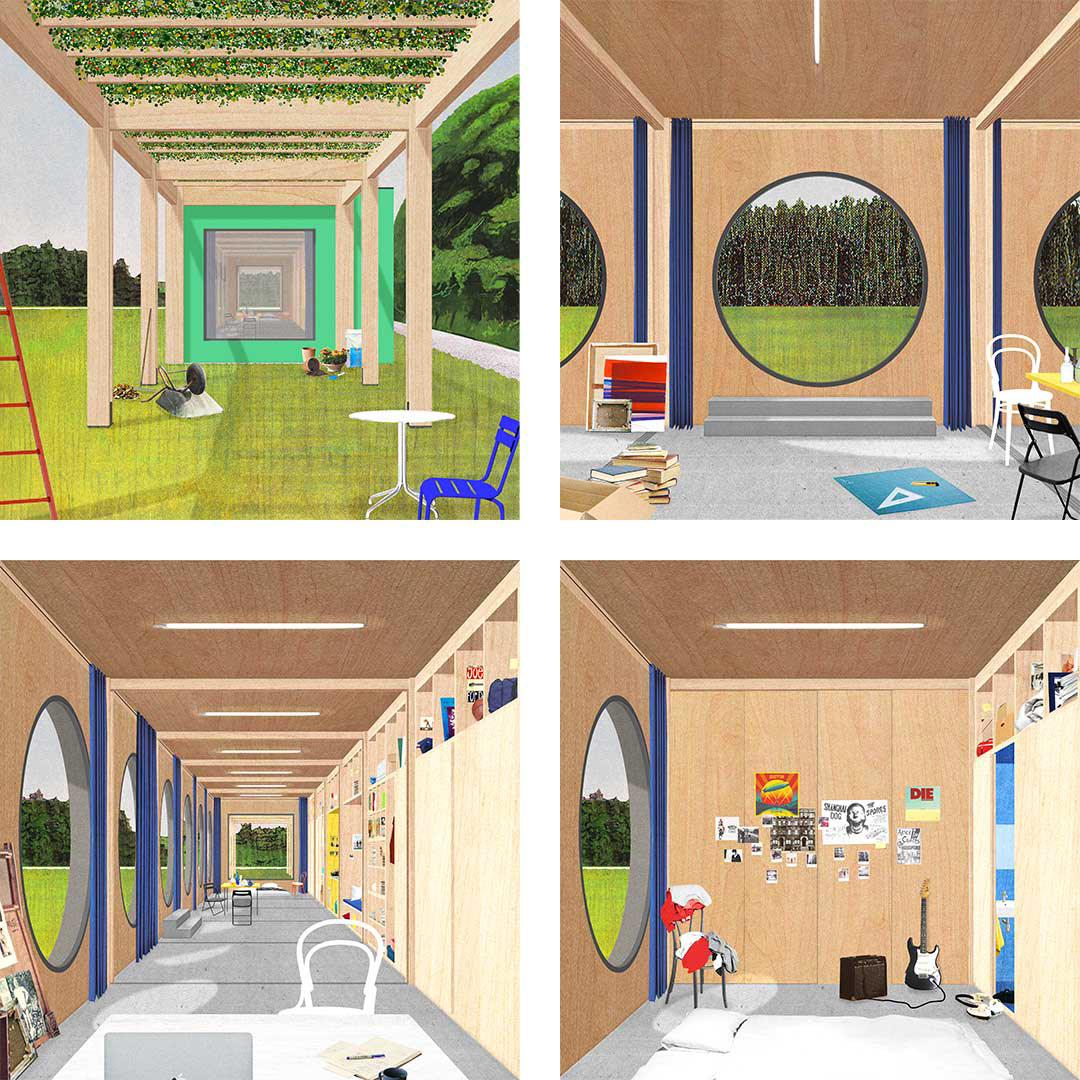
The structure of 'One Room House' is quite open, affording a multitude of circulation paths. The same openness is reflected in the placement of repeated windows in the center, which continue the pattern of apertures created by the beams and columns on the sides. Lastly, poches formed by the intersection of the longer rectangle parti and the more narrow rectangle parti (see top view) are intentionally used for various activities from relaxation to cooking. Overall, the One Room House seems to be characterized most by how its minimal structures afford multiple possibilities.
Conversely, 'Pilares' has more closed walls and less apertures (both windows and doors), which significantly limits the circulation path inside to a single loop (per floor). While the building is formed by what seem to be separate boxes of differing heights (celularity), these boxes are all connected by doorways, creating one continuous room. These doorways allow the interior to receive as much natural lighting as possible, despite 'Pilares' only having six exterior apertures.
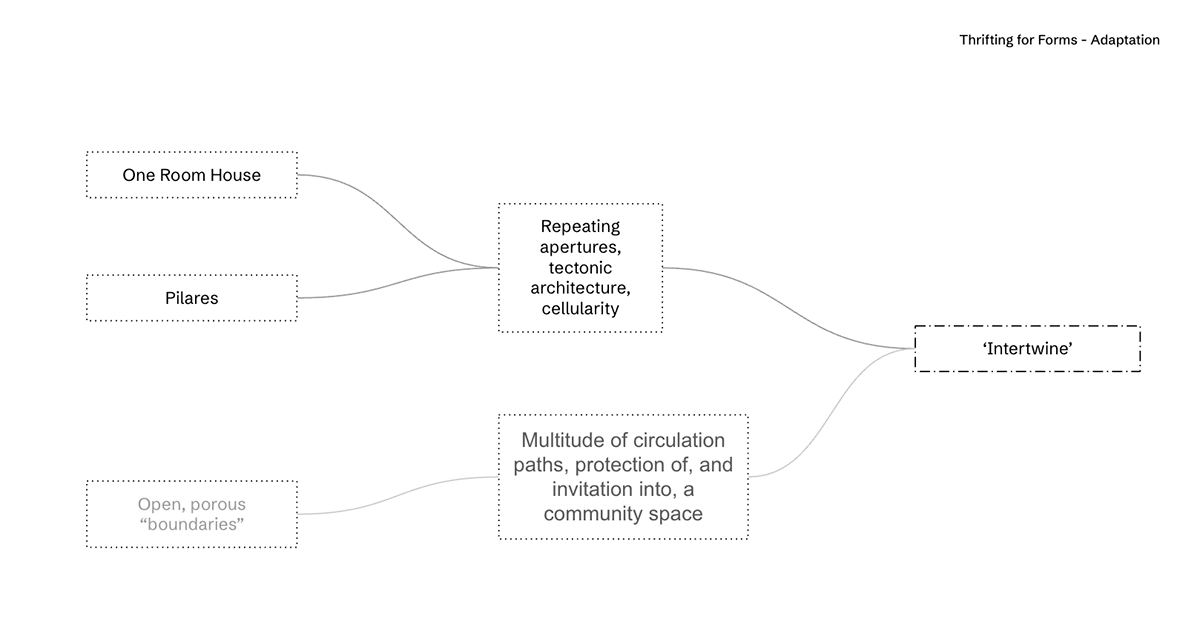
Design Flow Visual
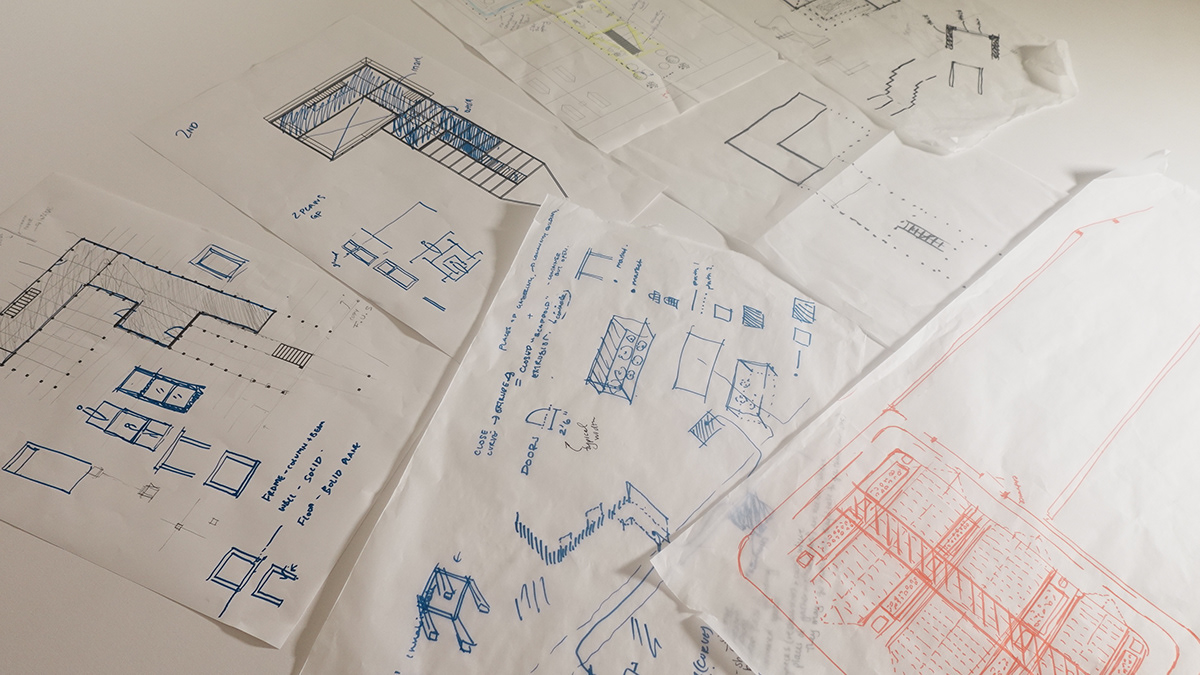
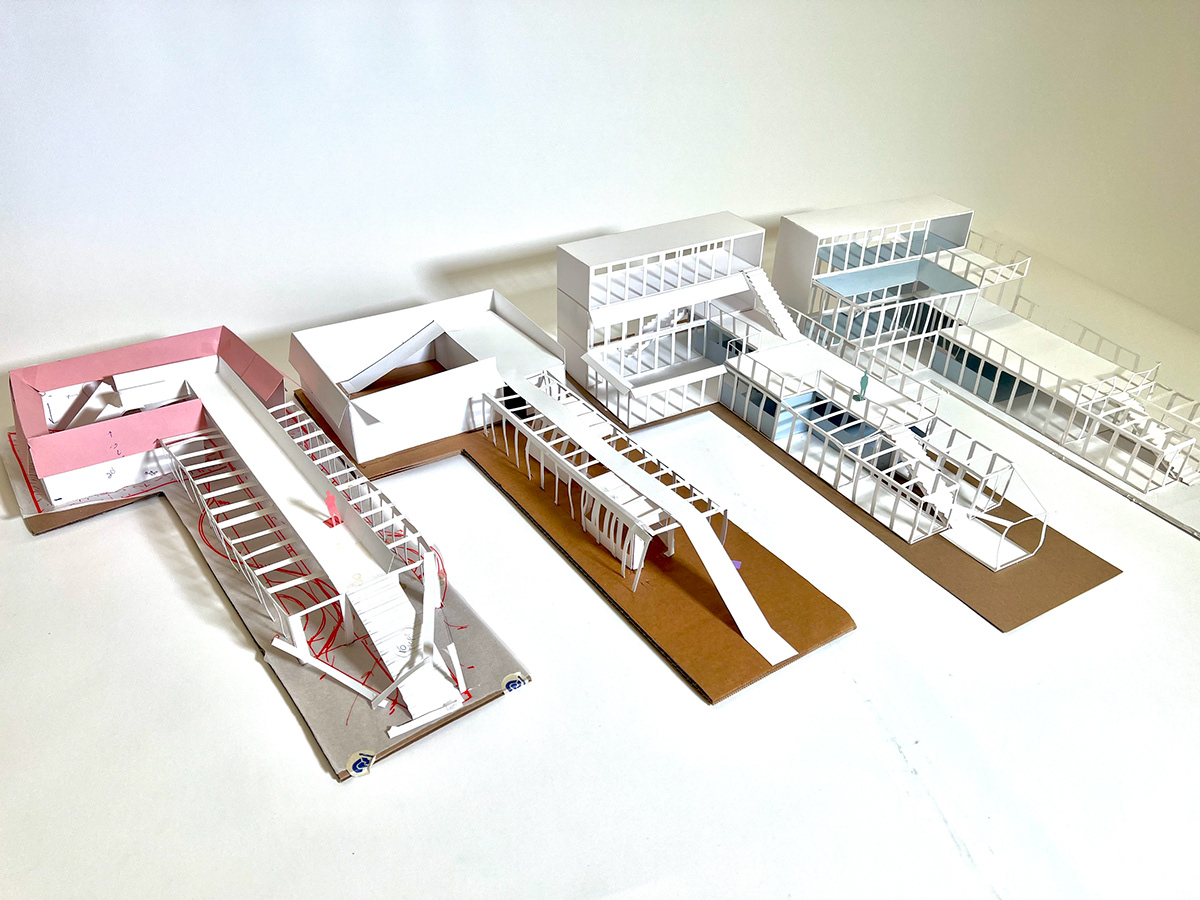
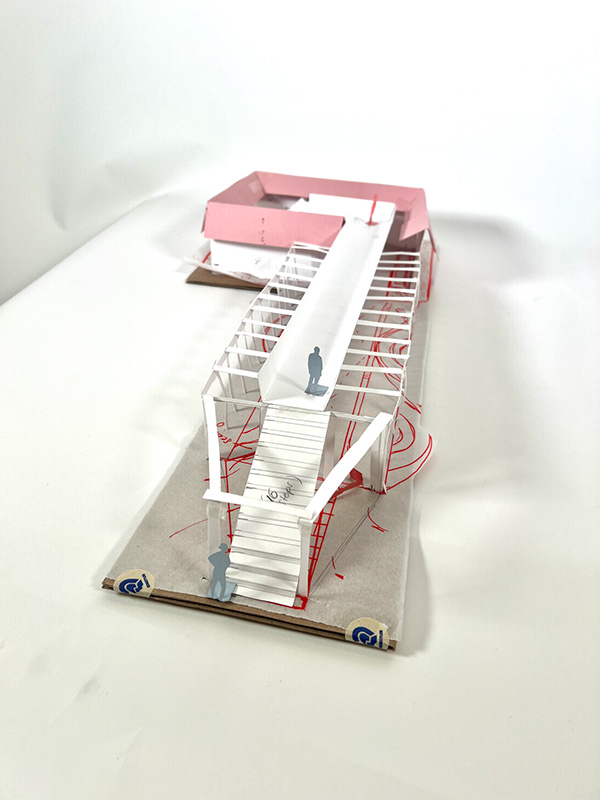
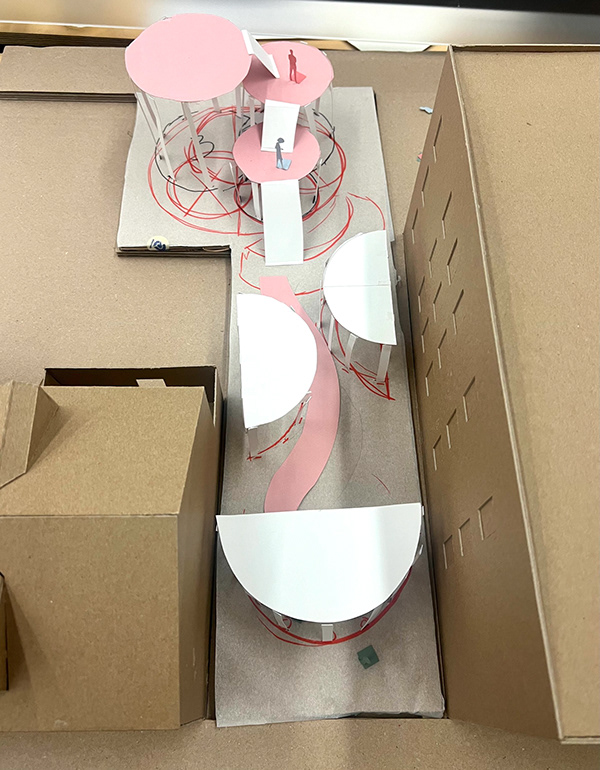
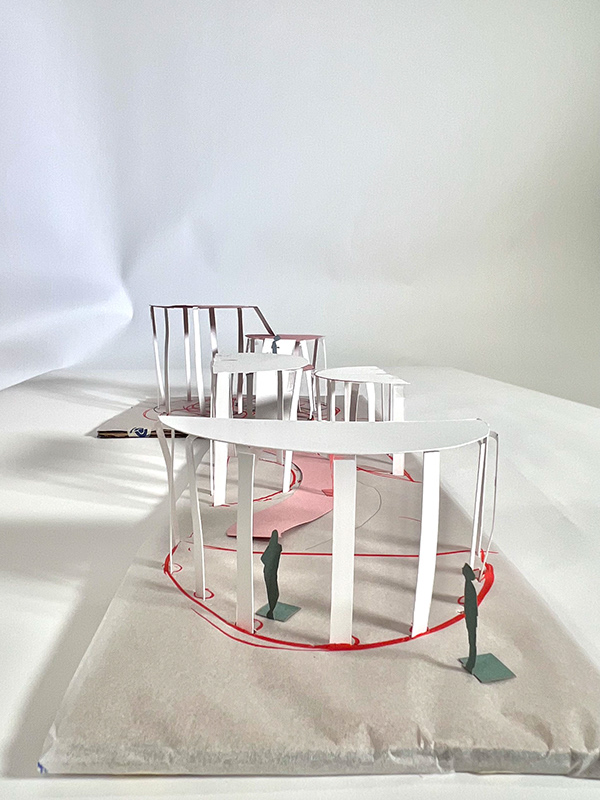
By combining the elements I identified in my architectural analyses of Pilares and One Room House (repeating apertures, tectonic architecture and cellularity) with elements and affordances inherent within the current Eastie farms site, I began rapid prototyping versions of the commons redesign proposal for this site. In total, I prototyped about five different iterations of the site commons, prioritizing designs that allowed for framing a community space using open, porous boundaries (similar to the pergola and cafe shelving I initially sketched earlier on in the site research).
Eastie Farms Site Redesign - Rapid Prototyping, round 1
Eastie Farms Site Redesign - Rapid Prototyping, round 2
'Intertwine' - Final Design
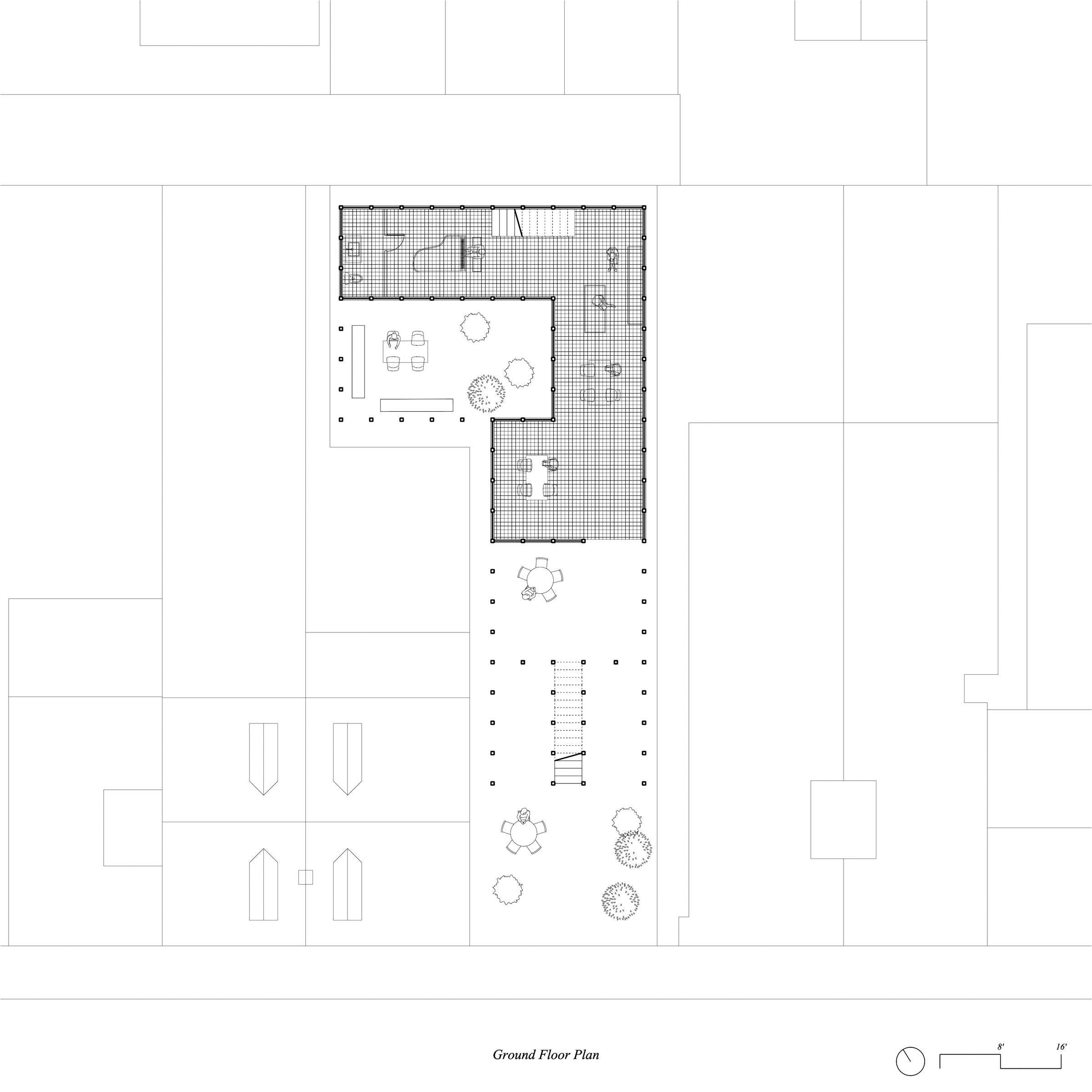
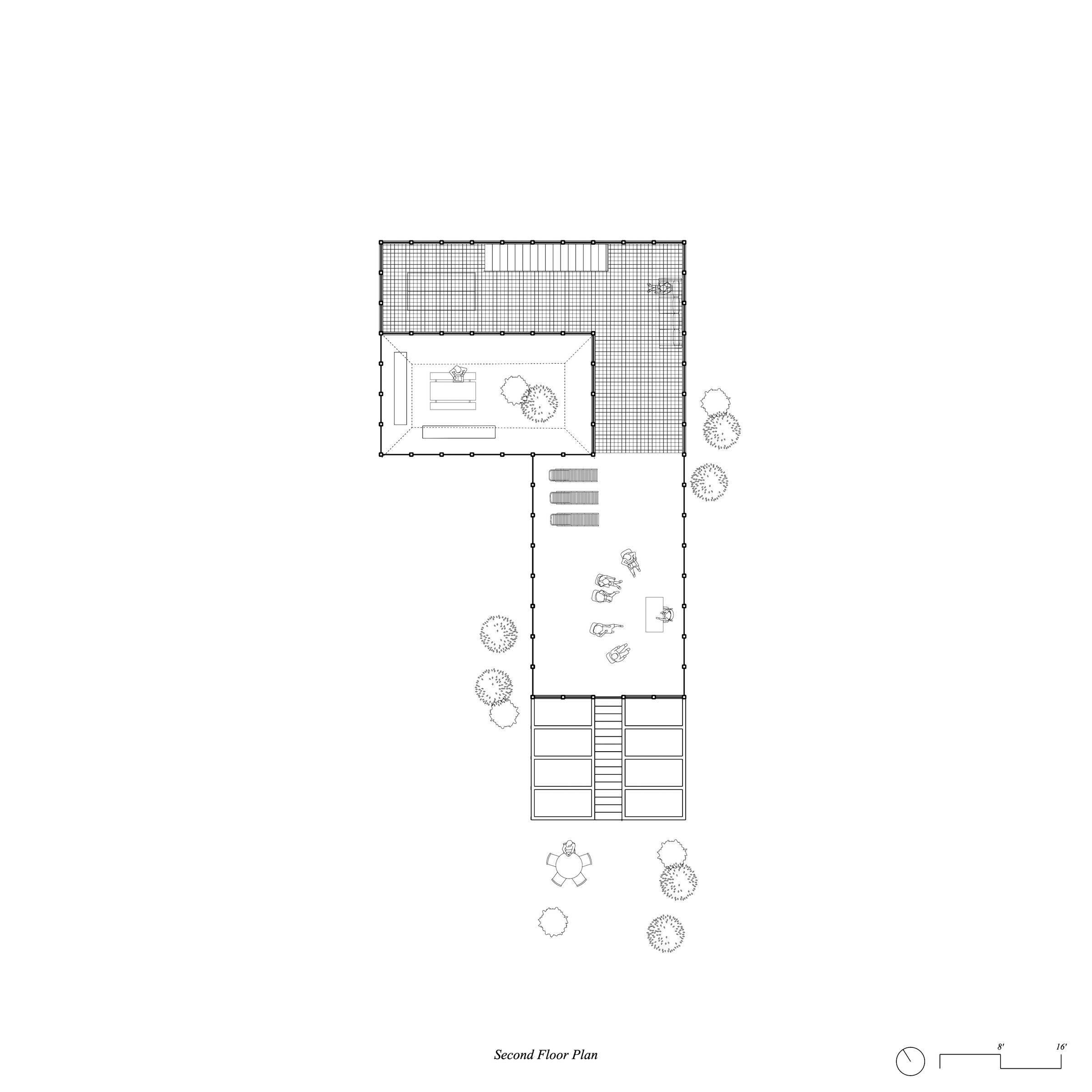
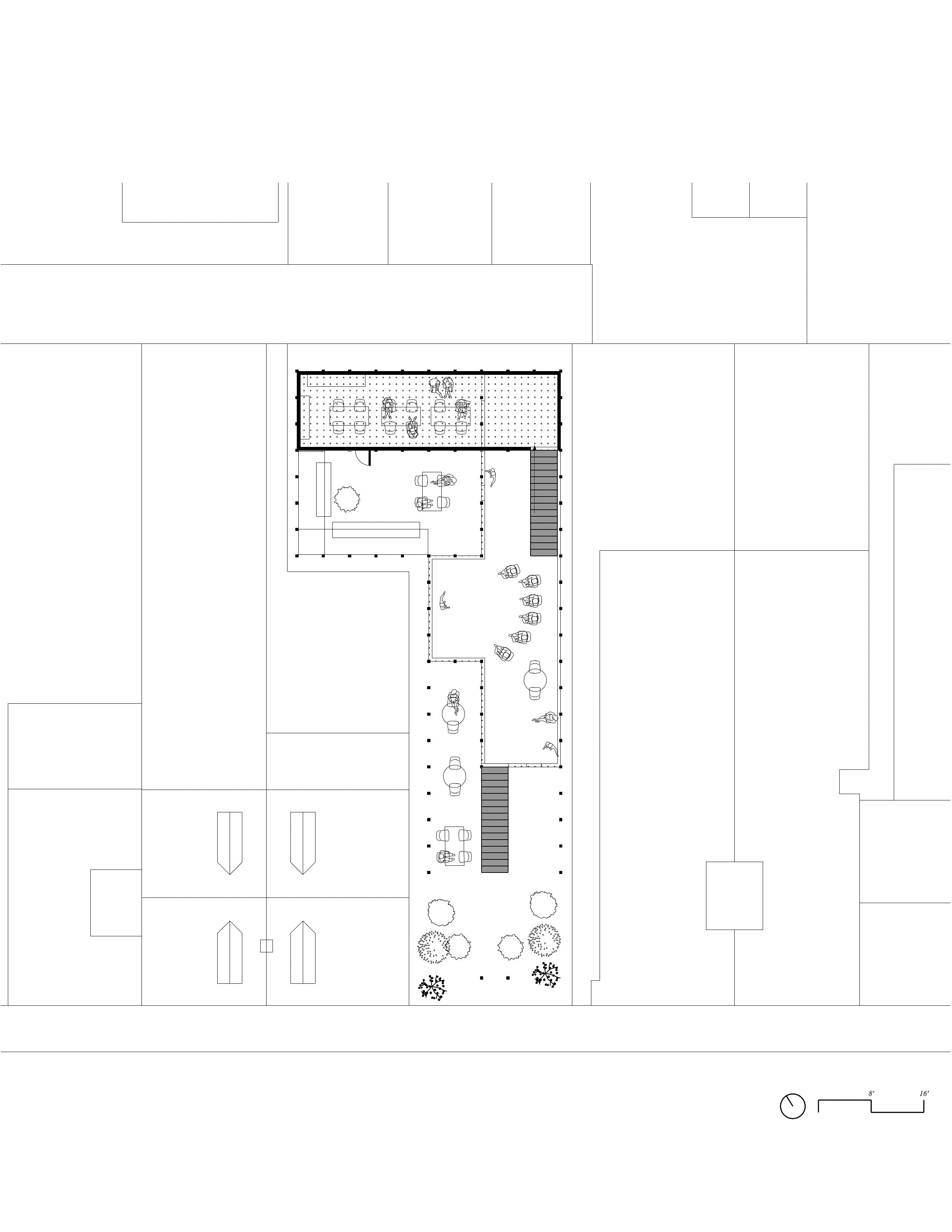
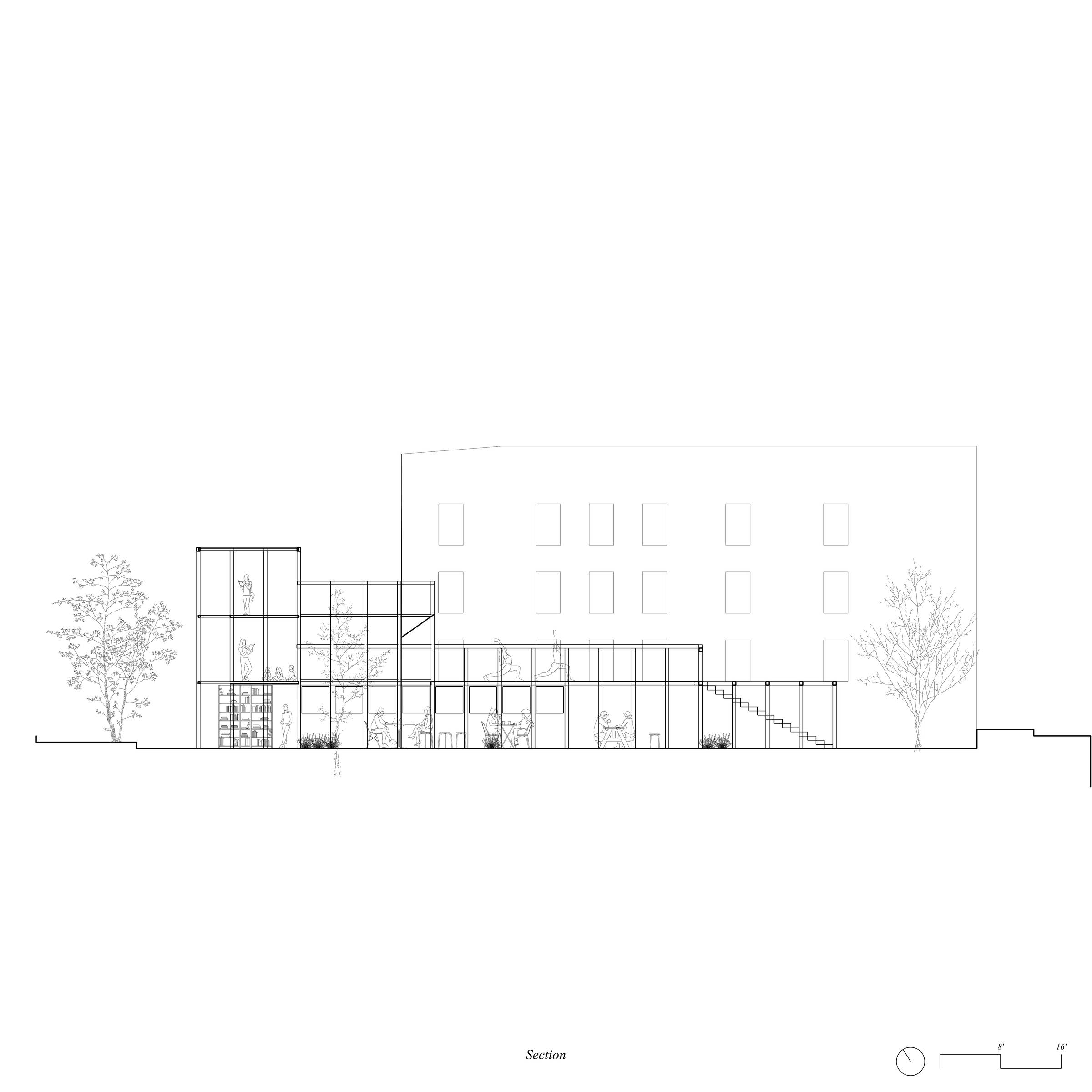
In this final prototype of the commons redesign, I maintained the theme of open, porous boundaries present in existing structures on Eastie farms, like the pergola and the fencing, which strike a balance between protection and invitation to a community space.
The structure acts as armature more than building - framing a collective space while leaving a multitude of circulation paths and programming possibilities open to the freedom of its users. Using a grid system, this design seamlessly blends open commons with interior spaces, maximizing natural lighting and minimal materials. In theme with the pergola inspiration, 'Intertwine' is designed to allow both nature and humans to freely exist and evolve within its columns and beams, acting as a giant pergola in which vines will grow over to provide insulation and reconnection with nature.
Plans, Section & Axon Oblique
All sections, plans and gifs created by me using Adobe Illustrator and Premier