Spatial Design

Designing for
Floating Villages
in Cambodia

During my year-long Princeton in Asia fellowship, I created and taught project-based design classes to Cambodian students as a Learning Facilitator at AUPP Liger Leadership Academy in Phnom Penh, Cambodia.

In one of the courses I designed, I wanted to teach the design process as a tool for problem-solving to my students. I also wanted to expose them to existing ways in which design has been used to address various issues in Cambodia, from sustainable architecture to low-cost bio-sand water filters for purifying water or strategic waste water systems for maintaining health in floating villages in Siem Reap.

I called the course 'Design for Impact,' and essentially acted as a teacher and project manager by leading design research, mockups and prototyping various design solutions with students, specifically aimed at exploring how we might design solutions to problems faced by communities living in floating villages. I had chosen floating villages as the context for the challenges we aimed to address, since designing for flooding and water safety seems to be an issue that will only become more prevalent in Cambodia and beyond with the effects of climate change.

This course included taking my students on trips to various design firms in Phnom Penh to learn from design professionals, volunteering with NGOs in Siem Reap, visiting Moat Khlar floating village and Kampong Khleang floating village, to interview villagers and understand their challenges, collaborating with international organizations and building prototypes with local materials to address identified challenges. We documented our field research and interviews in videos that I facilitated students to film and edit.

"Give a man a fish and you feed him for a day; teach a man to fish and you feed him for a lifetime."
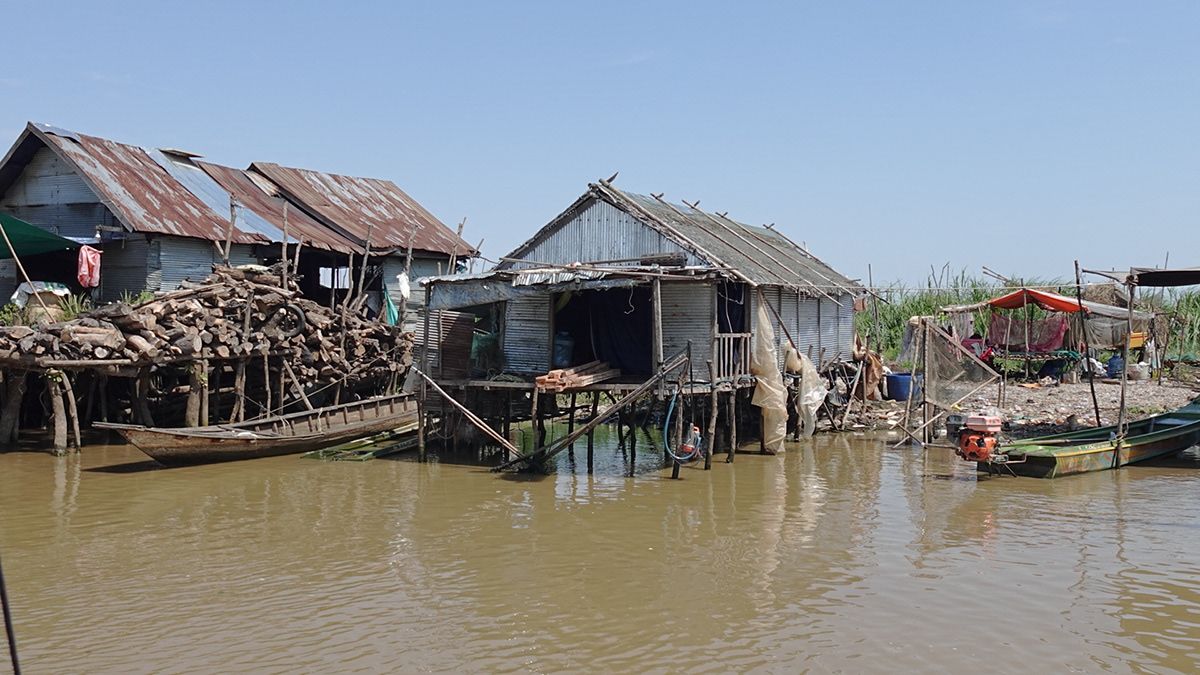
Floating Villages

How might we design alternative food and income sources to address decreasing fish population challenges in floating villages?

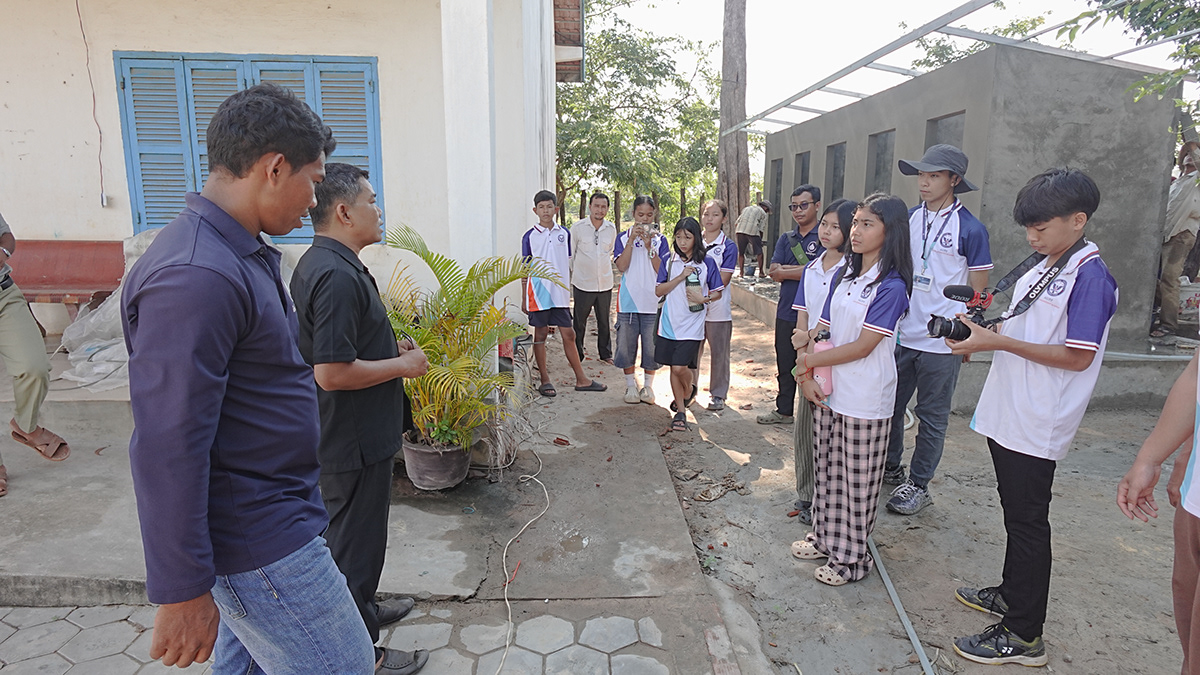
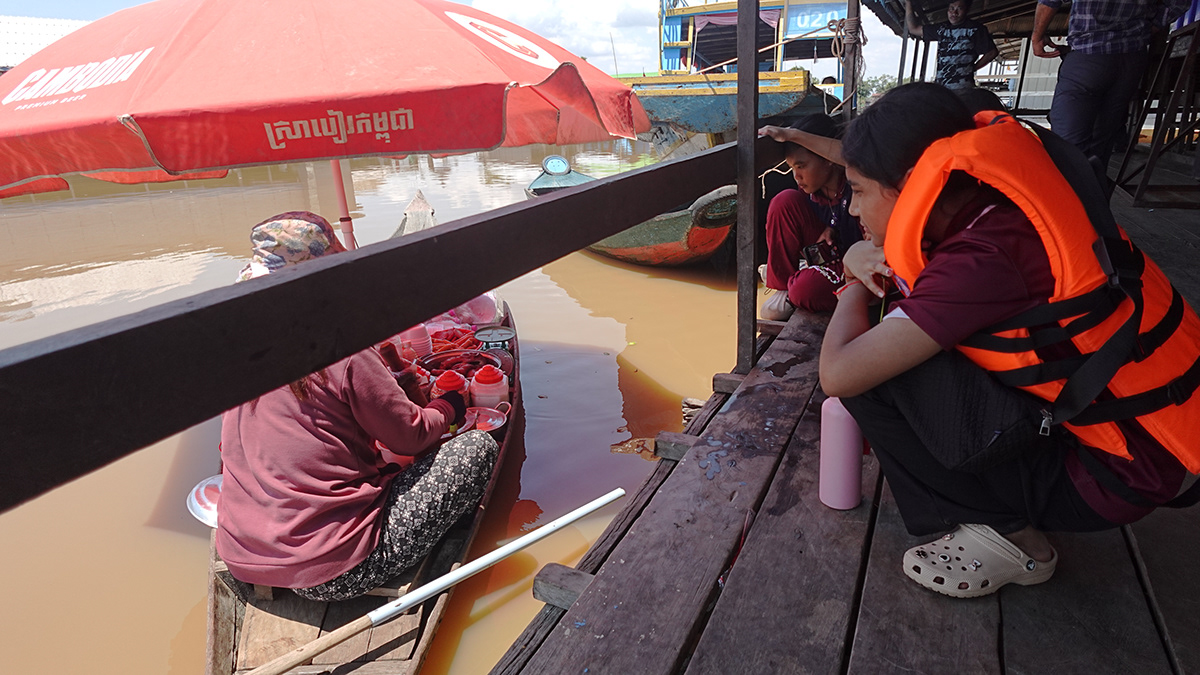
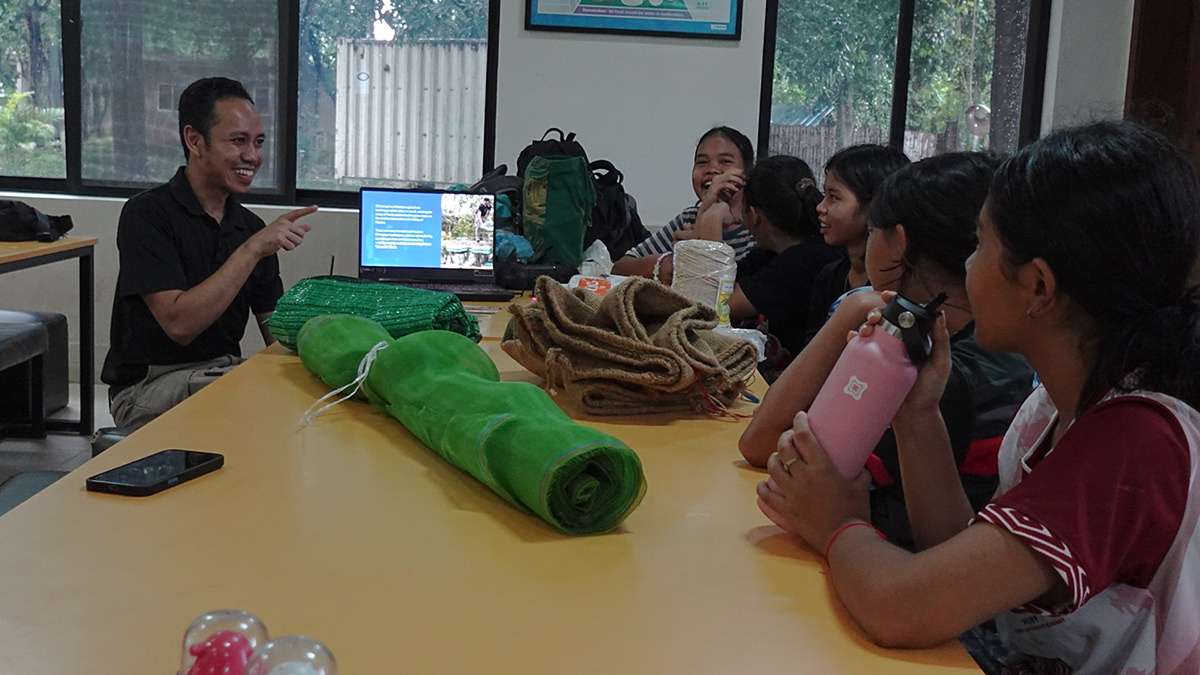
During our field trip to Siem Reap, my students and I gathered research through volunteering with local NGOs and interviewing community members in floating villages in the Tonle Sap to learn about the challenges they face in daily life and gather ideas for how we might use the design process as an approach to creating solutions to these.

Our pre-trip research about the challenges of life on the Tonle Sap was supported by interviews with villagers, who expressed challenges with providing food and income for their communities due to decreased fishing as a result of: climate change, recently-built dams that block fish migration in the Tonle Sap and the government's restrictions on communities' ability to fish.

To address these issues, my students and I created three different deliverables in a multi-pronged approach:

01

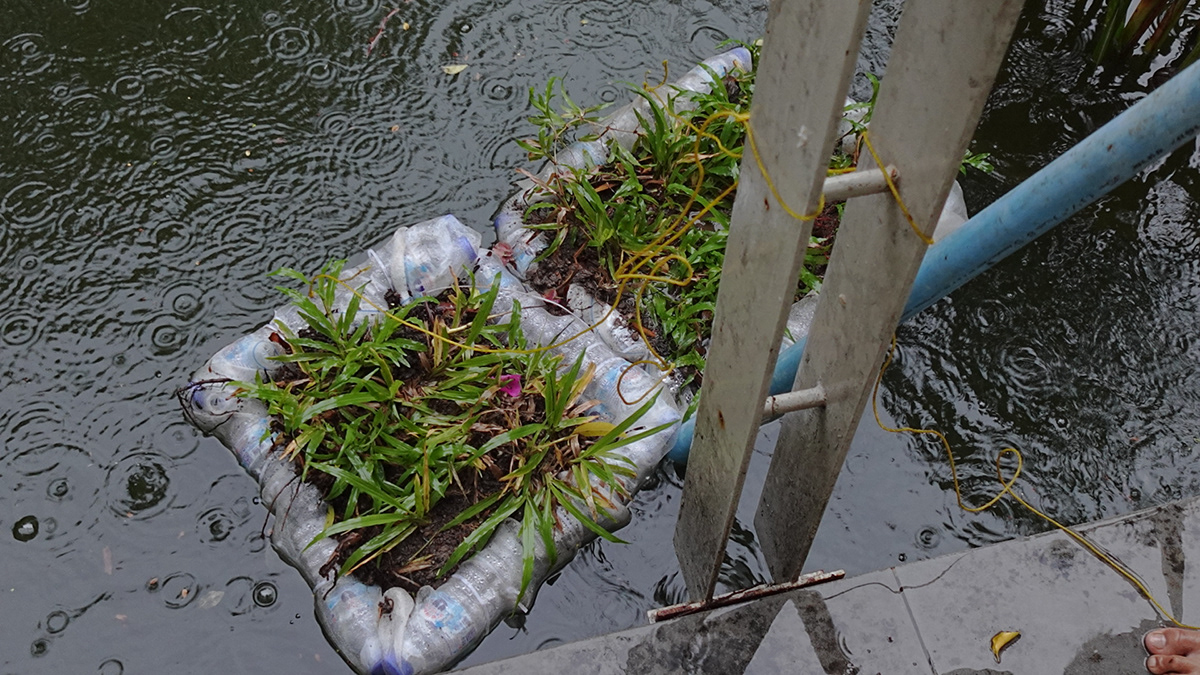
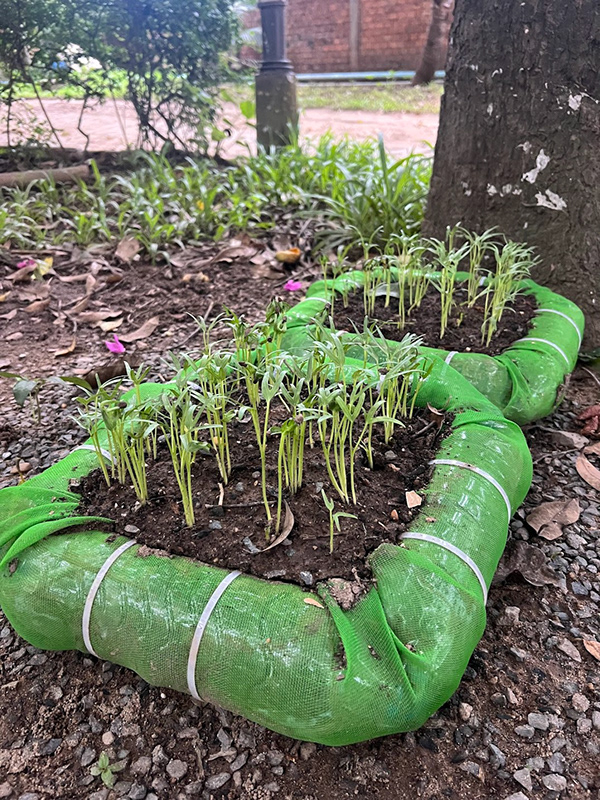
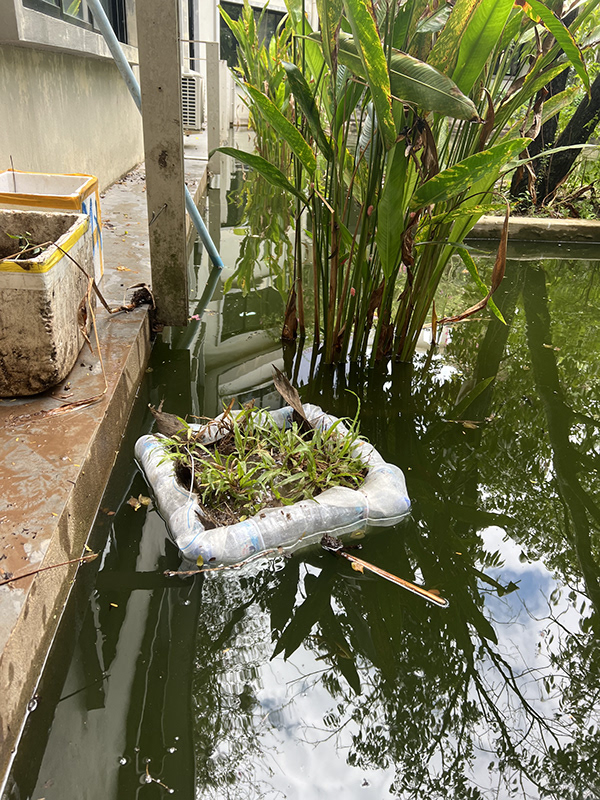
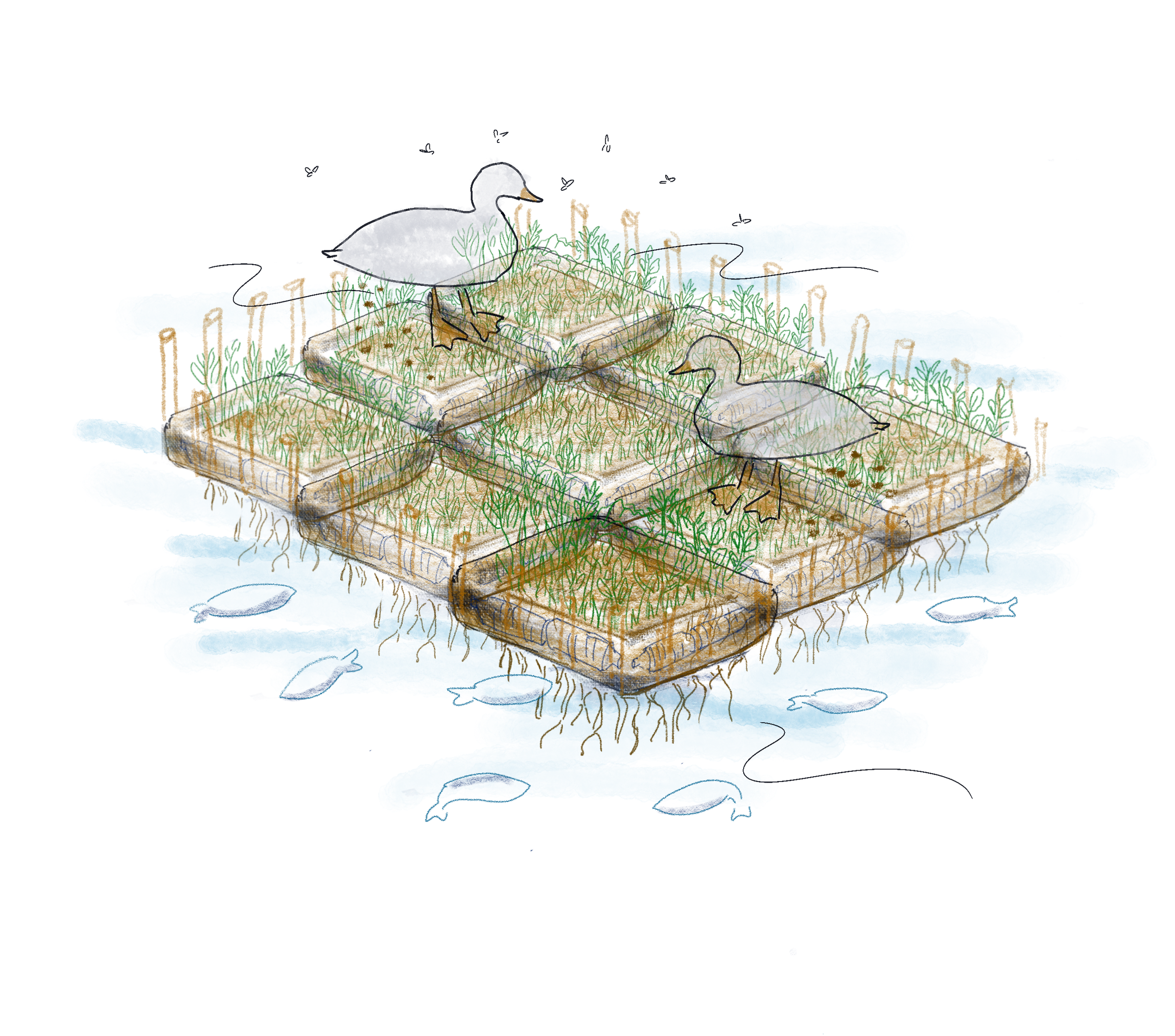
Two designs for regenerative and alternative food sources to fishing in floating villages: floating gardens and floating duck coops made of local, affordable and/or recycled materials.

02

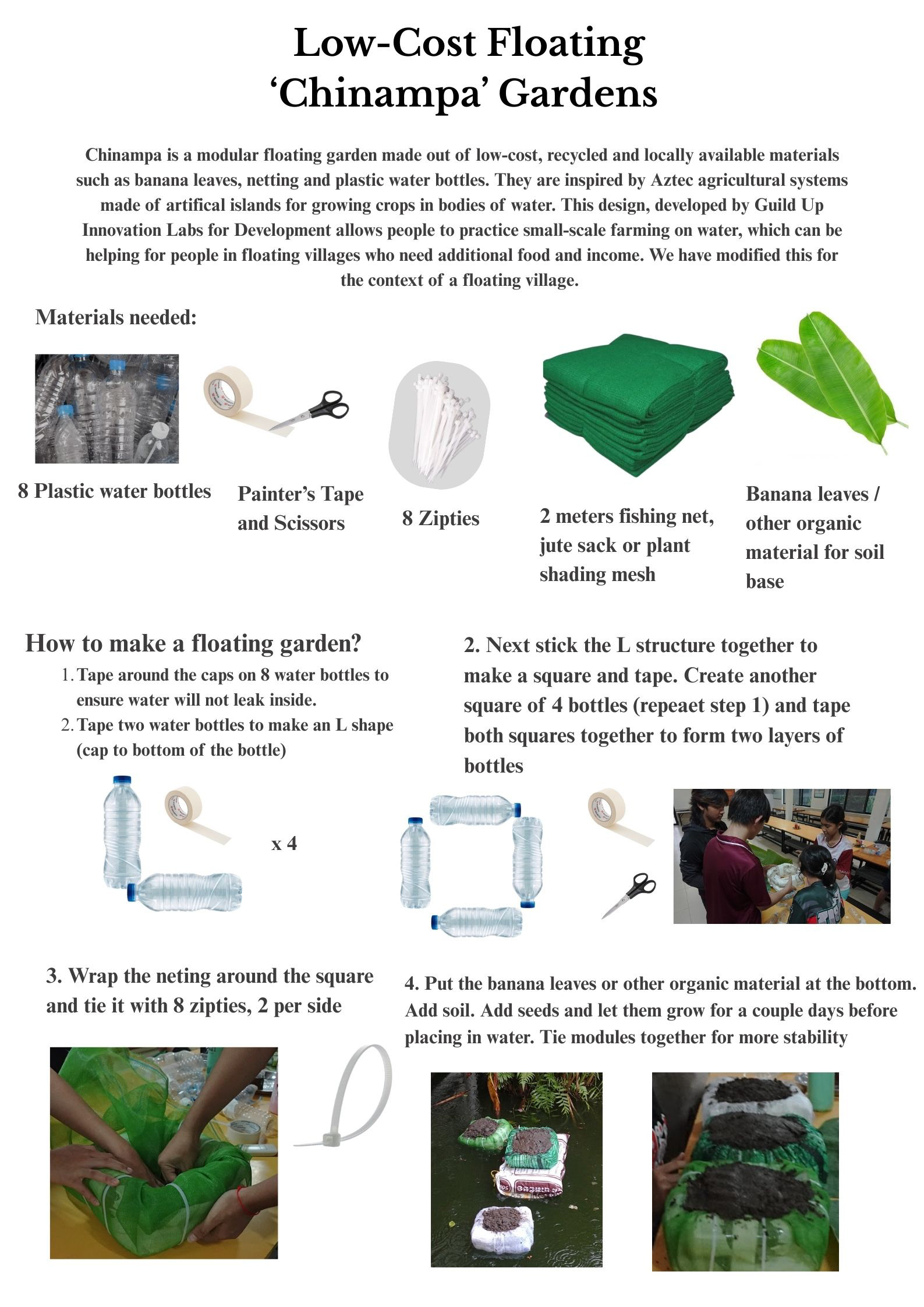
Instructional materials on how to make the floating gardens and duck coop, and why they are important, to promote behavior change and create a sustainable, replicable solution.

03

Promotional videos highlighting the important work that these NGOs in Siem Reap are already doing to provide housing, clean water and medical services for rural communities in and around the Tonle Sap.

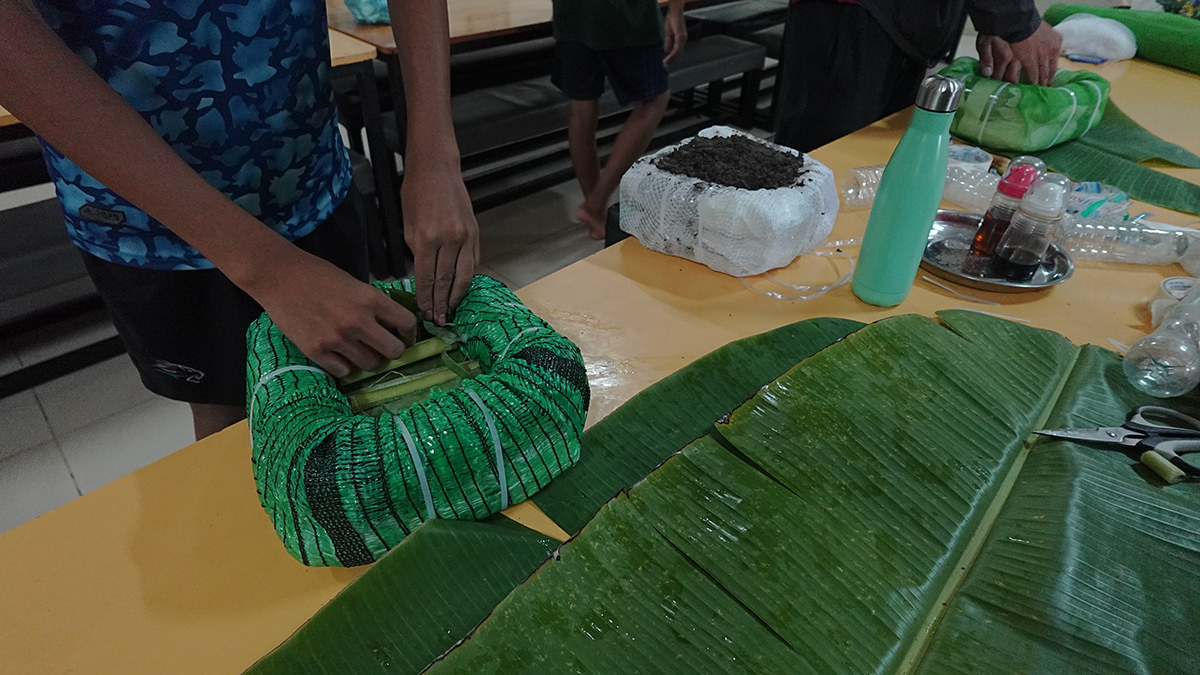
To address these resource gaps, I guided my class in developing a multi-pronged intervention focusing on creating alternative sources of food and income in floating villages. Through a workshop with Ground Up Innovation Labs for Development (GUILD) based in Singapore, we adapted their 'Chinampa' floating garden model to the specific constraints of the Tonle Sap.
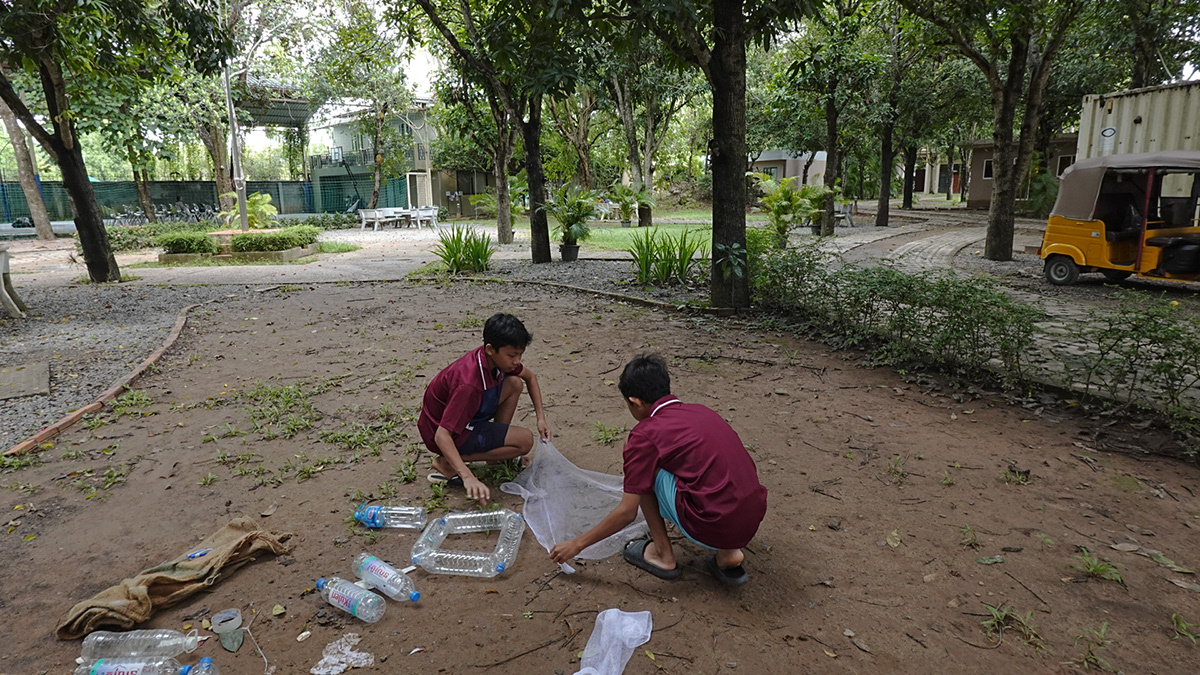
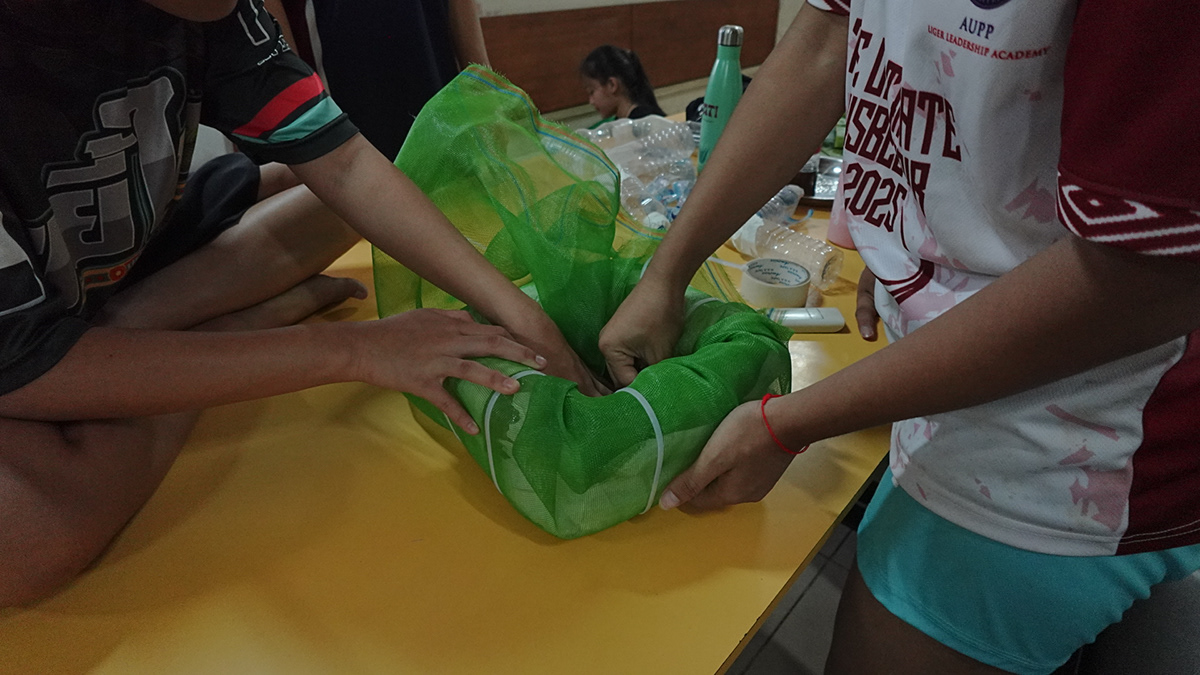
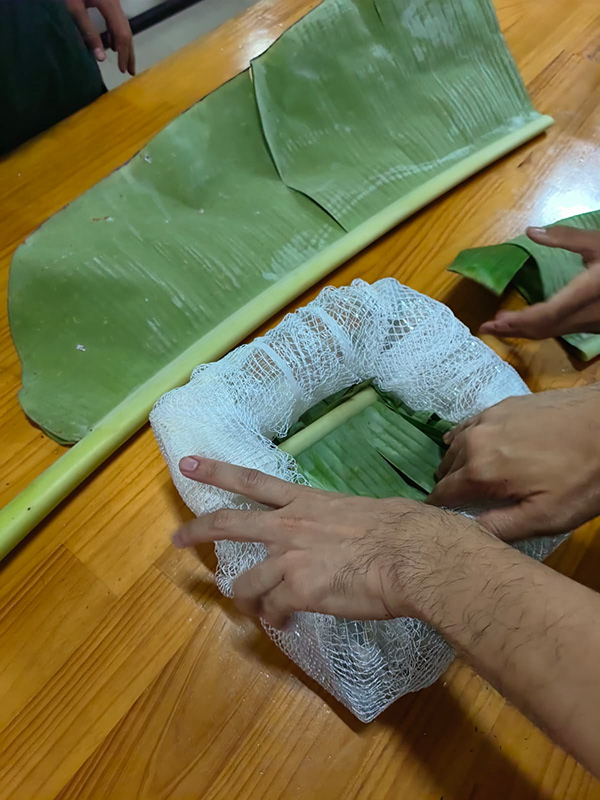
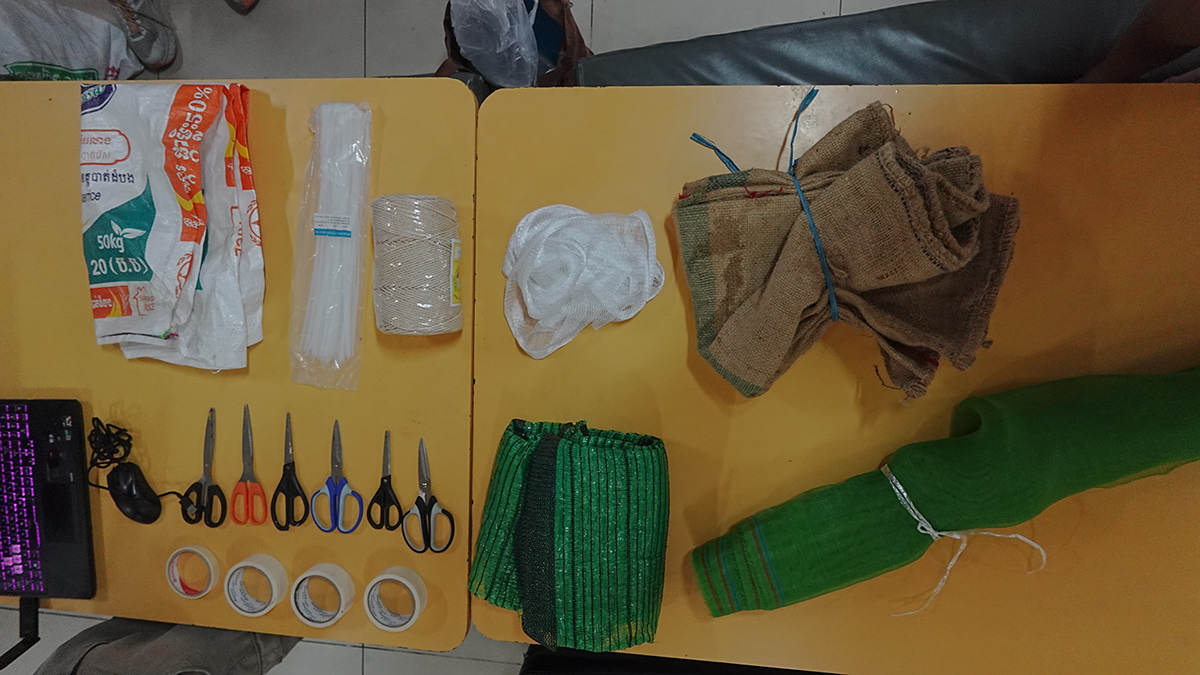
Our refined design prioritizes the use of site-specific, low-cost, recycled and natural materials available and used in and around floating villages, such as banana leaves and fishing net. By utilizing materials with low resale value, our design discourages the disassembly of units for parts, a problem we identified while interviewing NGO leaders who had attempted to install floating gardens in the past. This aimed to support the long-term stability of the community's food infrastructure.

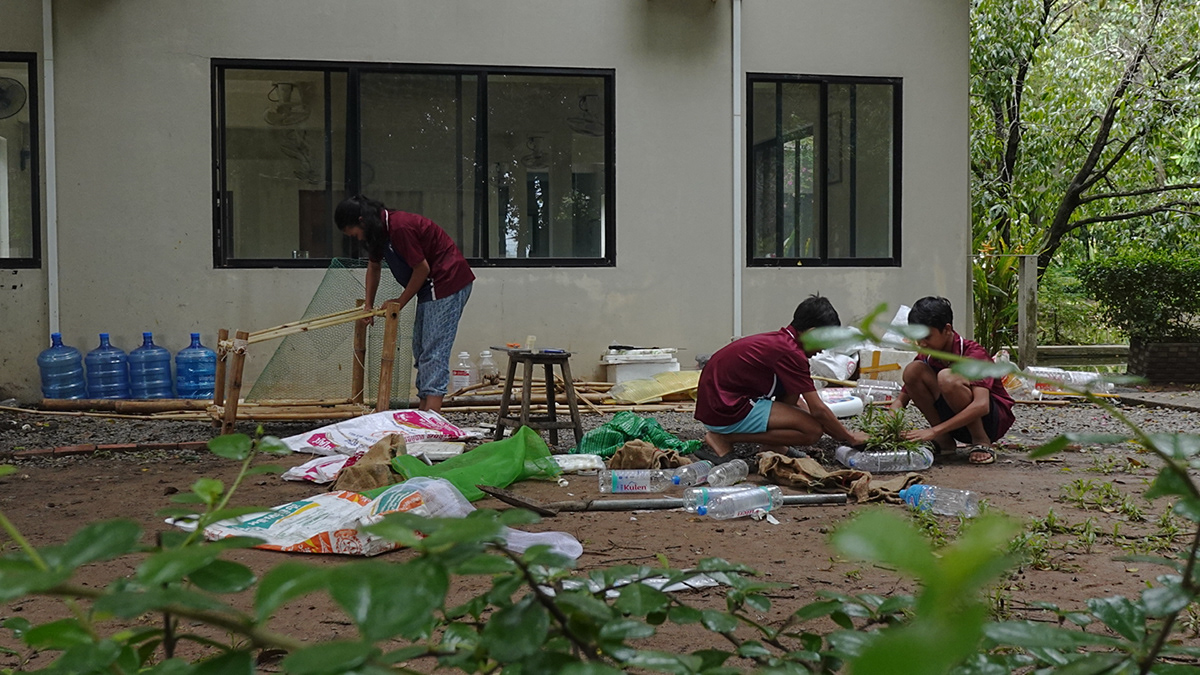
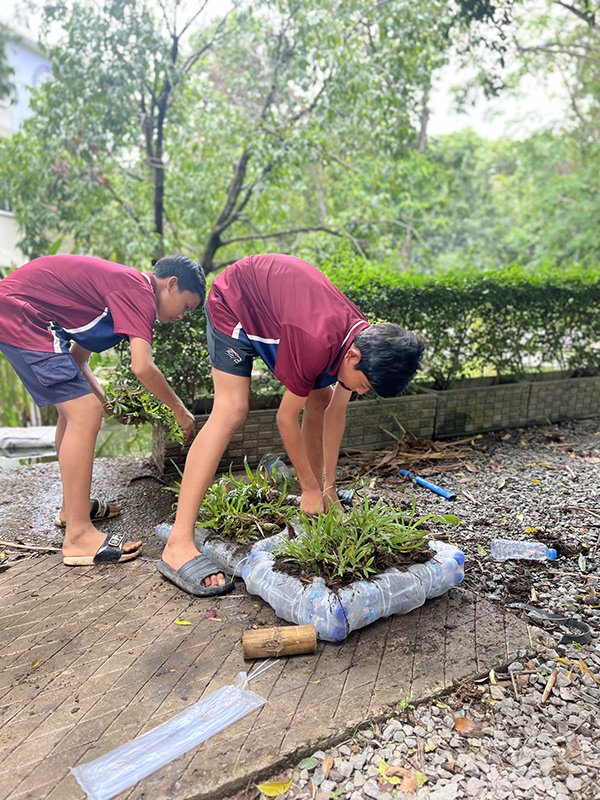
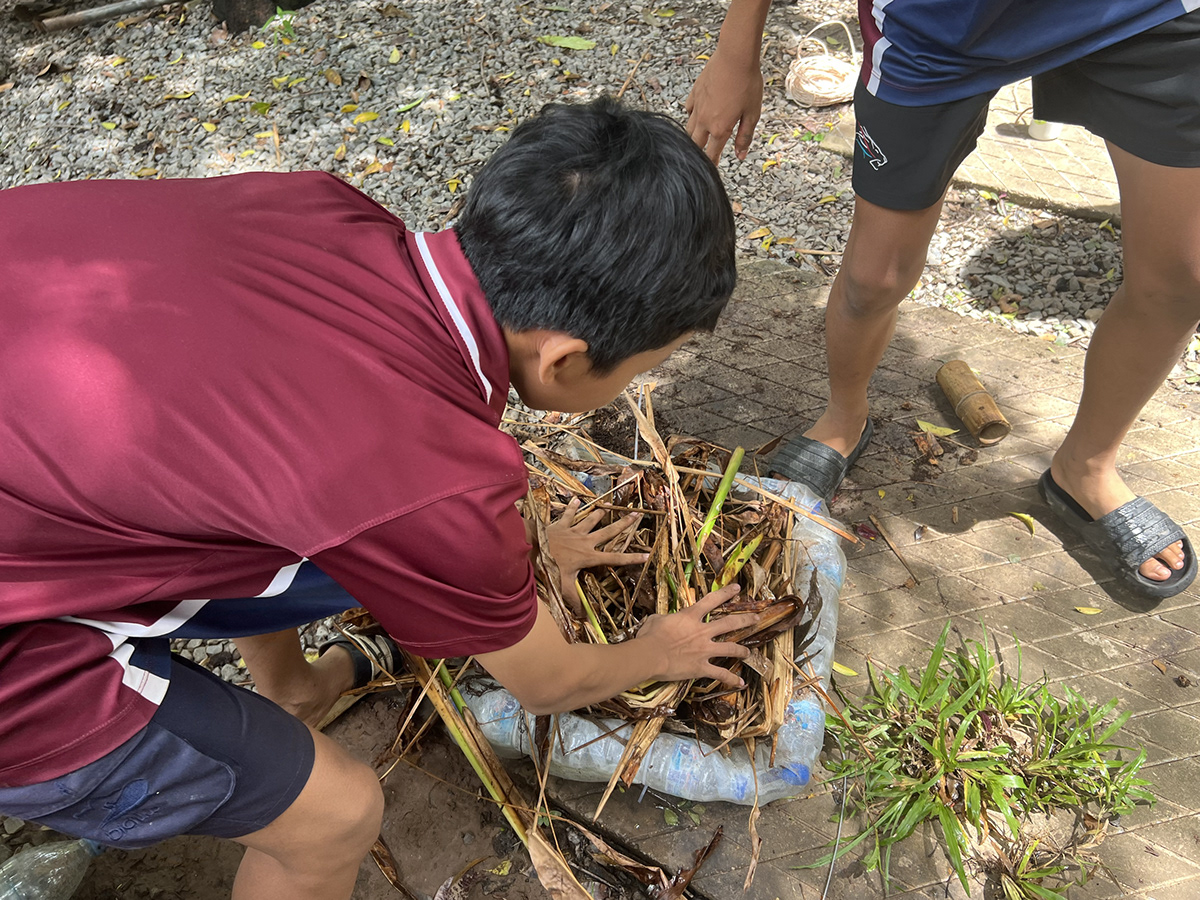
Tools and Materials: Plastic bottles, netting (fish net, garden shade, burlap), tape and zipties. Adapted from GUILD's 'Chinampa' design.

Presentation made by Liger Leadership Academy students

A critical part of our approach was ensuring our interventions could be sustained beyond the end of our class.

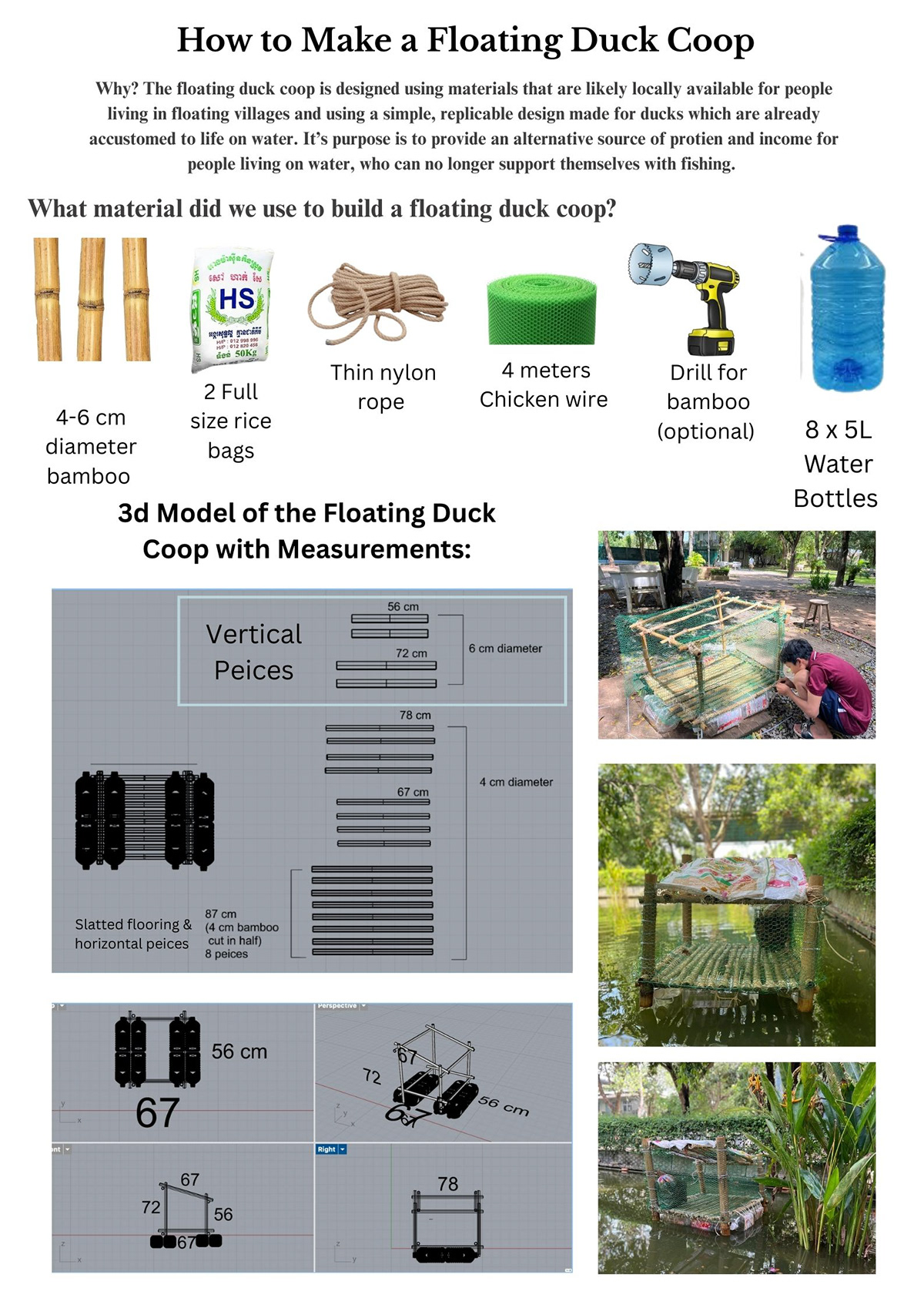
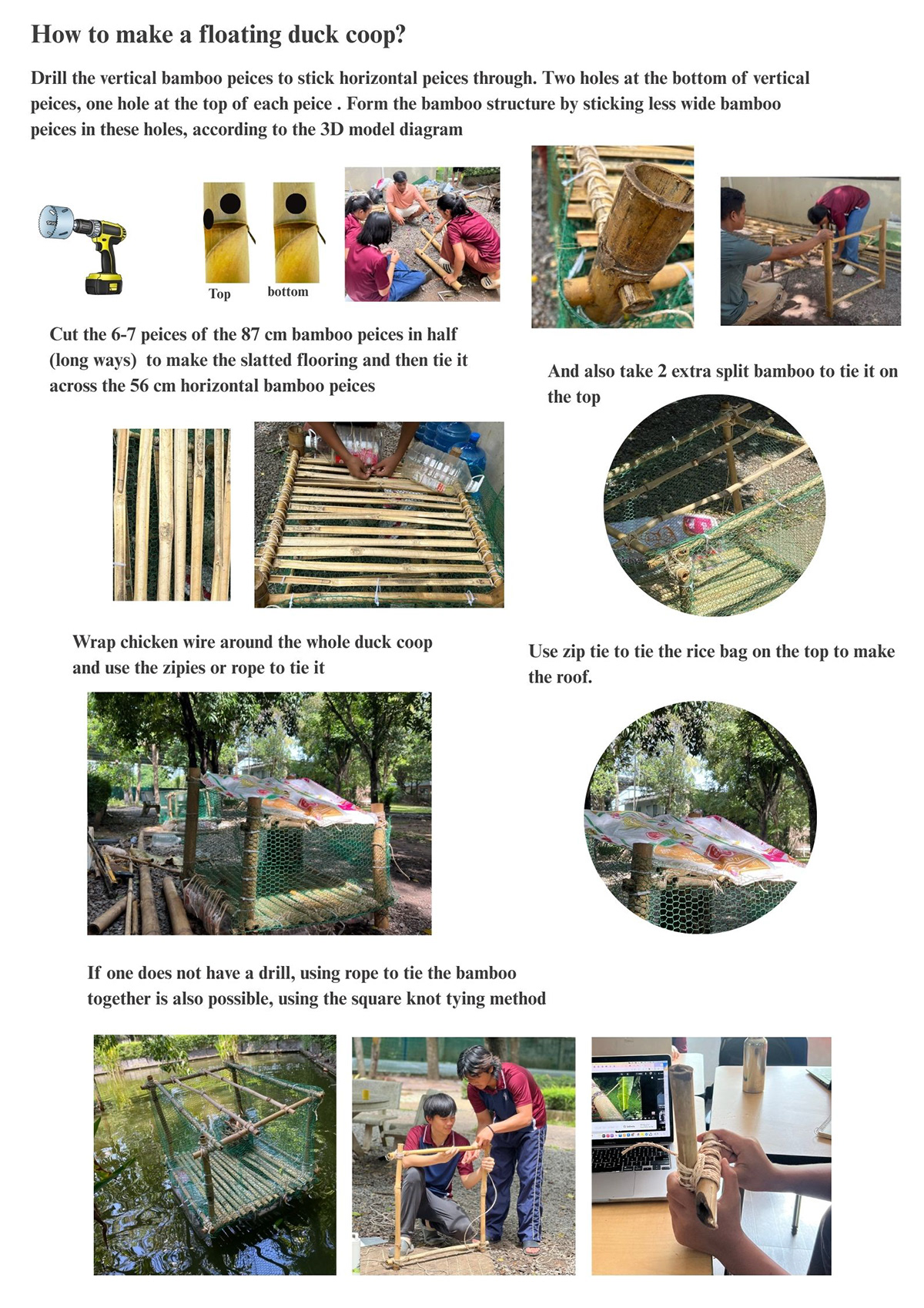
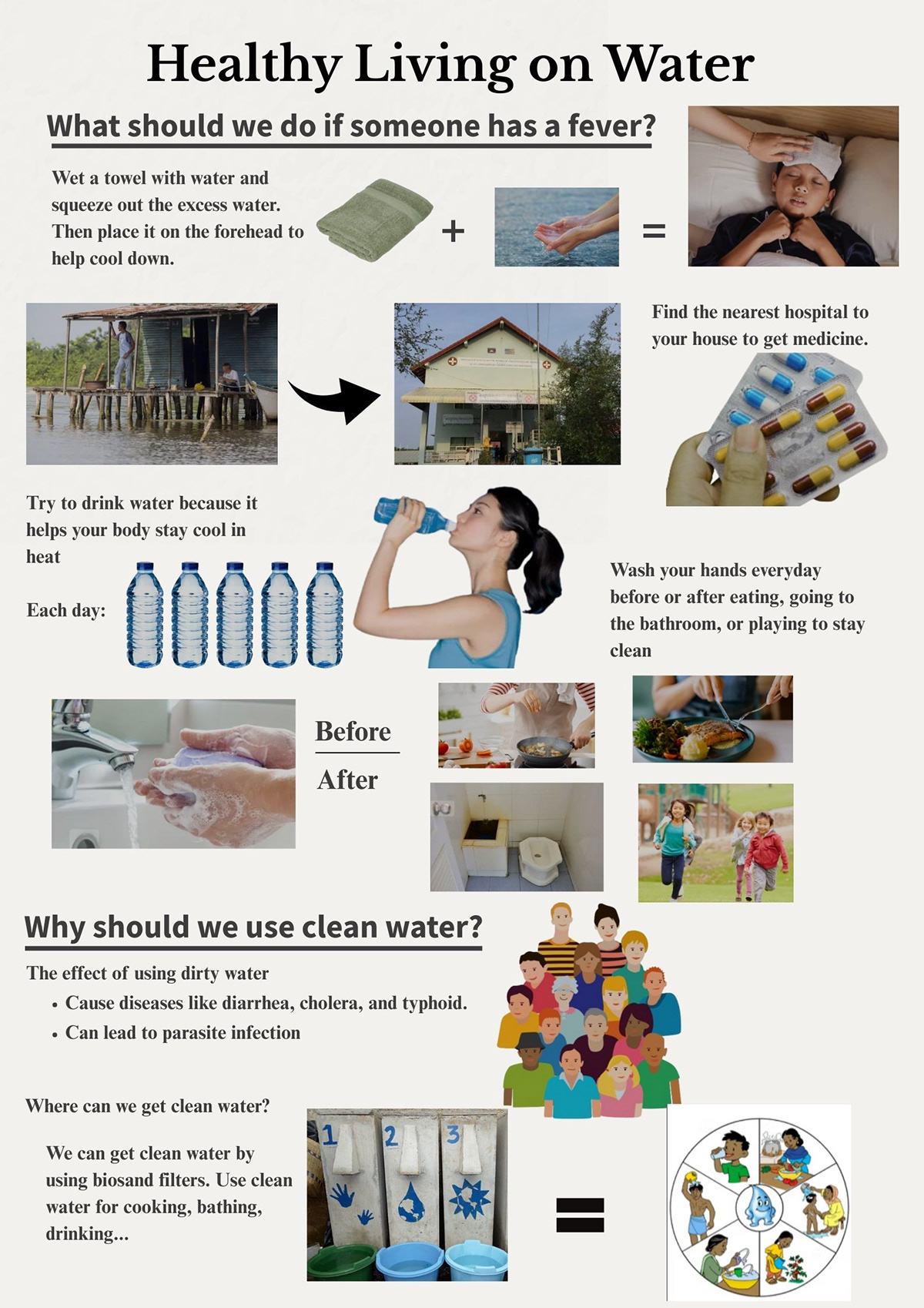
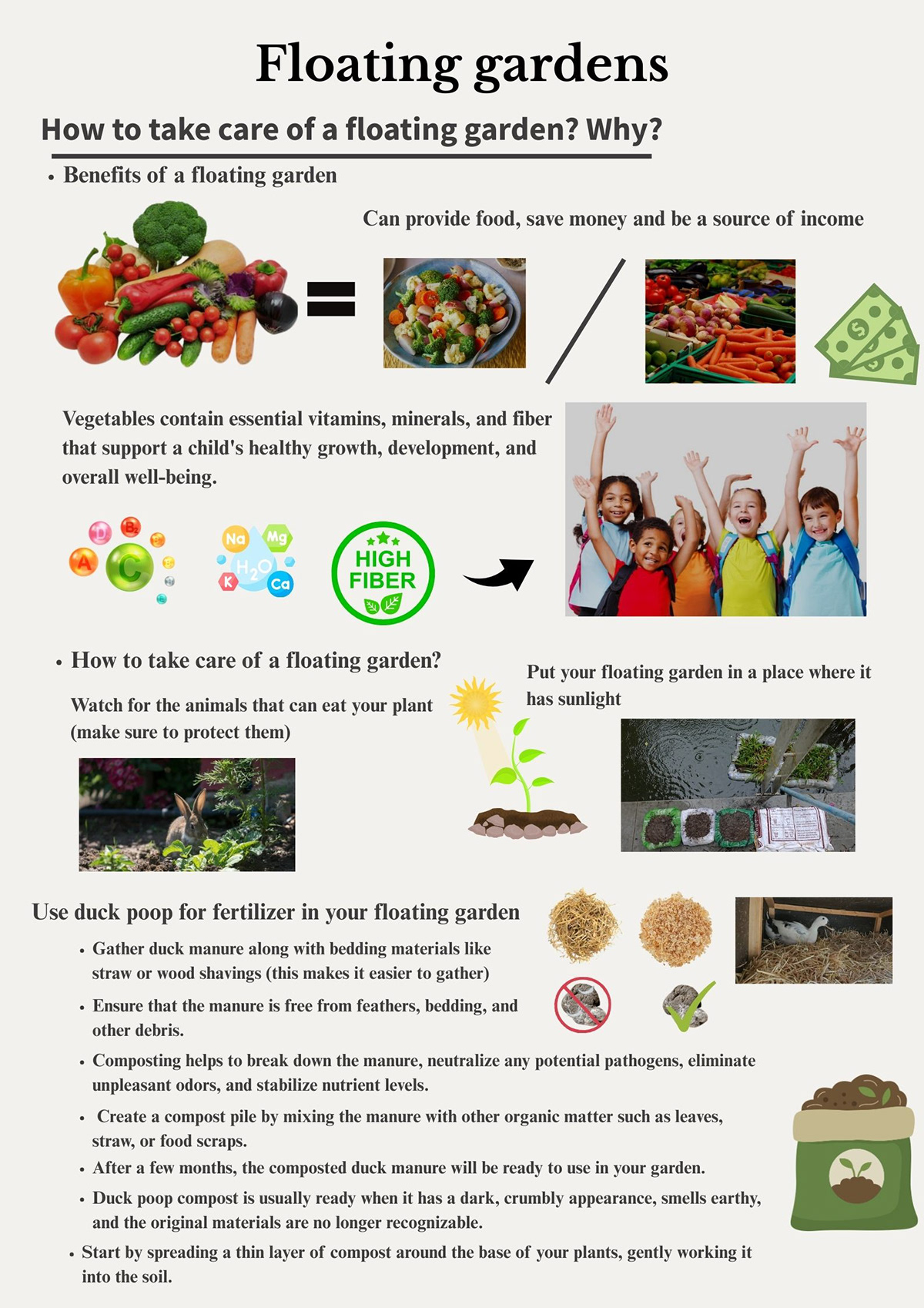
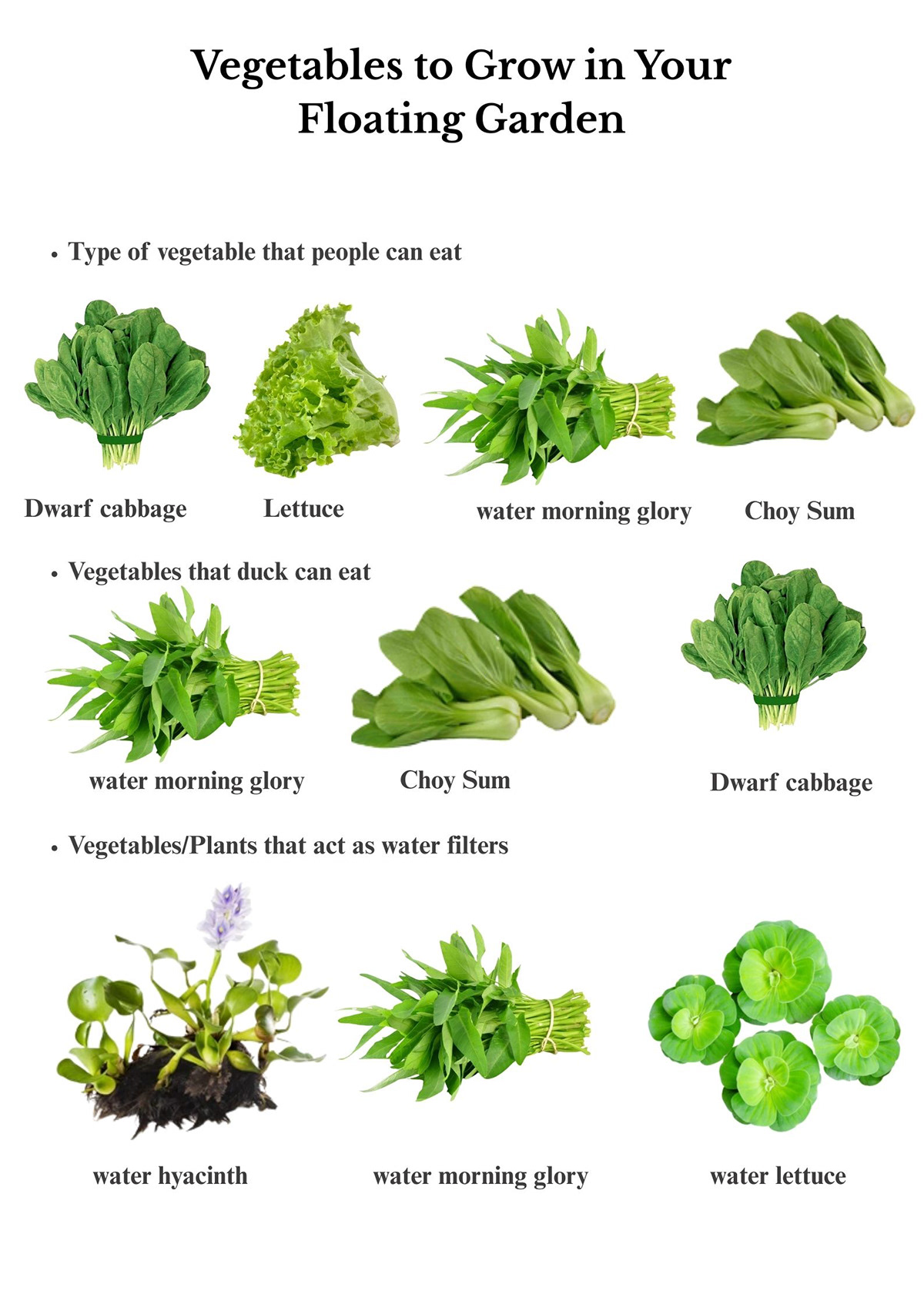
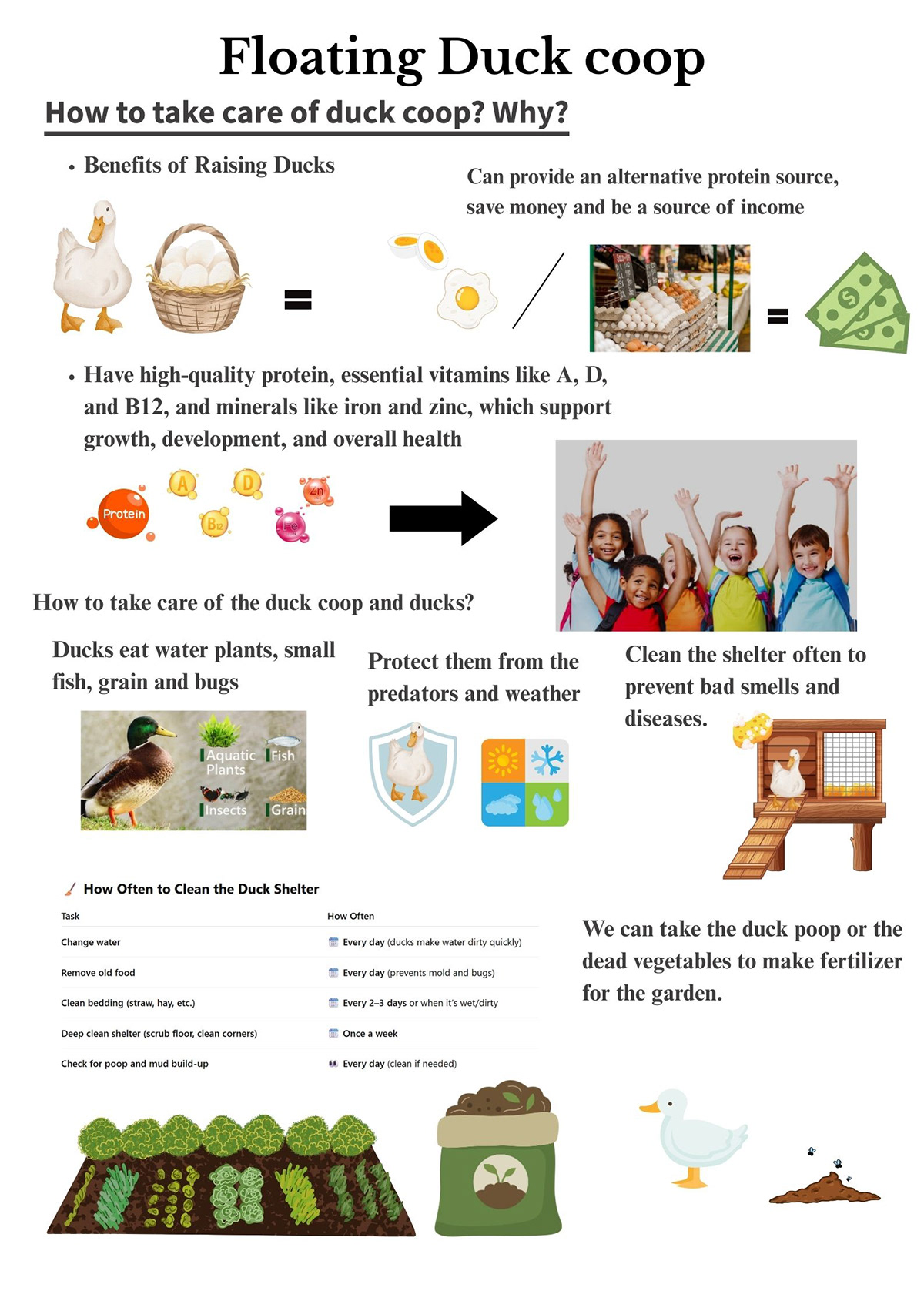
I facilitated students in creating 'how-to' guides in English and Khmer for floating villages that could help communities make and maintain floating gardens and duck coops independently, using low-cost materials we learned were most likely available nearby and simple construction methods.

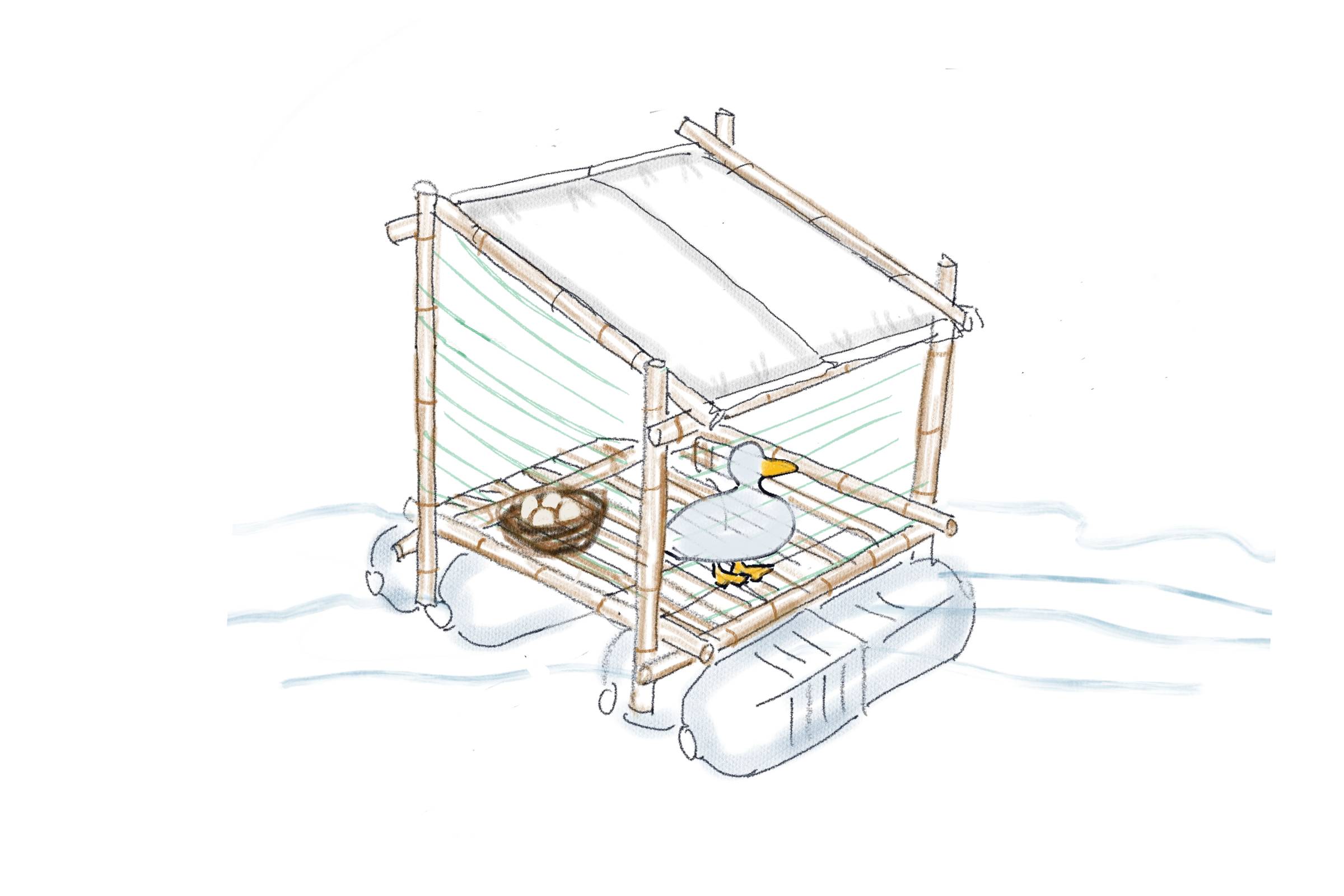
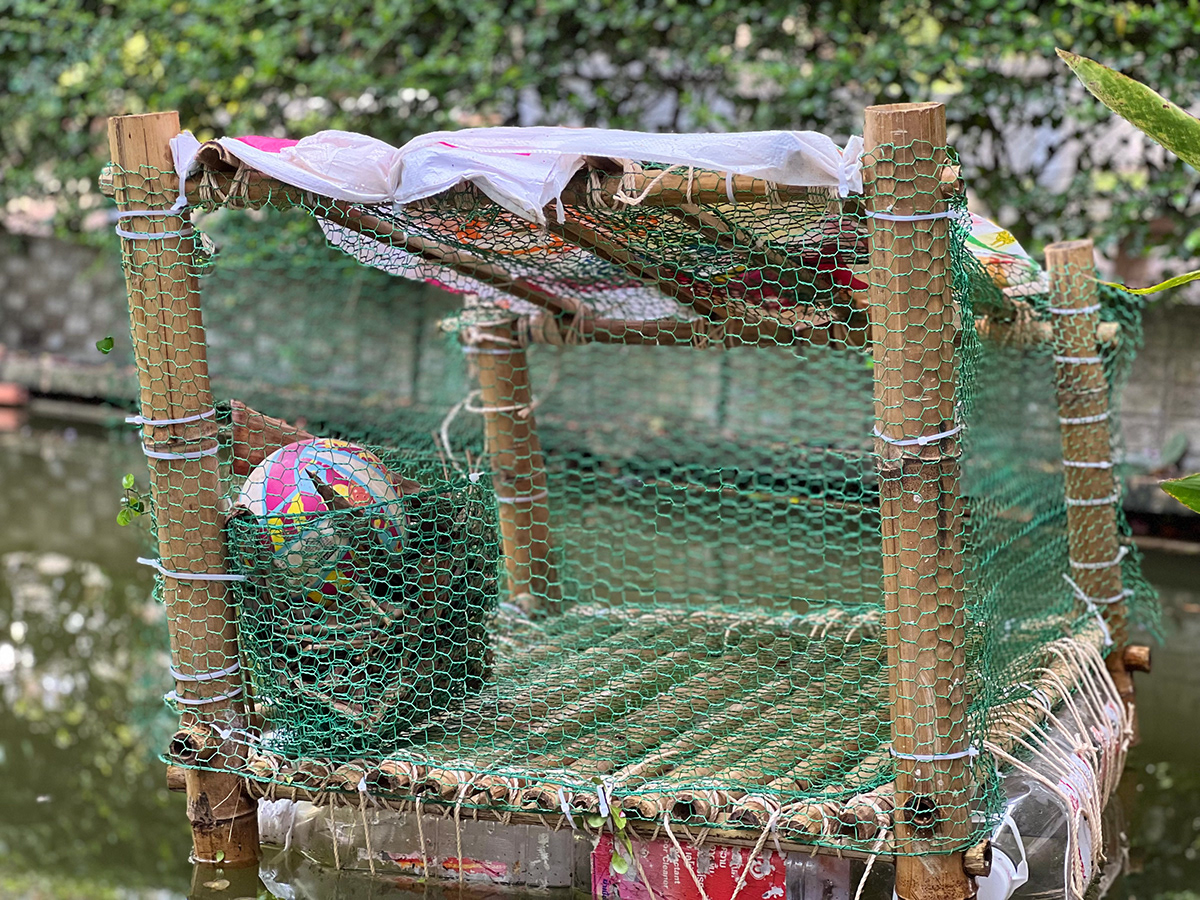
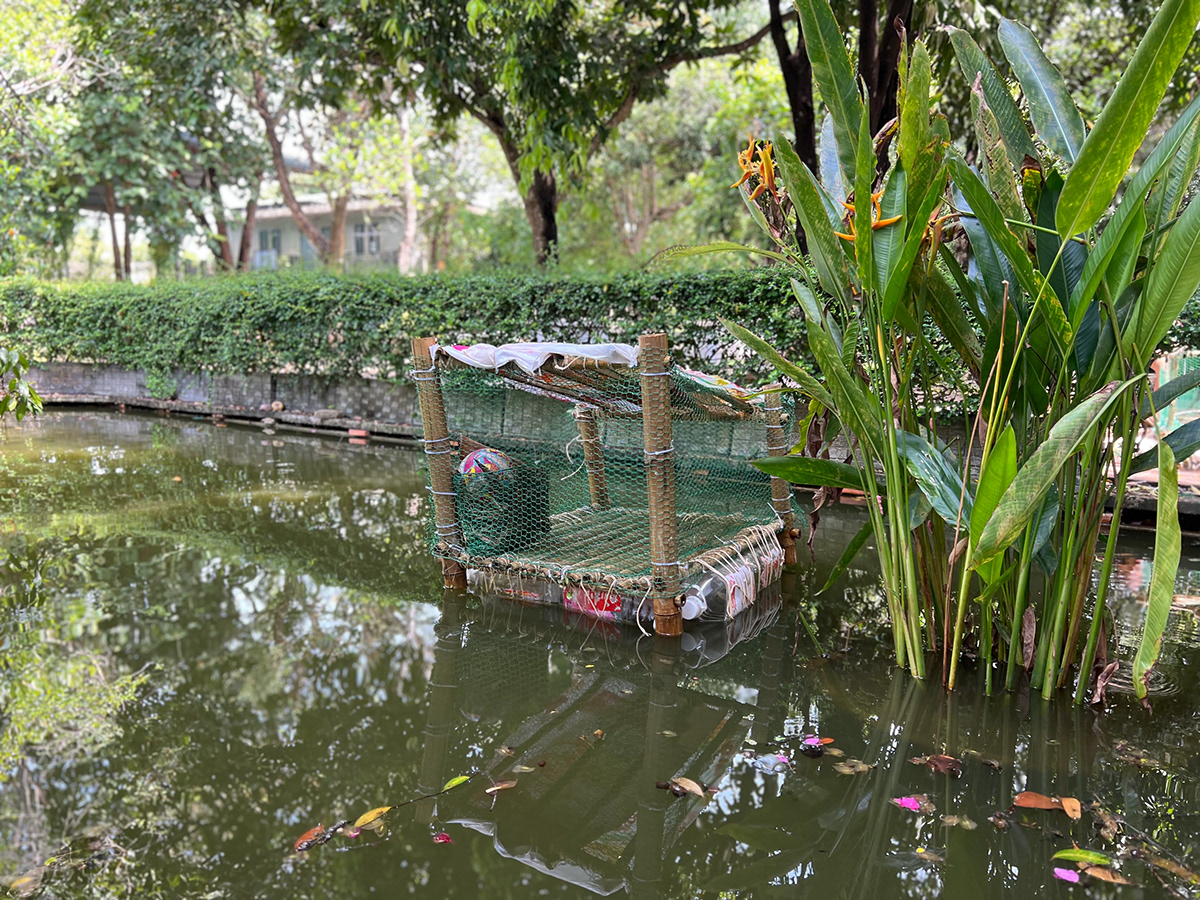
As a second intervention to address the local fishing decline, we developed a floating coop designed for domesticated ducks, a species already natively acclimated to the Tonle Sap's aquatic environment. While the floating gardens provide clean water and micronutrients through vegetable production, the coop introduces an alternative source of protein (and income) through egg harvesting.

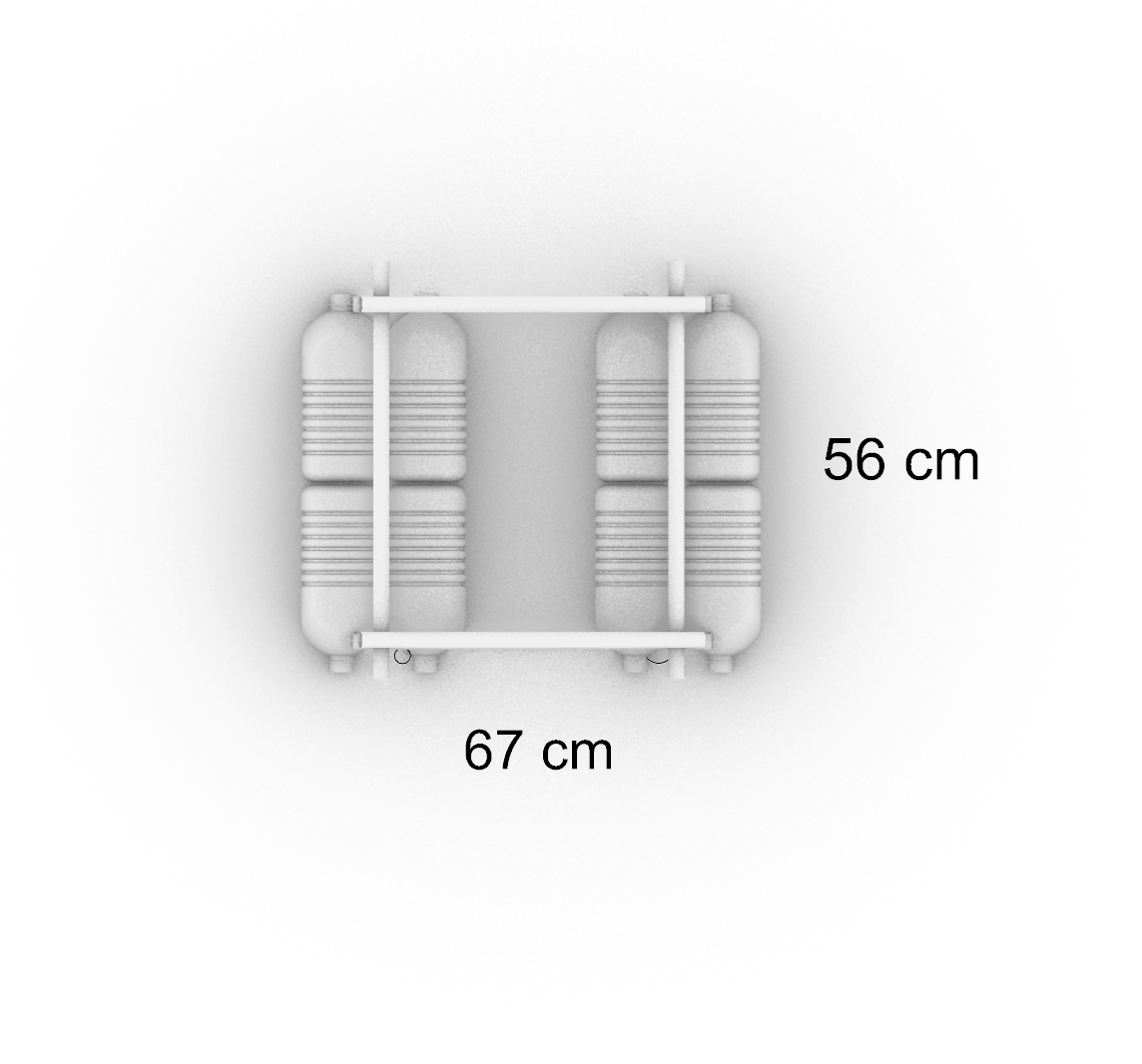
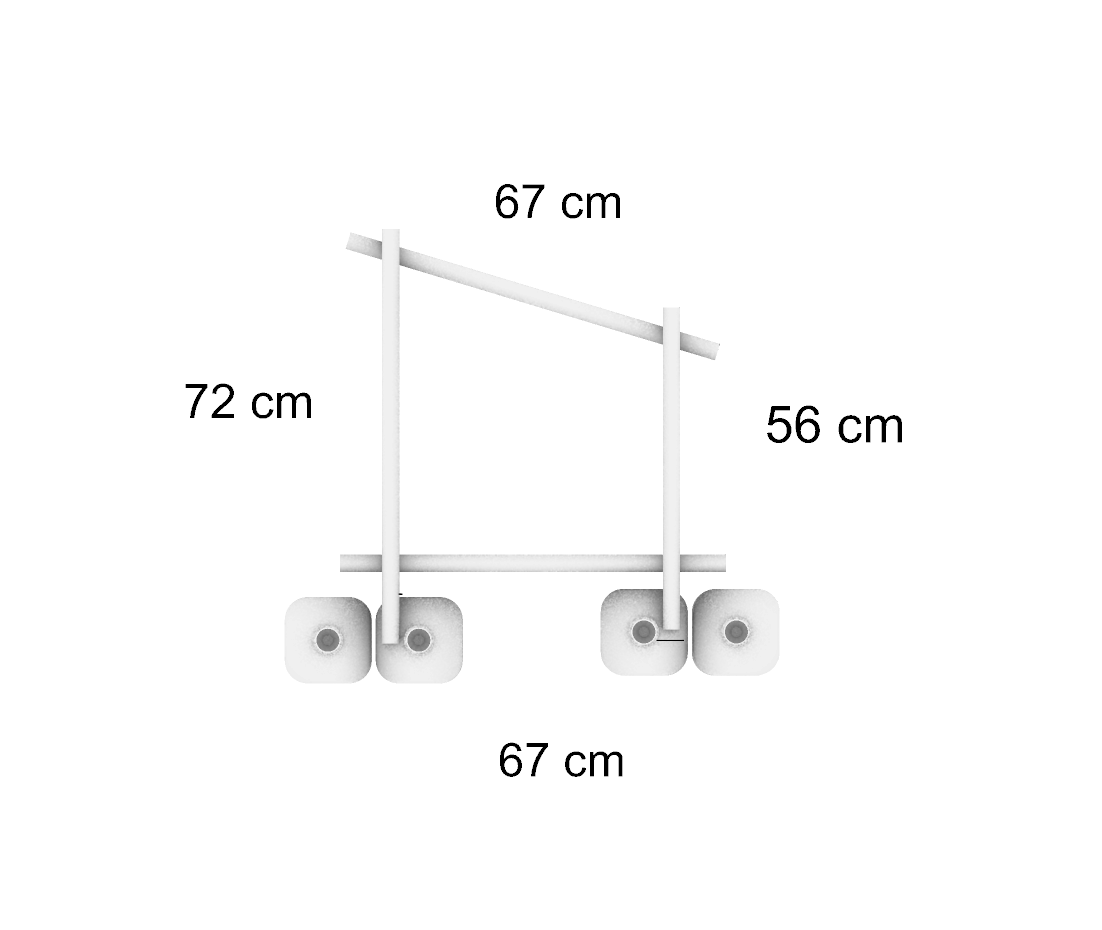
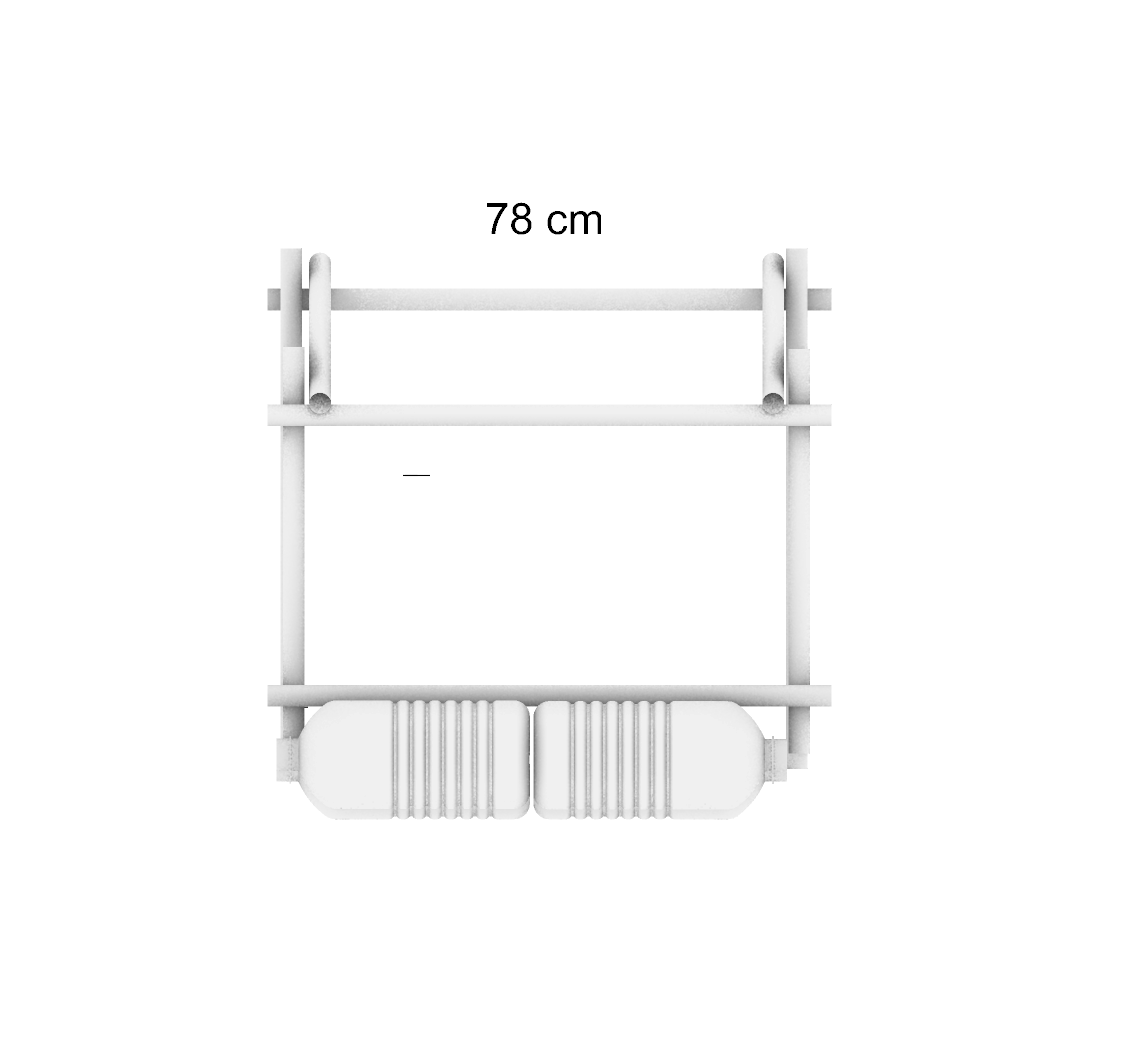
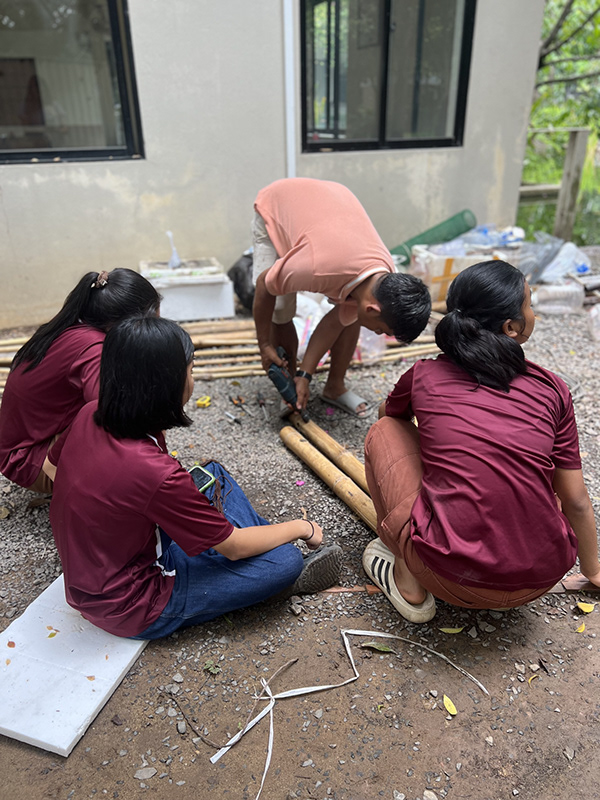
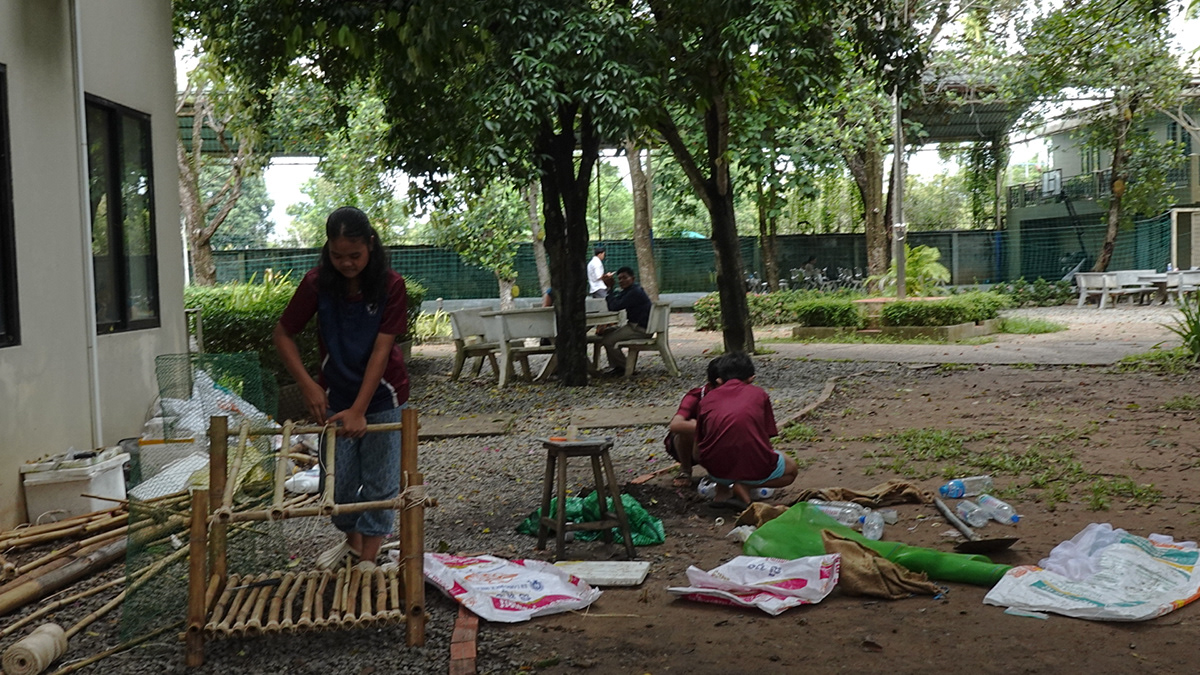
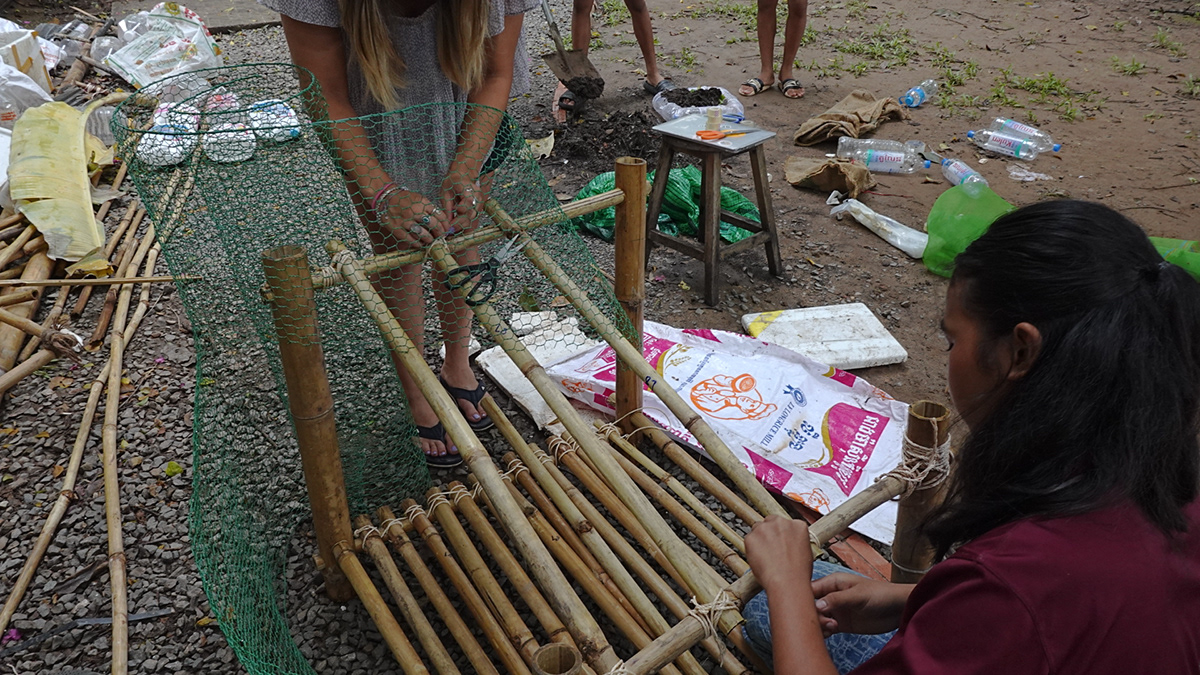
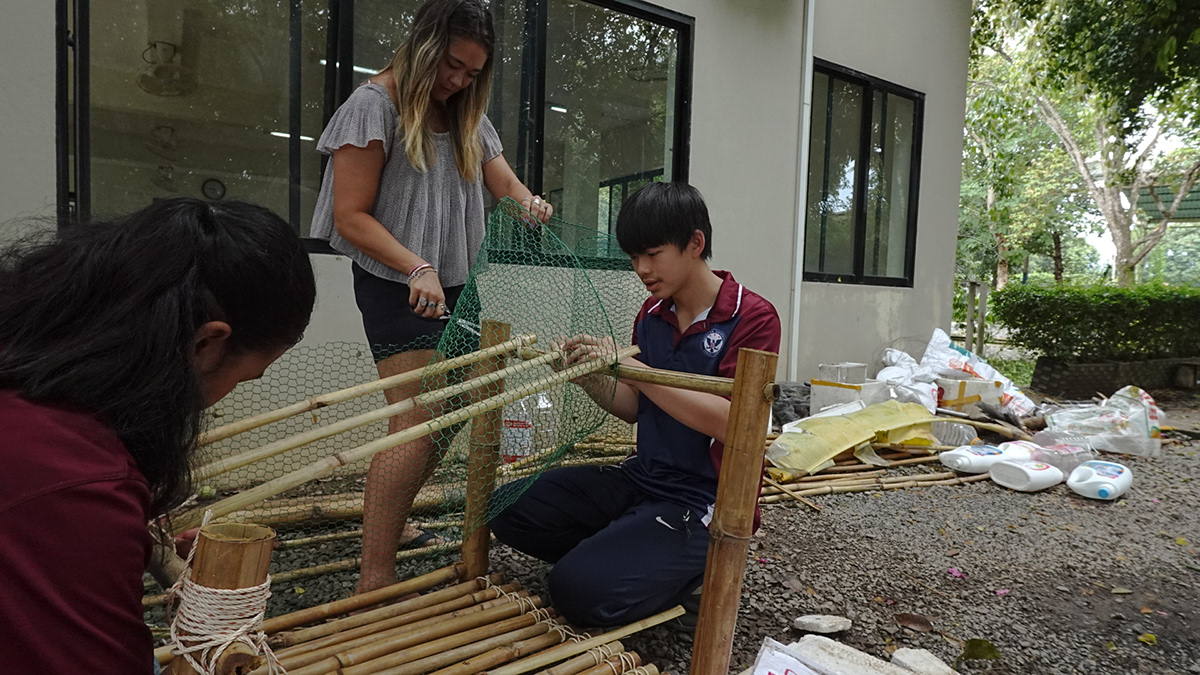
Tools and Materials: Made with 5L plastic bottles, bamboo, rice bags, chicken wire and zipties.

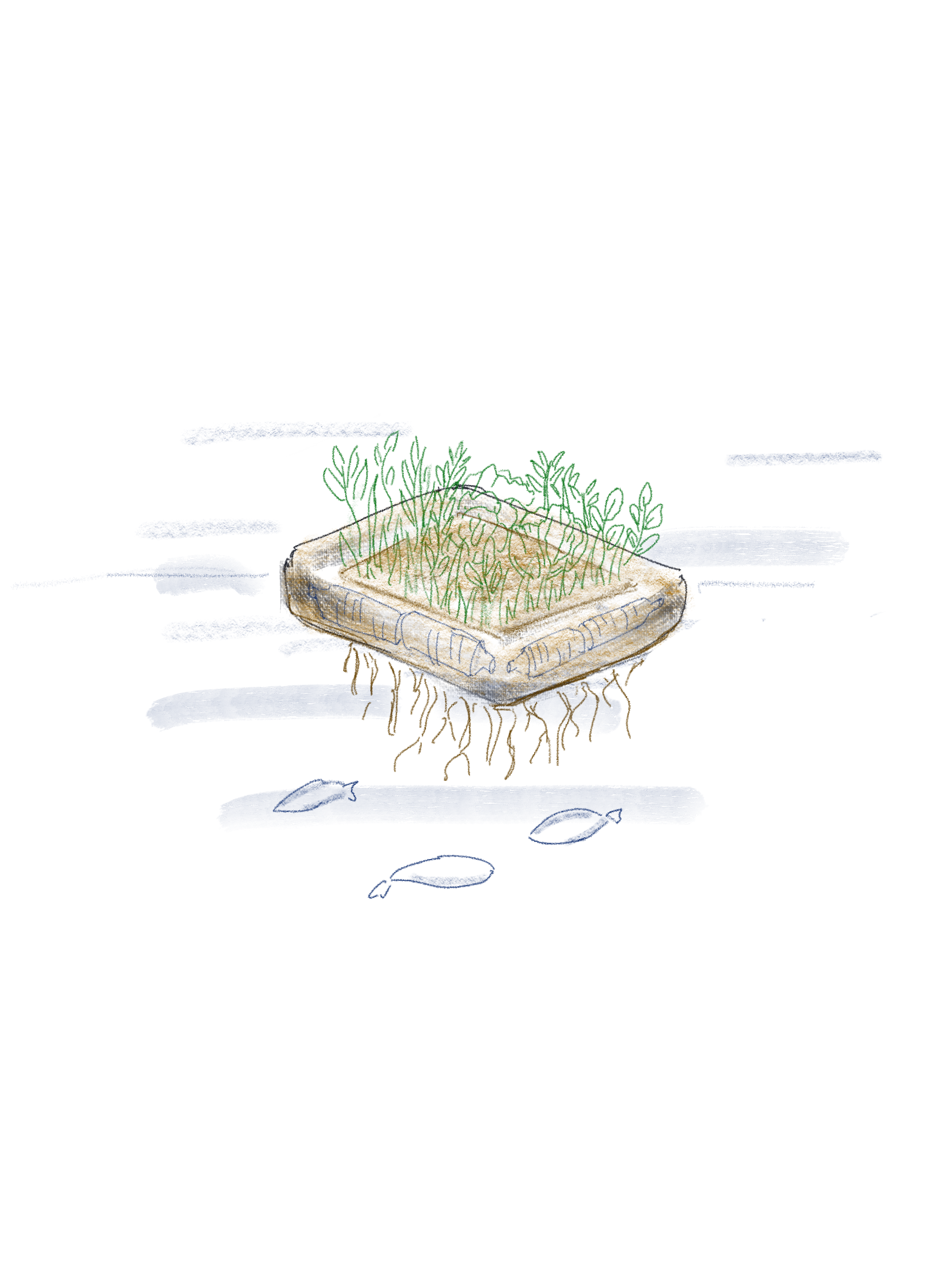
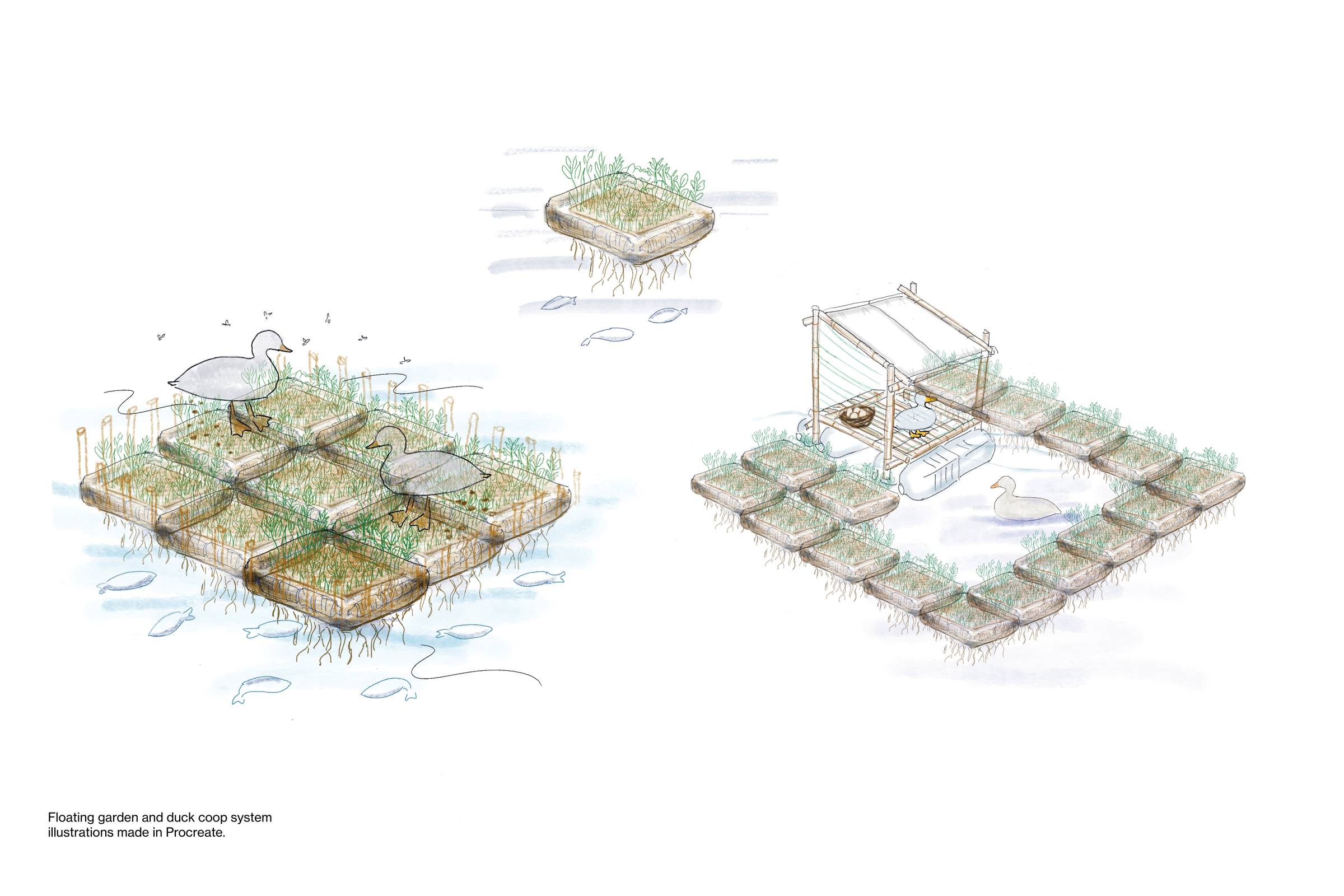
Duck Coop Illustration
Duck Coop 8

Beyond food and income security, the coop can function as a biological filter. Much like the floating gardens, which utilize root systems to absorb excess nutrients from the lake, the ducks contribute to a managed ecosystem by foraging on invasive aquatic plants and insect larvae, while their waste is captured and diverted as high-nitrogen fertilizer for the adjacent floating gardens. This synergy transforms a simple animal shelter into a critical node of a closed-loop system.

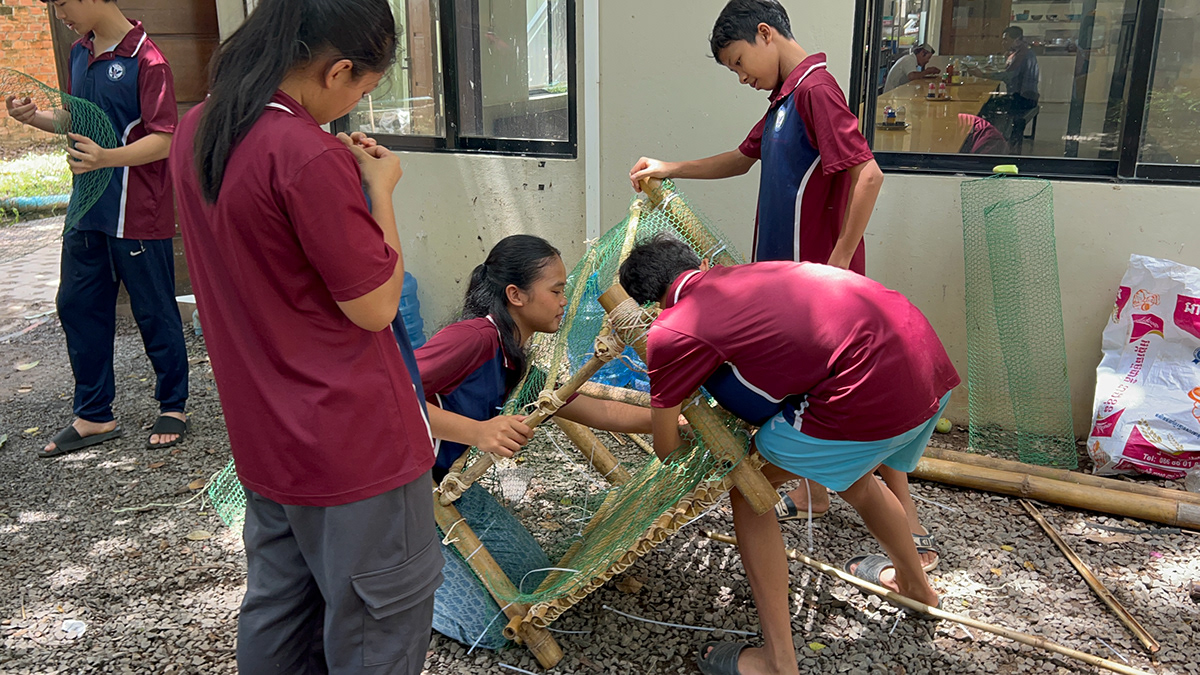
Using traditional bamboo joinery methods that have been practiced in Cambodia for centuries, we maintained a simple design using low-cost materials.

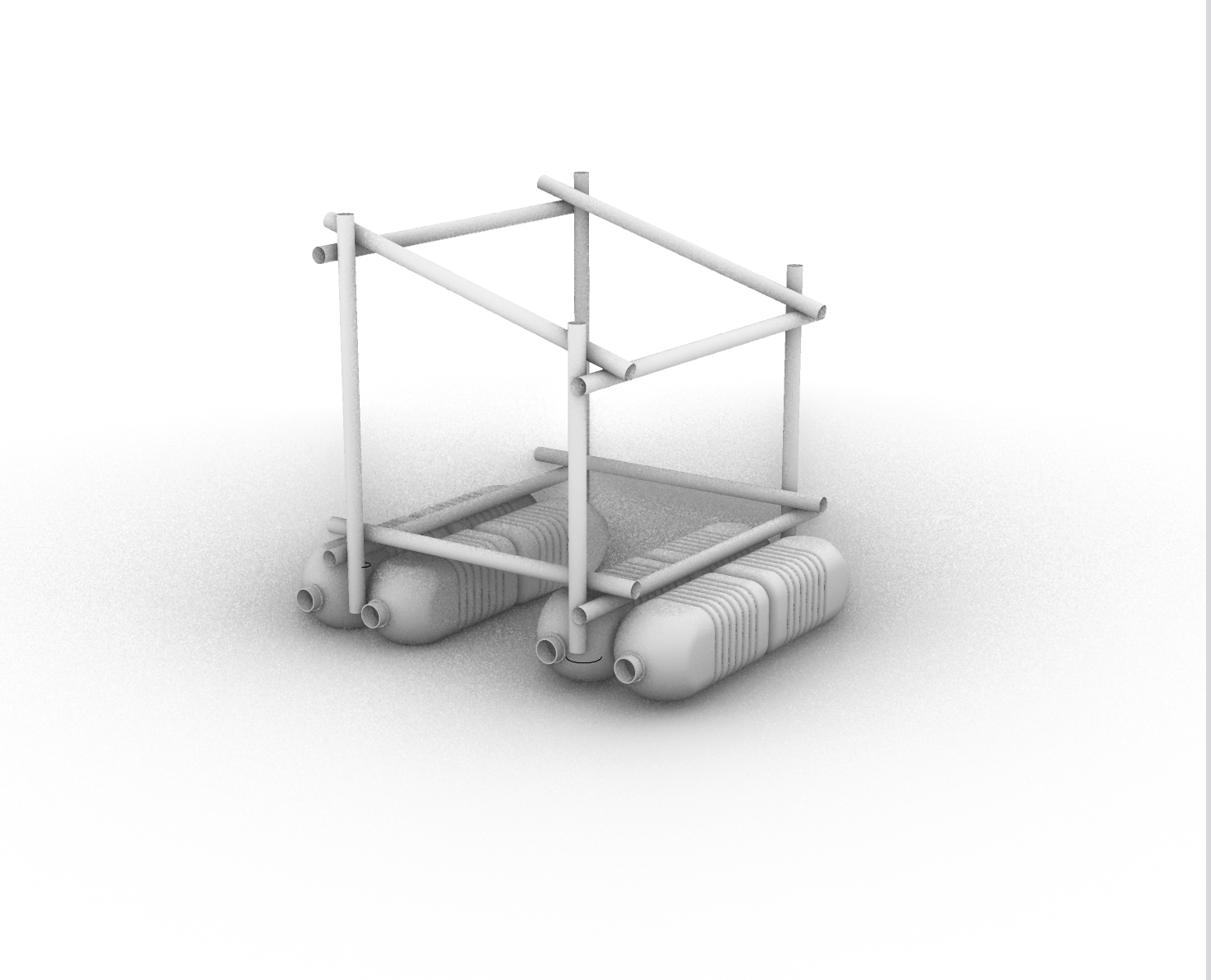
Taking into account the dimensions of local bamboo and recycled bottles locally available on the Tonle Sap, I modeled a prototype for our floating duck coop in Rhino to estimate the length of bamboo sticks we would need.

As our second design intervention, I encouraged my students to create instructional guides in both English and Khmer for the floating village community members, so our design interventions would be sustained after their implementation, unlike previous attempts at installing floating gardens in floating villages in Siem Reap. If community members understood the importance of creating and maintaining floating gardens and duck coops, this would increase the likelihood of them being sustained long enough to provide longterm value to the community, rather than being disassembled for their parts. All guides were created by Liger Leadership Academy students in Canva.

Water for Cambodia Video

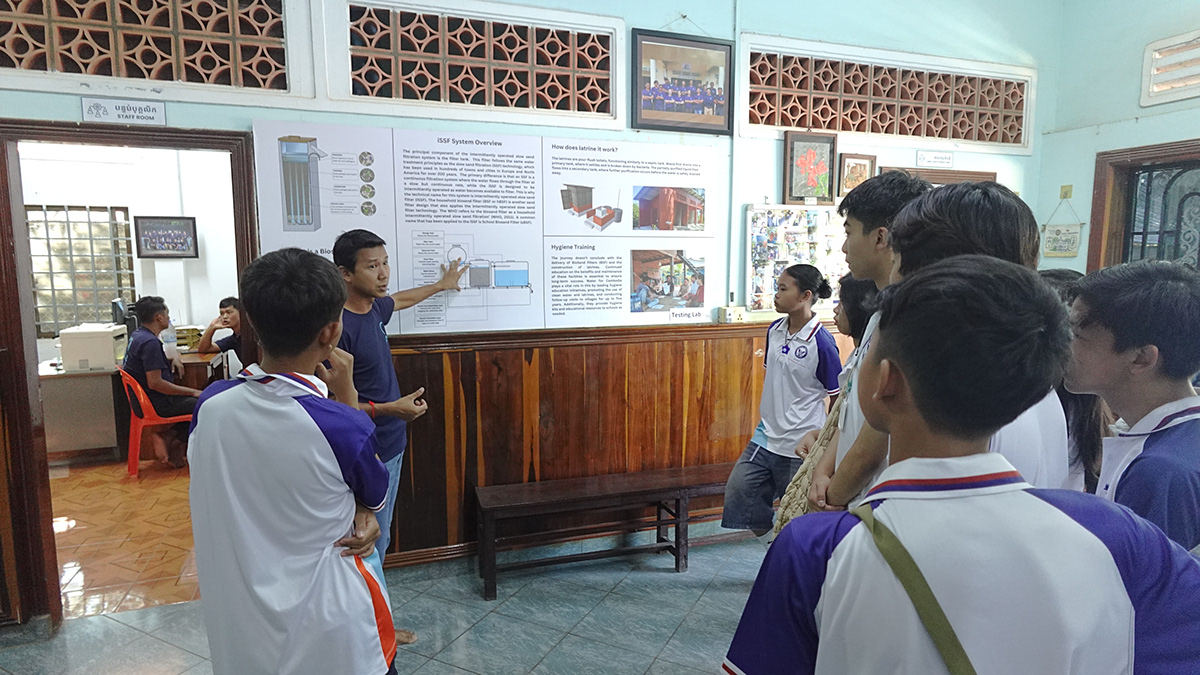
This video documents our time visiting and interviewing leaders at a local organization in Siem Reap called 'Water For Cambodia', which works with rural communities in Siem Reap to provide clean water through low-tech interventions such as their bio-sand water filters.

The Lake Clinic Cambodia Video

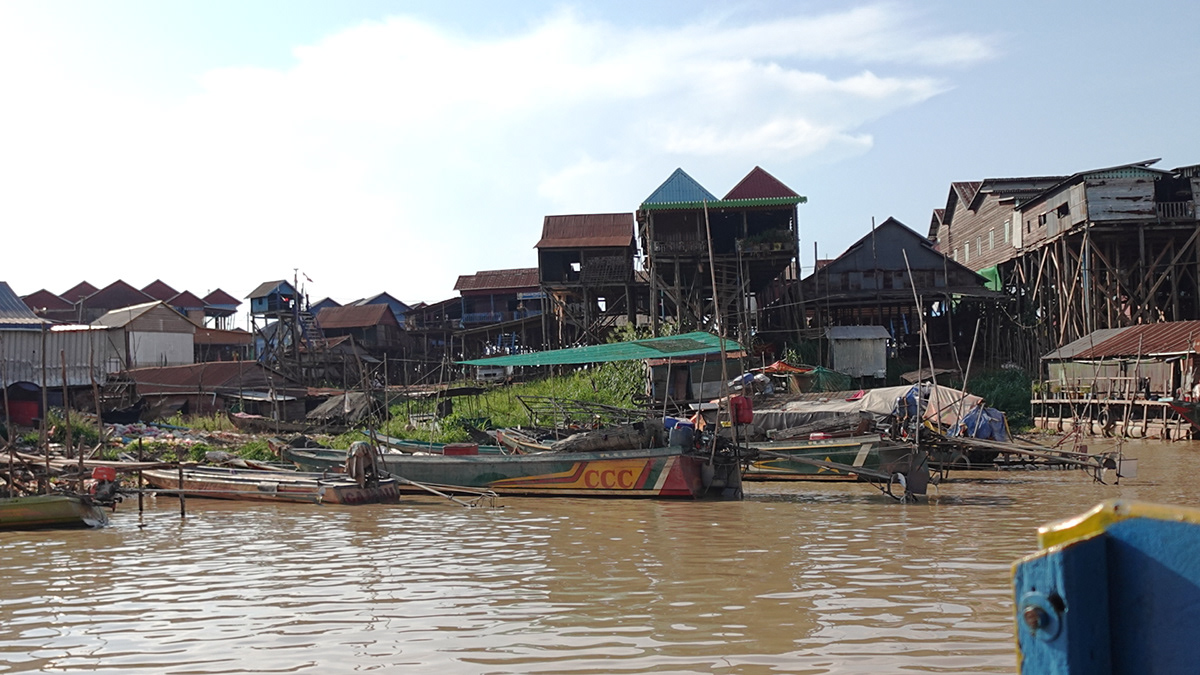
This video documents our time visiting and interviewing community members of a floating village in Siem Reap, in partnership with the Lake Clinic Cambodia team, to learn about the experiences and daily challenges of communities living in floating villages on the Tonle Sap Lake.

This video documents our field work, interviews with villagers and captures the challenges that organizations like the Lake Clinic Cambodia are already doing impactful work to address by providing accessible medical care to floating village communities.

Volunteer Building Cambodia Video

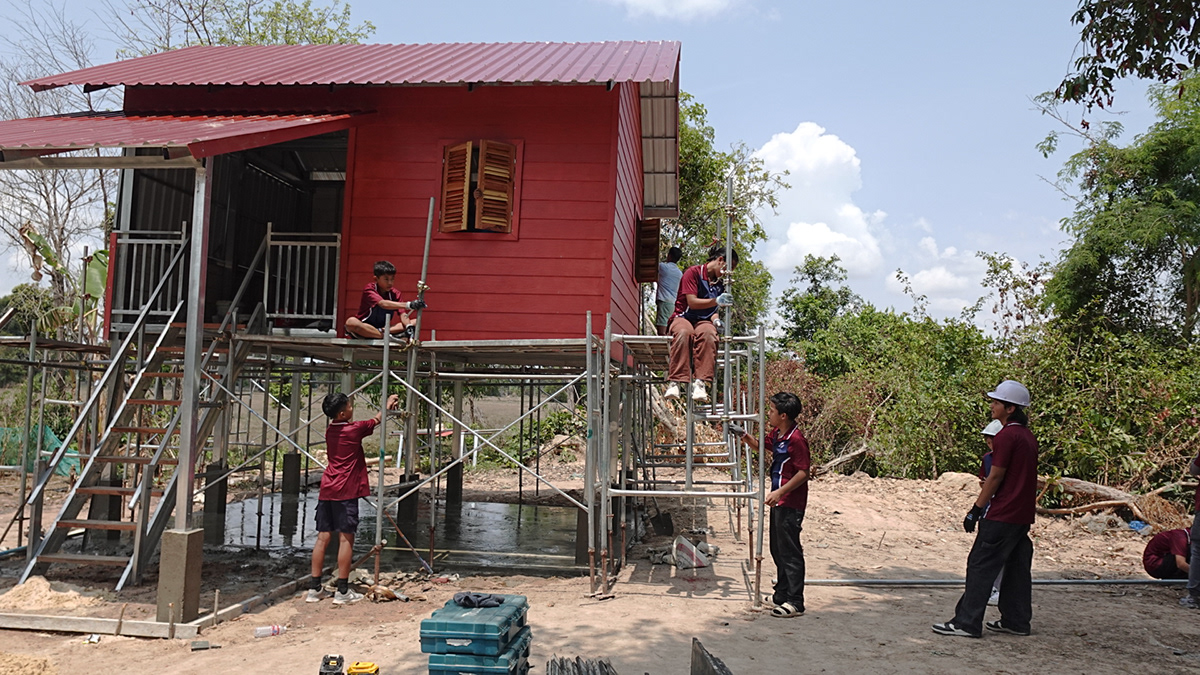
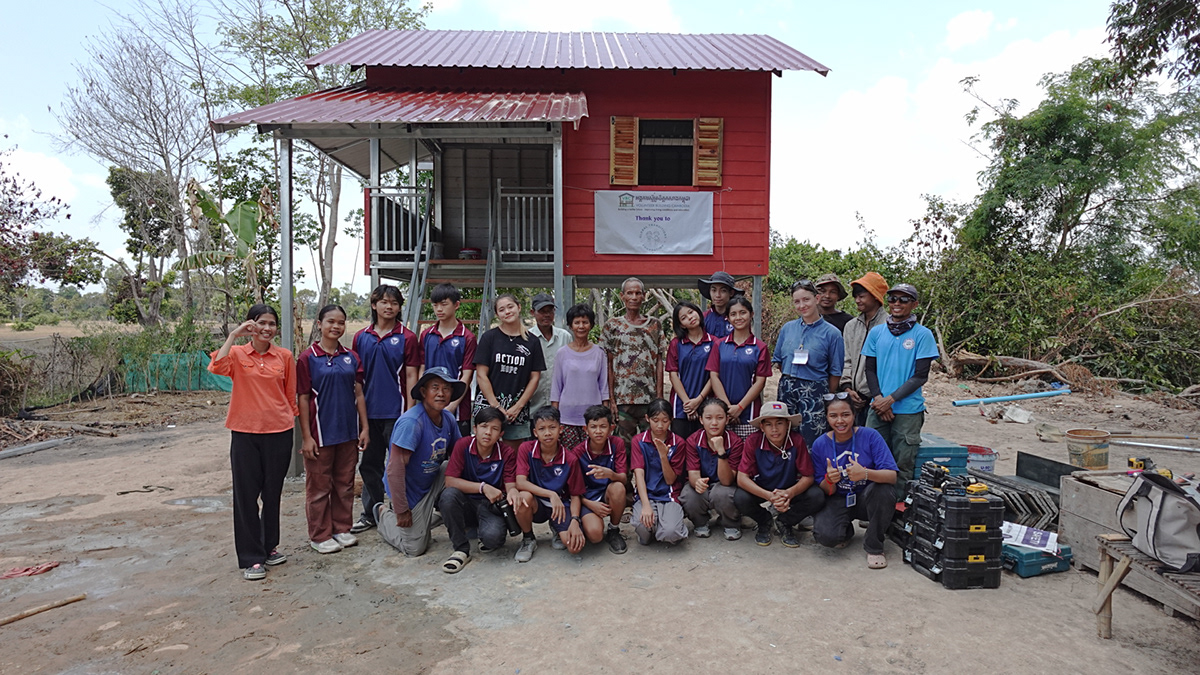
This video documents our class experience as volunteers helping build a house for a rural Cambodian family as part of Volunteer Building Cambodia, a non-profit that raises money and organizes volunteer groups to build houses, toilets, wells and water filters for rural communities in Siem Reap.